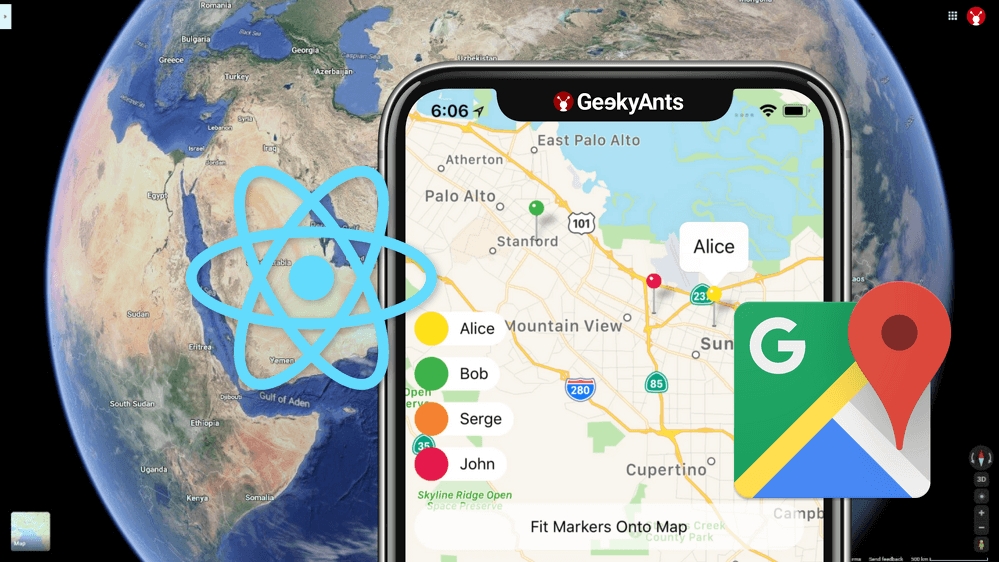
San Francisco-based IT development company, GeekyAnts, completed a fleet tracking platform that uses React Native to display real-time vehicle locations, the company announced. Teams often accept the framework for consumer apps but question its limits when live data, maps, and operational workloads converge. A recent production delivery by GeekyAnts offers a concrete reference point grounded in real usage rather than controlled testing.
The project focused on a live vehicle tracking platform built for logistics, transportation, and mobility businesses. The platform supports fleet-scale operations where drivers and operators manage hundreds of GPS-enabled vehicles under a single account. The system delivers real-time visibility, operational control, and stable monitoring across large geographic regions.
GeekyAnts implemented React Native for the mobile applications used by drivers and operators. A scalable backend ingests GPS streams from hardware tracking devices and maps each device to a specific vehicle. Operators can onboard hundreds of trucks under a single account and manage vehicle states such as active, idle, or offline through a centralized interface. This structure supports fleet-scale operations without fragmenting visibility.
The core engineering challenge involved rendering high-frequency location updates without degrading mobile performance. Continuous GPS polling often stresses rendering pipelines and state management layers. The team constrained state updates to relevant changes and reduced unnecessary re-renders. This approach kept the interface stable while vehicles moved across wide geographic regions.
Map-based visualization formed the center of the user experience. Operators view all vehicles on an interactive map that supports zoom and pan across large territories. Marker updates follow vehicle movement smoothly and maintain clarity even when the screen displays dense clusters of assets. The interface preserves responsiveness, which allows operators to identify and track vehicles during live operations.
Network and battery considerations shaped many design decisions. The application balances update frequency with device resource usage, which supports long operational sessions without draining devices or saturating networks. This balance matters for drivers and operators who rely on the application throughout the day.
The platform architecture supports growth beyond its initial scope. The backend handles real-time location streams at scale, while the mobile layer focuses on rendering efficiency and role-aware access. Drivers and operators receive views aligned with their responsibilities, which reduces complexity and improves response time during live scenarios.
Beyond live tracking, the delivery highlights deeper React Native capabilities. The same engineering group addressed offline HLS video streaming for React Native on iOS, an area where production-ready solutions remain limited. iOS media and storage constraints complicate offline playback, yet enterprise products require consistent behavior across platforms. The in-house solution built for this use case demonstrates control over native integrations within React Native.
The project also draws on broader technical practices, including React Native upgrades, navigation architecture design, large-list performance engineering, Turbo Module development, and event-driven mobile data handling. These elements support complex, real-time applications that must remain stable as usage scales.
For heads of engineering, platform leaders, and digital transformation executives, this deployment provides a practical signal. It shows that React Native can support map-heavy, real-time systems when teams apply disciplined architecture and performance-focused design. The outcome depends on data flow control and rendering strategy rather than framework limitations alone.
The business impact centers on operational visibility and control. Fleet operators gain live awareness of asset movement and status, which shortens response cycles and improves coordination. The platform also creates a foundation for extensions such as route history, alerts, and analytics without restructuring the core system.
As enterprises modernize logistics platforms and operational products, examples like this invite closer examination. They prompt technology leaders to reassess assumptions and study proven implementations. For decision-makers exploring scalable mobile architectures, the work delivered by GeekyAnts highlights how React Native fits into real-world systems that demand reliability and scale.
Media Contact
Company Name: GeekyAnts Inc.
Email: Send Email
Phone: +1 845 534 6825
Address:315 Montgomery Street, 9th & 10th Floors
City: San Francisco
State: CA 94104
Country: United States
Website: https://geekyants.com/en-us?utm_source=brandpush.co&utm_medium=referral