Global financial markets are currently navigating a complex and often contradictory landscape in the commodity sector as December 2025 draws to a close. While an overarching trend of softening commodity prices is casting a shadow of a multi-year decline, driven primarily by a projected global economic slowdown, not all commodities are following the same trajectory. This divergence presents a nuanced picture for investors, signaling both significant challenges and unique opportunities across various sectors and geographies. The immediate implications include shifts in inflation expectations, central bank monetary policy adjustments, and a re-evaluation of investment strategies across equity and bond markets.
The prevailing narrative suggests a significant deceleration in the global economy, characterized by persistent inflation in some regions and aggressive monetary tightening by major central banks over the past year. This macroeconomic backdrop is the primary catalyst for the anticipated multi-year decline in overall commodity prices, with institutions like the World Bank forecasting prices to reach their lowest levels in six years by 2026. However, this broad stroke obscures the remarkable performance of certain segments. Precious metals, notably gold and silver, have surged to extraordinary highs, while critical industrial metals like copper and aluminum, essential for the accelerating energy transition, have also defied the downturn with robust gains. Conversely, crude oil and several agricultural commodities are experiencing significant downward pressure, creating a highly stratified market environment.
A Deep Dive into the Commodity Crossroads: December 2025 Trends and Market Reactions
As of December 2025, the commodity market presents a study in contrasts, shaped by a confluence of economic, geopolitical, and structural factors. The most pronounced downward pressure has been observed in energy markets, particularly crude oil. West Texas Intermediate (WTI) crude oil traded at approximately $55.53 USD/Bbl on December 16, 2025, marking a substantial 20.28% decrease year-over-year and nearing five-year lows. Brent crude is projected to average around $58-$59 per barrel in Q4 2025, with forecasts dipping to $50/b in early 2026. This decline is largely attributed to a global oversupply, weakening demand stemming from the economic slowdown, robust non-OPEC+ production, and macroeconomic headwinds. Hopes for a ceasefire in the Russia-Ukraine conflict have also contributed to the bearish sentiment in oil markets. European natural gas prices also eased by 4.3% in November 2025, though the broader natural gas outlook shows more stability, driven by growing LNG exports and increasing domestic power generation needs.
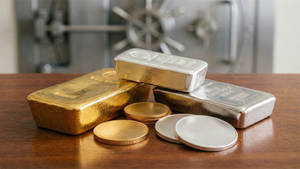
In stark contrast to the energy sector, precious metals have been on a remarkable bull run. Gold prices breached $3,700 per ounce in 2025, with projections for an average of $3,675/oz in Q4 2025 and a potential climb to $4,000/oz by mid-2026. This surge is fueled by strong safe-haven demand amidst ongoing geopolitical risks, persistent recession probabilities, aggressive central bank diversification efforts, and anticipated U.S. interest rate cuts. Silver has mirrored gold's performance, also reaching extraordinary highs. Industrial metals, vital for the burgeoning energy transition, have also shown resilience. Copper, in particular, stands out, surging 30% in 2025, with Goldman Sachs forecasting prices to reach $10,200 per metric ton (mt) in Q4 2025, and Citi predicting a $12,000/ton base case over the next six to twelve months, driven by energy-transition and AI trends. Aluminum also saw a healthy 12% gain in 2025. However, most other industrial metals are forecast to decline by approximately 10% in 2025 due to slowing global growth and trade tensions, with iron ore, despite a 4% rise to US$105/t in 2025, anticipating a 20% correction by the end of 2026 due to declining Chinese steel production.
Agricultural commodities present a mixed but generally subdued picture. The outlook for 2025 is for gradual price declines, though localized climate events continue to introduce volatility. Cocoa and coffee, which reached record highs last year due to adverse weather, are now experiencing declines as demand cools, with cocoa prices in London falling significantly in December 2025. Grains like wheat and corn are facing softer prices due to strong harvests, improved supply chain logistics, and adequate inventories. CBOT wheat prices extended losses in December 2025 amid comfortable supply prospects and record production estimates from Argentina. These divergent trends highlight the varying demand and supply dynamics at play, influenced by everything from geopolitical stability to climate patterns and technological shifts.
Initial market reactions reflect this divergence. The energy sector's stocks are experiencing a significant downturn, directly correlating with falling oil and gas prices, prompting a reevaluation of strategies by producers and investors. Conversely, companies involved in mining precious metals or critical energy transition metals are seeing boosted valuations. For net commodity importing economies, particularly those reliant on oil, lower crude prices are beneficial, reducing inflation and import costs. This positively impacts sectors such as aviation, fast-moving consumer goods (FMCG), paints, chemicals, cement, and oil marketing companies in countries like India. The US Federal Reserve's 25 basis point (bps) rate cut in December 2025, signaling a pivot towards supporting a weakening job market despite inflation remaining above its target (US CPI at 2.9% year-over-year), also underscores the complex interplay between commodity prices and monetary policy. Meanwhile, the European Central Bank (ECB) is holding its deposit facility rate steady at 2.00%, reflecting a more resilient Eurozone economy. The strengthening US dollar, which rallied throughout Q4 2024, has generally weighed on dollar-denominated commodities, making them more expensive for international buyers, though a sideways or declining dollar could remove this headwind.
Corporate Fortunes Diverge: Winners and Losers in the Commodity Shake-Up
The current commodity market dynamics are creating a distinct bifurcation in corporate fortunes, with certain industries poised for significant gains while others face considerable headwinds. Companies whose operational costs are directly linked to declining commodity prices, particularly crude oil and some agricultural products, are set to benefit from enhanced profitability and improved cash flows. Conversely, producers of these falling commodities will experience revenue and margin compression. On the flip side, the surge in precious and specific industrial metals is a boon for mining companies focused on these resources, while industries that heavily consume these rising metals will contend with escalating input costs.
Airlines, for instance, are among the primary beneficiaries of falling crude oil prices. Jet fuel represents one of their largest operating expenses, and a significant drop in oil prices directly translates to lower fuel costs, substantially boosting their profit margins. Major carriers such as Southwest Airlines Co. (NYSE: LUV), Delta Air Lines Inc (NYSE: DAL), and United Airlines Holdings Inc (NASDAQ: UAL) are likely to see improved financial performance, potentially leading to increased dividends or strategic reinvestment. Similarly, transportation and logistics giants like FedEx Corp (NYSE: FDX) will also enjoy reduced fuel expenses, enhancing their operating profitability. Beyond transportation, manufacturing and chemical companies that utilize petroleum as a raw material for various products will see lower input costs, leading to fatter profit margins. In commodity-importing nations, Oil Marketing Companies (OMCs) such as Indian Oil Corporation (NSE: IOCL) and Bharat Petroleum Corporation Limited (NSE: BPCL) often benefit from lower crude prices as their marketing margins improve, assuming retail fuel prices don't fall commensurately. Consumer discretionary and staples companies, including Walmart Inc (NYSE: WMT), Costco Wholesale Corporation (NASDAQ: COST), and Starbucks Corporation (NASDAQ: SBUX), could also see a boost as lower fuel costs act as a de facto tax cut for consumers, potentially increasing disposable income and spending.
However, the picture is considerably brighter for miners of precious and select industrial metals. Gold mining companies, including Newmont Corporation (NYSE: NEM), Barrick Gold Corporation (NYSE: GOLD), and Agnico Eagle Mines Limited (NYSE: AEM), are experiencing a significant uplift. As gold prices breach $3,700 per ounce, their revenues surge, and given that many extraction costs are relatively fixed in the short term, their profit margins expand dramatically. This operational leverage means a modest percentage increase in gold prices can lead to a much larger rise in profitability, cash flow, and stock appreciation. Silver mining companies benefit similarly from rising silver prices, which are also driven by increasing industrial demand from sectors like solar panels, data centers, and electric vehicles. In the industrial metals space, copper miners such as BHP Group (NYSE: BHP), Freeport-McMoRan Inc (NYSE: FCX), and Rio Tinto Group (NYSE: RIO) are capitalizing on soaring copper prices. Driven by robust demand from electric vehicles, renewable energy infrastructure, and AI data centers, copper's ascent directly translates to higher revenues and cash flows, amplified by existing supply deficits. Aluminum producers like Century Aluminum Company (NASDAQ: CENX) and Alcoa Corporation (NYSE: AA) are also well-positioned to benefit from rising aluminum prices, fueled by global demand from automotive, construction, and renewable energy sectors.
Conversely, companies directly involved in the exploration and production (E&P) of crude oil and natural gas are facing significant headwinds. Upstream E&P companies such as Pioneer Natural Resources Company (NYSE: PXD), ConocoPhillips (NYSE: COP), and EOG Resources Inc (NYSE: EOG) are experiencing direct reductions in revenue and profitability due to falling crude prices. This can lead to earnings pressure, reduced capital expenditure budgets, project delays, and potential asset impairments. Oilfield services companies like Halliburton Company (NYSE: HAL) and Schlumberger Limited (NYSE: SLB) are also negatively impacted as E&P firms cut back on drilling and exploration activities, leading to decreased demand for their services. In the agricultural sector, while individual farmers are not publicly traded, the broader agricultural supply chain is affected. Fertilizer companies such as Nutrien Ltd. (NYSE: NTR) and The Mosaic Company (NYSE: MOS) may face reduced demand from farmers who, facing lower crop prices, might cut back on input purchases. On the demand side for industrial metals, industries that are heavy consumers of copper and aluminum will see their production costs rise. Automotive manufacturers, particularly those in the electric vehicle (EV) space which use significantly more copper, will face increased material costs, potentially squeezing profit margins if these cannot be fully passed on to consumers. Construction companies, electronics manufacturers, and the packaging industry will also contend with higher input costs for these vital metals.
A Global Economic Crossroads: Unpacking the Broader Significance
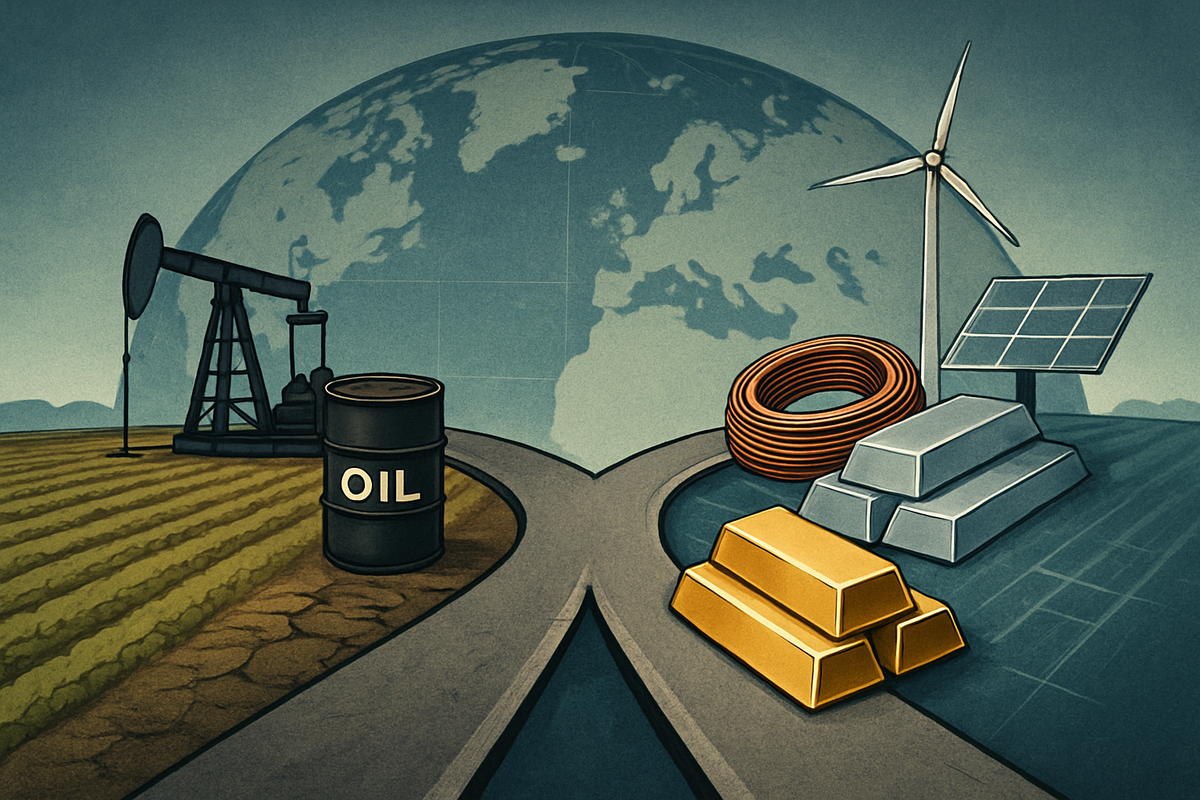
The current "Great Divergence" in commodity prices, with oil and agricultural products generally falling while gold, silver, copper, and aluminum soar, signifies a pivotal moment for the global economy. This intricate pattern is not merely a cyclical fluctuation but rather a manifestation of profound structural shifts, macroeconomic forces, and evolving geopolitical landscapes. It underscores a fundamental reordering of priorities and value drivers within the global industrial and financial ecosystems.
This divergence is deeply intertwined with several broader industry trends. The accelerating green energy transition and the massive buildout of Artificial Intelligence (AI) infrastructure are paramount structural drivers. The burgeoning demand for electric vehicles, renewable energy systems, and expanded electrical grids is directly fueling the robust demand and rising prices for critical industrial metals like copper and aluminum. Silver, too, benefits significantly from its industrial role in solar energy and electronics. Conversely, the global economic slowdown, influenced by persistent inflation and the lingering effects of aggressive monetary tightening from prior periods, is exerting downward pressure on energy and many agricultural commodities, reflecting a general moderation in industrial activity and consumer demand in traditional sectors. Adding to this complexity is the divergence in global monetary policies, with the U.S. Federal Reserve signaling potential easing, which tends to weaken the dollar and bolster dollar-denominated assets like gold, while other central banks maintain different stances based on their unique economic conditions.
The ripple effects of these trends are pervasive, impacting competitors and partners across various sectors. Upstream oil and gas exploration and production (E&P) firms face immense pressure, compelling them to accelerate efficiency drives and diversification strategies. Conversely, industries reliant on energy, such as transportation and heavy manufacturing, benefit from reduced input costs, which can help contain retail inflation. The agricultural sector is grappling with a "cost-price squeeze," where stubbornly high input costs for fertilizers and chemicals are juxtaposed with declining prices for many staple crops, creating financial strain for farmers and potentially impacting food security policies. Manufacturers face a "dual challenge": benefiting from lower energy costs but contending with surging prices for critical industrial metals, forcing strategic re-evaluation of sourcing, material substitution (e.g., aluminum increasingly replacing copper in certain applications), and innovation. Financial markets are witnessing increased volatility and a recalibration of investment strategies, with a clear shift towards stable, value-oriented assets and defensive sectors, prominently featuring gold and silver as hedges against economic uncertainty. Developing economies heavily reliant on exporting falling commodities face significant pressure on government revenues, while those dependent on imports of these commodities may experience eased inflationary pressures.
These commodity dynamics carry substantial regulatory and policy implications. Central banks worldwide are navigating a complex landscape, with the U.S. Federal Reserve's anticipated easing aiming to support a cooling labor market, while other central banks maintain different stances. This divergence can impact currency markets, capital flows, and potentially lead to protectionist trade measures. The strategic importance of critical industrial metals like copper, silver, and rare earths is increasingly recognized, potentially leading to policy support for domestic mining, enhanced supply chain scrutiny, and even government intervention to ensure resource security. Governments may also face pressure to implement targeted fiscal policies to support farmers grappling with the cost-price squeeze and declining agricultural commodity prices. Trade policies, tariffs, and environmental regulations continue to play a crucial role, influencing commodity flows and production capacities, with stricter environmental rules potentially exacerbating supply-demand imbalances for certain metals.
Historically, periods of significant commodity market divergence are not unprecedented. The "Gold Reversion Effect," observed over three centuries, suggests that commodity prices tend to diverge from and eventually return to gold price levels, with gold acting as a long-term benchmark of stable purchasing power. For instance, after the Napoleonic Wars and the post-World War I demand crash in 1920, commodity prices experienced significant declines. While the current oil price decline contrasts with the 1973 Oil Crisis, which saw prices quadruple, both periods highlight the profound impact of energy shocks. The late 1970s also saw a strong gold performance, similar to its current surge, driven by inflation and uncertainty. The current surge in silver, having spiked above $50 (a level historically reached only twice before), draws comparisons to its sharp run-up in 2011, which was followed by a significant price correction, hinting at potential future volatility. These historical precedents offer valuable context, suggesting that while the immediate drivers are unique, the underlying economic and financial forces often follow familiar patterns of adjustment and eventual rebalancing.
The Road Ahead: Navigating a New Commodity Landscape
The divergent commodity price trends witnessed in December 2025 are not fleeting anomalies but rather harbingers of a profound reshaping of global markets, setting the stage for a dynamic and often unpredictable future. Both short-term adjustments and long-term structural shifts will demand strategic pivots from investors, businesses, and governments alike.
In the short term (next 6-12 months), the global economy will likely grapple with nuanced inflationary pressures. While falling oil and agricultural prices may temper overall consumer price index (CPI) inflation, the persistent rise in industrial metals could fuel inflation in specific sectors such as manufacturing, construction, and technology. Central banks, particularly the US Federal Reserve, will face a complex environment: lower energy and food prices could provide room for further interest rate cuts to stimulate growth, yet the strength in industrial metals and gold might signal underlying inflationary pressures or geopolitical risks, potentially limiting the extent of monetary easing. This period will also see continued sectoral performance shifts, with energy and agricultural companies potentially facing headwinds, while industries reliant on copper and aluminum (e.g., EV manufacturers, renewable energy infrastructure) will navigate increased input costs alongside robust demand. Businesses will need to adapt their supply chains, potentially leveraging lower oil prices for reduced transportation costs while simultaneously managing higher raw material costs for metals, with a continued shift from "just-in-time" to more resilient buffer stock strategies.
Looking further ahead (1-5+ years), the energy transition is poised to accelerate, solidifying the structural bull market for "green" metals. Demand for copper, for instance, is projected to rise significantly (around 70% by 2050) due to electrification, renewable energy systems, and the buildout of data centers. Gold's continued ascent reflects ongoing geopolitical tensions, economic uncertainty, and central bank diversification away from the US dollar, suggesting its role as a long-term safe-haven asset will only strengthen. However, long-term food security challenges remain, with climate change posing significant risks to agricultural commodity prices through erratic weather patterns and "climateflation." Shifting global trade dynamics, influenced by tariffs and geopolitical tensions, will continue to reshape supply chains and regional pricing, with potential for increased protectionism impacting commodity flows.
These evolving dynamics necessitate significant strategic pivots. For investors, a diversified commodity exposure that selectively favors industrial metals and precious metals over traditional energy and agriculture will be crucial. Gold continues to serve as a strong inflation and geopolitical hedge. Equity sector rotation will be key, with overweighting in sectors linked to the energy transition (e.g., renewable energy, EV infrastructure) and technology (e.g., data center developers) that benefit from rising metal prices. Businesses must prioritize supply chain resilience, securing long-term contracts and diversifying sourcing to mitigate volatility. Cost management through efficient technologies, robust hedging strategies using financial instruments, and flexible pricing models will be essential for navigating fluctuating input costs. Innovation, including exploring alternative materials or redesigning products, will be vital to reduce dependency on volatile commodities. Governments, in turn, must develop long-term strategies for critical mineral security, invest in climate-resilient agriculture, and carefully review trade policies to prevent market distortions.
Market opportunities will emerge in green technology investment, leveraging the strong demand for copper and aluminum in renewable energy, EVs, and battery production. Precious metals will continue to attract investor interest as safe havens. Agricultural technology (AgriTech) innovations that improve yields and climate resilience could see increased investment. Challenges include profit margin squeezes for manufacturers reliant on rising metals, continued geopolitical instability disrupting supply chains, and persistent sector-specific inflation. The energy sector will face ongoing headwinds, demanding strategic adjustments, while food price volatility due to localized events remains a risk. Potential scenarios include a "Green Boom, Traditional Bust," where industrial metals and green tech thrive while traditional energy and agriculture struggle; a "Stagflationary Drift," characterized by subdued growth and high manufacturing costs; or a "Global Rebalancing & Moderation," where supply and demand gradually find equilibrium, leading to more stable markets. Adapting to these shifts will define success in the years to come.
The Great Divergence: A Market Redefined
As 2025 draws to a close, the global commodity market is unequivocally defined by a "great divergence," marking a fundamental reshaping of economic landscapes and investment paradigms. This is not a mere cyclical blip but a profound structural adjustment, driven by the inexorable forces of the energy transition, rapid technological advancement, and persistent geopolitical friction.
The key takeaway is the stark contrast between the surging performance of metals and the more subdued or declining trends in energy and certain agricultural commodities. Precious metals, particularly silver and gold, have reached extraordinary highs, fueled by safe-haven demand, aggressive central bank buying, and anticipated interest rate shifts. Industrial metals like copper and aluminum have delivered robust gains, powered by the accelerating global energy transition, electrification, and the buildout of AI infrastructure, which is creating unprecedented structural demand. Conversely, crude oil prices have softened due to an emerging surplus and moderating demand growth, while agricultural markets present a mixed picture, influenced by regional supply-demand dynamics and climate events.
Moving forward into 2026, these divergent trends are expected to largely persist. Metals, especially copper and aluminum, are projected to continue their upward trajectory or remain broadly stable, underpinned by structural demand and supply shortages. Gold and silver are also forecast for further gains, supported by lower real interest rates and ongoing geopolitical uncertainties. While crude oil may see a recovery in the second half of 2026 as the current surplus diminishes, overall commodity indices may experience moderation, primarily due to expected declines in iron ore and LNG. Persistent volatility, influenced by geopolitical factors, trade tensions, and monetary policy shifts, will remain a defining characteristic across all sectors.
The lasting impact of this "great divergence" is a shift from a fuel-intensive to a material-intensive global energy system, creating unprecedented demand for critical minerals. This also means inflation may become more concentrated in manufactured goods and technology rather than broadly across all sectors, posing challenges for economic growth and amplifying swings in inflation for commodity-exporting countries.
For investors, the coming months demand a granular, sector-specific approach. Close monitoring of central bank actions, particularly the US Federal Reserve's interest rate trajectory, will be crucial, as a December Fed rate cut could further boost commodity prices. The strength of the US dollar and global economic growth, especially in China, will significantly influence demand. Investors must also pay keen attention to specific supply-demand balances within each commodity, ongoing geopolitical developments, the accelerating momentum of the energy transition, and unpredictable weather patterns impacting agricultural markets. Astute investors who can navigate this complex, bifurcated landscape, prioritizing strategic allocations to "new economy" metals and defensive assets, will be best positioned to capitalize on emerging trends and mitigate risks.
This content is intended for informational purposes only and is not financial advice