As the clock strikes midnight on 2025, the global financial markets are entering 2026 with a mixture of awe and anxiety. The "Magnificent Seven" and their large-cap tech peers have spent the last three years rewriting the rules of market capitalization, fueled by a relentless drive toward artificial intelligence. However, as the new year begins, investors are no longer content with promises of a digital utopia; they are demanding proof of profitability. The "Autumn Chill" of late 2025 has transitioned into a winter of intense scrutiny, as valuation concerns reach a fever pitch.
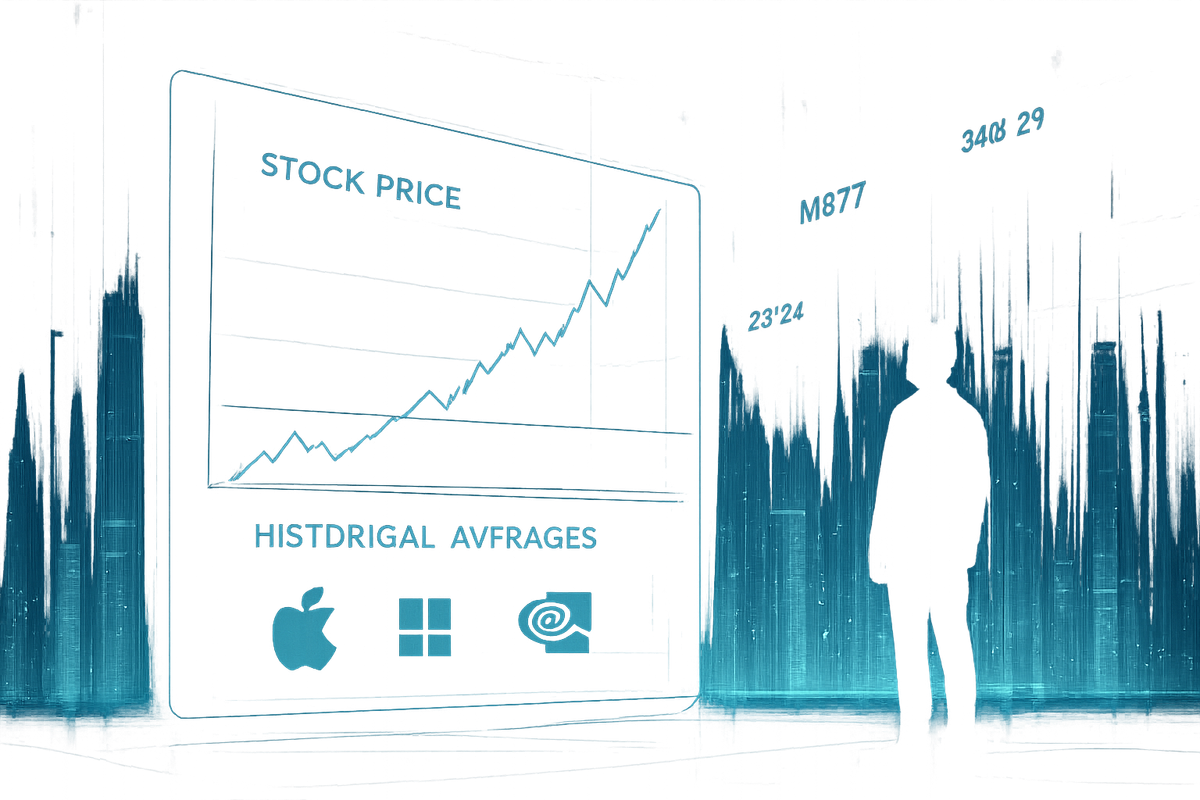
The immediate implication for the market is a widening "ROI Gap." While companies like Nvidia (NASDAQ: NVDA) have delivered the hardware to build the AI era, the software giants tasked with monetizing these tools are facing a skeptical audience. Heading into 2026, the primary question for Wall Street is whether the current price-to-earnings (P/E) ratios—many of which sit significantly above ten-year historical averages—can be sustained in an environment where capital expenditures are projected to exceed $500 billion annually across the top four cloud providers.
The Valuation Disconnect: A Tale of Two Multiples
The final quarter of 2025 was marked by a series of volatile earnings calls that highlighted a growing divergence between stock price and historical valuation norms. Apple (NASDAQ: AAPL), long considered the bedrock of conservative tech investing, entered December 2025 trading at a trailing P/E of approximately 36.5x. This is a stark departure from its 10-year historical average of 25.1x. Critics argue that Apple’s "defensive luster" and aggressive share buybacks have masked a slowdown in iPhone upgrade cycles, leaving the stock vulnerable if its "Apple Intelligence" suite fails to ignite a massive hardware refresh in early 2026.
Conversely, Microsoft (NASDAQ: MSFT) has seen its forward P/E settle at roughly 30.5x. While this is closer to its five-year average of 33.9x, the sheer scale of its capital investment has raised eyebrows. Throughout 2025, Microsoft funneled billions into data centers and its partnership with OpenAI, leading to a "CapEx fatigue" among institutional holders. The timeline of this valuation buildup can be traced back to the "Great AI Breakout" of 2023, but by late 2025, the market's patience for margin compression in exchange for market share has worn thin. The initial reaction from the analyst community has been a series of downgrades, not on fundamentals, but on "valuation exhaustion," as the S&P 500's tech sector remains priced for perfection.
Winners and Losers in the "Great Rotation"
As capital begins to leak out of overextended mega-caps, a "Great Rotation" is reshaping the 2026 leaderboard. Alphabet (NASDAQ: GOOGL) has emerged as a surprising valuation champion. After trading at a discount for much of the previous year, Alphabet’s successful rollout of Gemini 3 and its custom TPU chips led to a year-end re-rating. Trading at a forward P/E of 28x, Alphabet is seen as one of the few giants where the valuation is actually supported by accelerating cloud revenue and a stabilized search business. Similarly, Meta Platforms (NASDAQ: META) enters 2026 in a position of strength after a landmark November 2025 court ruling dismissed the FTC’s long-standing monopoly claims, effectively ending the threat of a forced breakup of Instagram and WhatsApp.
On the losing side of this rotation are the companies struggling to bridge the "execution gap." Amazon (NASDAQ: AMZN) faces a difficult 2026 as its massive investments in Anthropic and Project Rainier have yet to produce the same margin expansion seen by its cloud rivals. Meanwhile, Nvidia (NASDAQ: NVDA), despite its dominance, is entering a "digestion period." While its forward P/E has actually compressed to 24.5x due to massive earnings growth, the stock faces headwinds as major customers like Alphabet and Amazon increasingly shift to their own custom silicon to reduce their dependence on Nvidia’s high-margin H200 and Blackwell chips.
The beneficiaries of this shift are not just in tech. Energy and utility giants like Constellation Energy (NASDAQ: CEG) and NextEra Energy (NYSE: NEE) have become the "new tech" stocks of 2026. As AI data centers create a global power crunch, these companies are seeing their valuations swell as essential infrastructure providers. In the mid-cap space, firms like AppLovin (NASDAQ: APP) and Palantir (NASDAQ: PLTR) have outperformed their larger peers by proving they can turn AI hype into tangible, high-margin software revenue for government and commercial clients.
Regulatory Reckonings and Structural Shifts
The broader significance of the 2026 market landscape cannot be overstated. We are witnessing a transition from the "Infrastructure Phase" of AI to the "Application Phase," and this shift is occurring under the shadow of unprecedented regulatory pressure. In January 2026, Google is set to begin complying with a court-ordered search remedy that forces it to share user-interaction data with competitors. This "data openness" mandate is a historical precedent that could fundamentally alter the economics of search advertising, a move that has investors questioning the long-term premium previously afforded to Alphabet’s "moat."
Furthermore, the European Union’s full enforcement of the AI Act in 2026 will force Big Tech into a regime of rigorous auditing and transparency. This regulatory friction, combined with the U.S. Department of Justice’s ongoing "walled garden" trial against Apple, represents a structural reckoning for the industry. Historically, tech booms have been followed by periods of intense antitrust scrutiny—much like the Microsoft trials of the late 1990s. The 2026 landscape suggests that while AI may be the future, the "monopoly rents" that funded the growth of the last decade are under direct assault from both regulators and the "Competitive Deregulation" policies of the current U.S. administration, which seeks to foster domestic competition.
The Road Ahead: The Year of the AI Agent
Looking forward, 2026 is being billed by analysts as the "Year of the AI Agent." The market's focus has shifted from hardware scarcity to software execution. For the current valuations of the "Big Four" to hold, they must demonstrate that "Agentic AI"—autonomous software capable of executing complex tasks—can generate meaningful subscription or service revenue. In the short term, we may see a "valuation reset" in the first half of 2026 if Q1 earnings reports show a continued disconnect between AI spending and AI income.
Strategic pivots are already underway. We should expect large-cap tech companies to move toward "disciplined capital allocation," potentially slowing the pace of data center builds in favor of dividend increases or more targeted acquisitions of mid-cap AI innovators. The challenge for 2026 will be navigating a market that is no longer rising on a "tide of hype" but is instead anchored to the cold reality of GAAP earnings.
Wrap-Up: A Market at a Crossroads
As we head into 2026, the key takeaway is that the "AI Premium" is no longer a blanket gift to the tech sector. The market has become increasingly discerning, rewarding companies with clear monetization paths while punishing those with stretched multiples and vague ROI projections. While the fundamental growth of AI remains intact, the era of "valuation expansion at any cost" has ended.
Investors should keep a close watch on the "Search Default" revenue streams and the progress of "Agentic AI" rollouts in the coming months. The 2026 market will likely be defined by a shift from growth-at-all-costs to a focus on sustainable, high-quality earnings. The "Great Tech Reckoning" is not a signal of the end of the tech bull market, but rather a necessary maturation of a sector that must now prove it can live up to its own monumental expectations.
This content is intended for informational purposes only and is not financial advice.