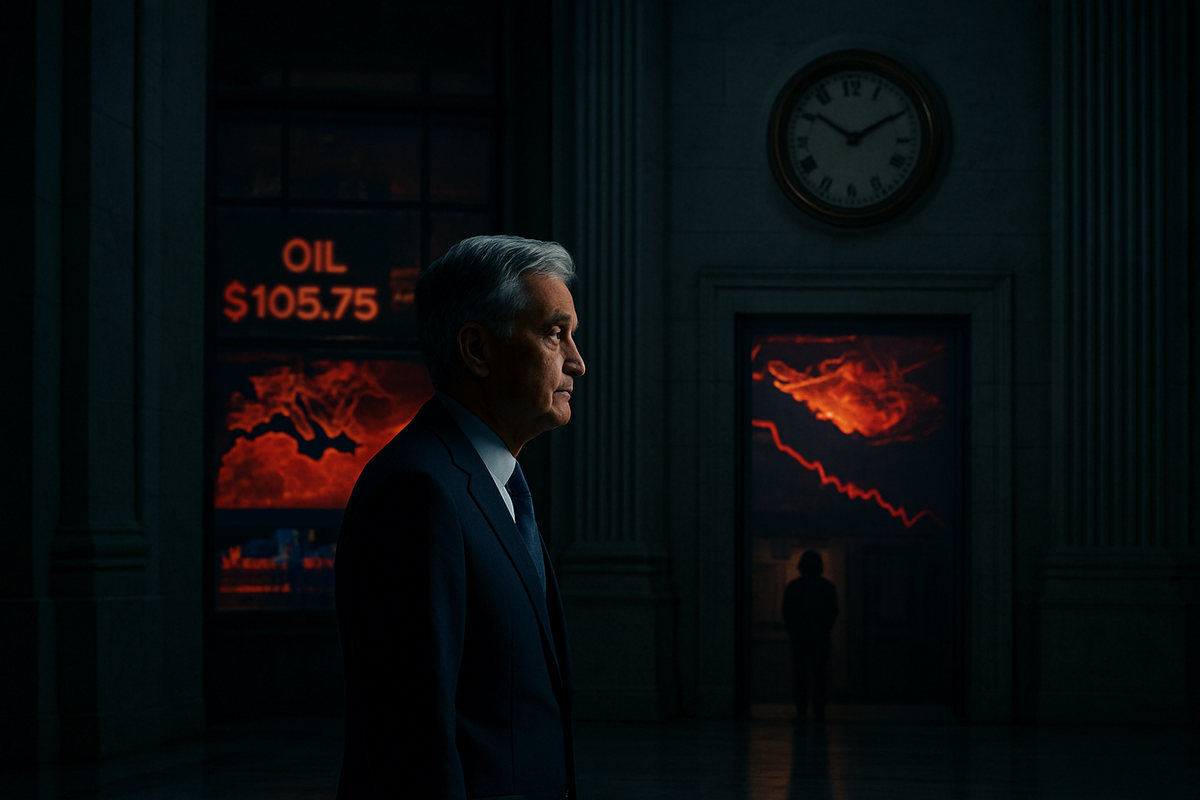
On March 18, 2026, the Federal Open Market Committee (FOMC) concluded its two-day policy meeting by voting unanimously to maintain the federal funds rate at its current target range of 3.5% to 3.75%. The decision reflects a sudden and dramatic shift in the central bank’s priorities, as the burgeoning conflict in the Middle East has sent energy prices soaring, effectively freezing the rate-cutting cycle that many investors had expected to continue through the spring.
The "hawkish pause" comes at a precarious moment for Jerome Powell, who is entering his final sixty days as Fed Chair. With the U.S. labor market showing visible signs of cracks and a geopolitical energy shock threatening to reignite inflation, Powell faces the ultimate test of his legacy: maintaining central bank independence while the shadow of a contentious succession battle looms over Washington. Markets reacted with immediate volatility following the 2:00 PM ET announcement, as traders parsed the "Summary of Economic Projections" for clues on whether the Fed’s next move is a hike or a cut.
A Precarious Balance: Oil Shocks and Labor Fatigue
The Federal Reserve's decision to hold rates marks a significant departure from the narrative of early 2026. Just months ago, the consensus was that the Fed would continue easing to support a softening economy. However, the escalation of the "2026 Iran War" in late February—which led to the closure of the Strait of Hormuz—has fundamentally altered the economic landscape. Brent crude prices surged toward $110 per barrel in the weeks leading up to today’s meeting, dragging U.S. gasoline prices to a national average of $4.00 per gallon.
This energy-driven inflationary pressure collided head-on with a cooling domestic labor market. The February jobs report, released earlier this month, shocked analysts by showing a loss of 92,000 jobs and an unemployment rate that ticked up to 4.4%. During his press conference today, Powell characterized the current situation as "extraordinarily complex," noting that while the energy shock is a supply-side issue, the Fed must remain vigilant against it unanchoring inflation expectations. "Our mandate is clear," Powell stated, "but the path to achieving it has been narrowed by external events beyond our control."
The timeline leading up to this decision was marked by intense debate within the FOMC. Several "dovish" members reportedly argued for a rate cut to stave off a recession, pointing to the weakness in white-collar hiring and corporate earnings. However, the "hawkish" faction, led by those concerned about the 0.8% estimated bump to global inflation caused by the oil crisis, ultimately won the day. The result is a defensive hold that acknowledges the risk of "stagflation"—a toxic mix of stagnant growth and high inflation.
Winners and Losers: Energy Surges while Consumers Retrench
The Fed’s decision and the underlying geopolitical crisis have created a stark divide in the equity markets. Energy giants have emerged as the primary beneficiaries of the current environment. Companies like ExxonMobil (NYSE: XOM) and Chevron (NYSE: CVX) have seen their shares climb as the spike in crude prices bolsters their refining and production margins. Investors are flocking to these stocks as a hedge against the inflation that the Fed is now struggling to contain.
Conversely, the consumer discretionary and retail sectors are feeling the pinch of $4 gas and high interest rates. Amazon.com, Inc. (NASDAQ: AMZN) and Walmart Inc. (NYSE: WMT) are facing a "double whammy": higher logistics and delivery costs due to fuel prices, and a consumer base that is increasingly wary of spending as the labor market softens. In today’s trading, these stocks saw significant sell-offs as the Fed’s "pause" signaled that no immediate relief in borrowing costs is on the horizon.
The banking sector also faces a complex outlook. While higher-for-longer rates typically benefit the net interest margins of giants like JPMorgan Chase & Co. (NYSE: JPM) and Bank of America Corp (NYSE: BAC), the rising threat of a recession increases the risk of credit defaults. Banking analysts noted today that the "inverted" or flat nature of the yield curve following the Fed's announcement suggests that the market is more worried about an economic slowdown than it is optimistic about sustained high interest rates.
The Succession Shadow and the Fight for Independence
The broader significance of today’s meeting cannot be overstated, as it takes place against the backdrop of a historic transition of power at the Federal Reserve. Jerome Powell’s term expires on May 15, 2026, and the political climate surrounding his successor, Kevin Warsh, has become increasingly toxic. The White House has been vocal in its desire for aggressive rate cuts to stimulate the economy ahead of the midterms, leading to public clashes between the administration and the central bank.
Powell’s insistence on a "pause" today is seen by many as a final act of institutional defiance. By refusing to cut rates in the face of political pressure, Powell is attempting to cement his legacy as a Chair who prioritized the Fed’s 2% inflation target over political expediency. This mirrors the historical precedent of Paul Volcker, who maintained high rates in the early 1980s despite intense public and political backlash to break the back of inflation.
Furthermore, the "2026 Iran War" has introduced a "geopolitical premium" into central bank policy that hasn't been seen since the 1970s. Central banks across the globe, including the European Central Bank, are watching the Fed’s move today as a bellwether. The ripple effect of the Fed's decision to prioritize inflation over growth in the face of a supply shock could lead to a coordinated global tightening—or at least a prolonged pause—that threatens to stifle global GDP growth for the remainder of the year.
What Comes Next: The "Succession Cliff" in May
Looking ahead, the market is laser-focused on the May FOMC meeting, which will be Powell’s last. The short-term possibility of a rate hike remains on the table if the Iran conflict escalates further and oil moves toward $130. However, most analysts believe the Fed will remain in a holding pattern until the leadership transition is resolved. The confirmation of Kevin Warsh remains stalled in the Senate, creating a "policy vacuum" that could lead to extreme market volatility in the early summer.
Investors should prepare for a period of "strategic pivots." If the labor market continues to shed jobs at the pace seen in February, the Fed may be forced to pivot back to cuts, regardless of where oil prices sit. This creates a high-stakes "game of chicken" between inflation and unemployment. The potential for a "hard landing"—where the economy enters a significant recession—has jumped to its highest level since the 2008 financial crisis, according to several Wall Street models.
Conclusion: A Legacy Defined by Uncertainty
The Federal Reserve's decision on March 18, 2026, will be remembered as the moment the "soft landing" narrative was pushed to the brink. By holding rates at 3.5%-3.75%, Jerome Powell has chosen a path of caution, prioritizing the long-term stability of the dollar over the immediate pressures of a weakening labor market and a vocal White House.
For investors, the key takeaways are clear: the era of easy money is not returning as quickly as hoped, and geopolitical risk is once again a primary driver of market valuations. Moving forward, the market will be hypersensitive to any signs of de-escalation in the Middle East or further deterioration in employment data. As Powell prepares to exit the stage in May, he leaves behind a central bank at a crossroads, facing a world that is more volatile and less predictable than at any point during his decade-long tenure.
This content is intended for informational purposes only and is not financial advice.