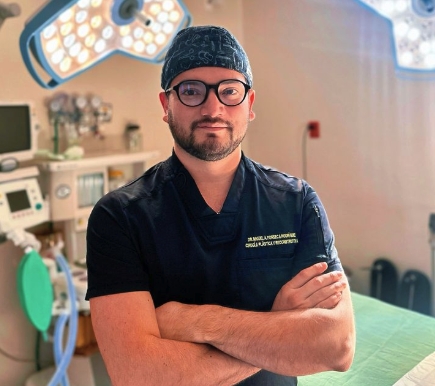
Plastic surgery has become part of everyday conversation. It is discussed openly, shared widely and, at times, simplified into before-and-after images that travel faster than context. Yet beyond visibility and trends, it remains a surgical specialty grounded in medical evaluation, technical training and patient safety.

Miguel Ángel Fonseca Rodríguez is a medical doctor specialized in aesthetic and reconstructive plastic surgery. His professional training includes studies at the Centro Médico Nacional de Occidente, and his practice is supported by official certification within the specialty. In a field where visibility can blur qualifications, formal training still defines the standard.
Clinical practice does not begin with transformation. It begins with assessment. Medical history, physical examination, anatomical analysis and a detailed discussion of expectations form the foundation of any procedure. Not every request translates into surgical indication. Part of responsible practice is determining candidacy, outlining realistic outcomes and, when necessary, advising against intervention.
Among the procedures he performs are body contour surgery, Brazilian Butt Lift (BBL), breast augmentation and reduction, mastopexy and blepharoplasty, as well as the Ribxcar technique aimed at waist definition. Each intervention requires a different evaluation process and technical planning.
Body contouring focuses on proportion rather than drastic alteration. Tissue quality, skin elasticity and overall health influence the surgical strategy. The BBL, widely discussed in recent years, demands strict safety protocols and careful fat transfer techniques. In breast surgery, motivations vary: aesthetic preferences, physical discomfort or structural changes following pregnancy or weight fluctuations.
The Ribxcar technique, associated with enhanced waist definition, is not universally indicated. It requires individualized analysis and clear criteria. Surgical decision-making in this context relies on anatomy and feasibility rather than trend.
Facial procedures such as blepharoplasty often involve subtler objectives. Many patients seek to reduce signs of fatigue while preserving natural expression. Precision becomes essential, as minor adjustments can significantly influence facial balance.
In a landscape shaped by rapid information exchange, the underlying medical framework remains consistent. Plastic surgery involves operating room protocols, multidisciplinary coordination, anesthesia management and structured postoperative follow-up. These components, though less visible than final results, define professional practice.
The specialty continues to evolve, but its core principles remain unchanged: evaluation, indication and execution under established medical standards. Visibility may fluctuate. Clinical rigor does not.

Media Contact
Company Name: Leagenzia
Contact Person: Luis Mendez
Email: Send Email
Country: United States
Website: https://www.instagram.com/leagenzia/