The final weeks of 2025 have proven to be a watershed moment for the aerospace industry as Rocket Lab USA, Inc. (Nasdaq:RKLB) solidified its transition from a niche launch provider to a heavyweight defense prime. On December 23, 2025, analysts at Needham sent shockwaves through the market by raising their price target for the company to a staggering $90, a move precipitated by the announcement of a massive $816 million contract with the U.S. Space Force’s Space Development Agency (SDA).
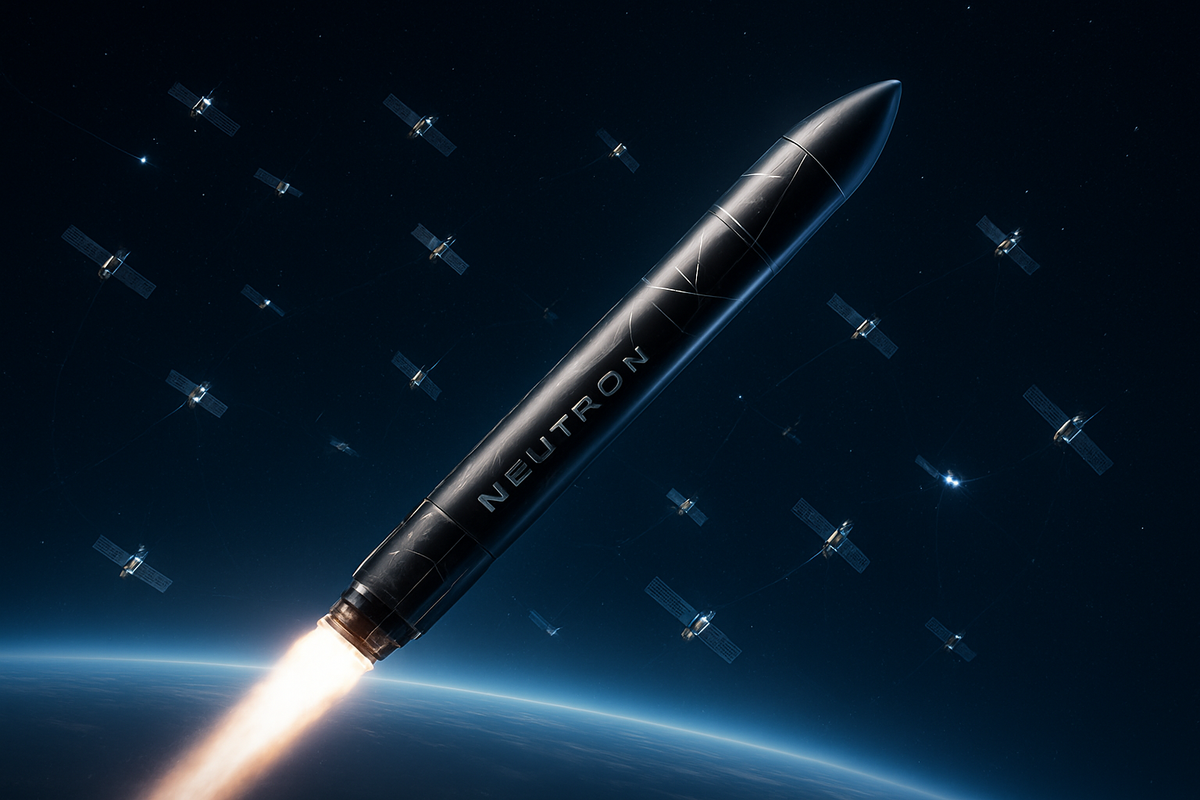
This landmark deal and the subsequent analyst optimism underscore a fundamental shift in the space economy. As Rocket Lab moves beyond its "Electron" rocket's success and prepares for the 2026 debut of its medium-lift "Neutron" vehicle, the company is capturing high-value government contracts that were once the exclusive domain of legacy aerospace giants. The $90 price target reflects a growing consensus that Rocket Lab’s vertically integrated business model—building both the rockets and the satellites they carry—is the new gold standard for national security space missions.
The SDA Contract: A Billion-Dollar Milestone
The catalyst for the recent market frenzy was the December 19, 2025, announcement that the SDA had selected Rocket Lab as a prime contractor for the Tracking Layer Tranche 3 (TRKT3) program. Under the terms of the $816 million agreement, Rocket Lab will design, manufacture, and operate a constellation of 18 satellites. These spacecraft are destined for the Proliferated Warfighter Space Architecture (PWSA), a high-priority military network designed to provide global missile warning and tracking, specifically targeting the rising threat of hypersonic missile systems.
The technical specifications of the deal highlight Rocket Lab’s internal capabilities. The 18 satellites will be built on the company’s proprietary "Lightning" spacecraft platform and will feature the "Phoenix" wide field-of-view infrared sensors. This level of vertical integration allows Rocket Lab to control costs and timelines more effectively than competitors who must outsource major components. While the base contract is valued at $816 million, industry analysts estimate the total capture value could approach $1 billion when accounting for Rocket Lab's role as a merchant supplier of components to other prime contractors within the same program.
This award follows a prior $515 million contract for the SDA’s Transport Layer, bringing Rocket Lab’s total portfolio with the agency to over $1.3 billion. The timeline for the TRKT3 satellites is aggressive, with production expected to ramp up through 2026 and 2027. The deal has effectively doubled Rocket Lab’s Space Systems backlog to $1.4 billion, providing the company with unprecedented revenue visibility for the next five years.
Winners and Losers in the New Space Race
The primary winner in this scenario is undoubtedly Rocket Lab (Nasdaq:RKLB). By securing "prime" status on a major defense contract, the company has broken into the elite circle of Tier-1 government contractors. This move validates the vision of CEO Peter Beck, who has long argued that launch is merely an "enabler" for the more lucrative satellite services and manufacturing sectors.
Conversely, legacy defense contractors such as Lockheed Martin (NYSE: LMT) and Northrop Grumman (NYSE: NOC) are facing a disruptive challenge. While these giants still hold massive contracts, the SDA’s shift toward "proliferated" constellations—hundreds of small, cheap satellites rather than a few billion-dollar ones—favors agile, vertically integrated players like Rocket Lab. The loss of market share in the SDA’s Tranche 3 awards suggests that the "Old Space" guard may need to significantly overhaul their cost structures to remain competitive in the rapid-deployment era.
In the small-satellite component market, companies like Redwire Corp (NYSE: RDW) and Sidus Space (Nasdaq:SIDU) may find themselves in a complex position. While Rocket Lab’s success validates the industry, its increasing vertical integration means it is less likely to outsource components, potentially squeezing smaller specialized suppliers. However, the overall expansion of the Space Force budget provides a "rising tide" that could benefit the broader ecosystem of space technology firms.
A Paradigm Shift in National Security Space
The significance of the $816 million deal extends far beyond Rocket Lab’s balance sheet. It marks a definitive shift in how the U.S. government approaches national security in orbit. The Proliferated Warfighter Space Architecture represents a move away from "exquisite" and vulnerable satellite systems toward a more resilient, distributed network. By awarding such a critical contract to a relatively young company, the Space Force is signaling that it prioritizes speed, innovation, and cost-efficiency over traditional procurement cycles.
This event also mirrors historical shifts in the defense industry, such as the emergence of SpaceX (Private) as a primary launch provider for the Department of Defense. Just as SpaceX broke the monopoly of the United Launch Alliance, Rocket Lab is now breaking the stranglehold on satellite manufacturing. This competition is likely to trigger regulatory and policy shifts aimed at further streamlining space acquisitions, potentially leading to more frequent, smaller-value contract awards that favor rapid iteration.
Furthermore, the focus on hypersonic missile tracking within the TRKT3 program highlights the escalating geopolitical stakes. With both Russia and China advancing their hypersonic capabilities, the U.S. is under immense pressure to deploy advanced sensing capabilities. Rocket Lab’s role in this mission places it at the very center of the 21st-century arms race, providing a level of "defensive moat" that few other growth-stage tech companies can claim.
The Road to Neutron: Upcoming Catalysts
While the satellite contract provides the financial foundation, the upcoming launch of the "Neutron" rocket remains the most anticipated catalyst for 2026. Neutron is designed to be a direct competitor to SpaceX’s Falcon 9, offering a reusable, medium-lift capability that can deploy entire satellite constellations in a single mission. During the Q3 2025 earnings call, Rocket Lab confirmed that while the maiden flight has moved to early 2026, the development of the "Archimedes" engines is nearing completion.
Investors are closely watching for several key milestones in the coming months:
- Archimedes Engine Testing: Successful full-duration hot-fire tests of the Archimedes engines will be a major de-risking event for the stock.
- Infrastructure Completion: The finalization of Launch Complex 3 at Wallops Island, Virginia, will signal that the company is ready for the physical integration of the Neutron vehicle.
- Potential M&A Activity: With a strengthened balance sheet, rumors are circulating that Rocket Lab may look to acquire specialized firms in laser communications or space-based data processing to further enhance its satellite platforms.
Summary and Market Outlook
The upgrade to a $90 price target by Needham reflects a new reality: Rocket Lab is no longer a "speculative" space stock, but a foundational player in the aerospace and defense sector. The $816 million SDA contract serves as a massive endorsement of the company's technical maturity and its ability to execute on complex, high-stakes government programs.
Moving forward, the market will be hyper-focused on the execution of the TRKT3 program and the progress of the Neutron rocket. Any delays in Neutron could lead to short-term volatility, but the massive backlog in Space Systems provides a significant cushion. For investors, the key takeaway is that Rocket Lab has successfully diversified its revenue streams, making it a unique play that combines the high growth of a tech startup with the stability of a defense prime. As we head into 2026, the "Space Race 2.0" is no longer just about getting to orbit—it's about what you do once you're there, and Rocket Lab is currently leading the pack.
This content is intended for informational purposes only and is not financial advice.