As the final trading days of 2025 unfold, a flurry of critical macroeconomic data has crystallized a new narrative for the year ahead. On this Wednesday, December 24, 2025, investors are digesting a complex mixture of lower-than-expected jobless claims and stubbornly persistent inflation signals. The data, released in a compressed schedule following a disruptive 43-day federal government shutdown earlier this autumn, suggests an economy that is neither cooling fast enough to warrant aggressive rate cuts nor slowing enough to threaten a recession.
The immediate market reaction has been one of cautious optimism, fueling a late-December "Santa Claus Rally" that has pushed major indices to new heights. While the Federal Reserve continues to signal a "higher-for-longer" stance relative to earlier 2025 expectations, the sheer resilience of the American consumer and the underlying strength of the labor market have provided a sturdy floor for equities. As we look toward 2026, the market is no longer bracing for a crash, but rather a "polarized resilience" where growth is concentrated in high-productivity sectors.
The data released this morning by the Department of Labor showed that initial jobless claims fell to 214,000 for the week ending December 20, outperforming the consensus estimate of 224,000. This figure suggests that despite the fiscal friction caused by the recent government shutdown, American corporations are hesitant to let go of workers. However, the report also highlighted a lingering concern: continuing claims have climbed to 1.923 million, a four-year high. This indicates a "low-hire, low-fire" equilibrium where those currently employed are safe, but the unemployed are finding it increasingly difficult to re-enter the workforce.
The inflation picture, provided by the Bureau of Economic Analysis (BEA) on Tuesday, added another layer of complexity. The Core Personal Consumption Expenditures (PCE) price index—the Fed’s preferred inflation gauge—rose to 2.9% on an annual basis for the third quarter, up from 2.6% in the second quarter. November’s monthly core PCE remained sticky at 2.6%. While these numbers are far below the post-pandemic peaks, they remain uncomfortably above the Federal Reserve's 2% target, effectively dampening hopes for a rapid series of interest rate cuts in early 2026.
This week’s data dump was particularly significant due to the backlog created by the 43-day government shutdown that paralyzed federal agencies in October and November. The lack of visibility during that period had led to heightened volatility and fears of a technical recession. The revelation that Q3 GDP was revised upward to a robust 4.3% has largely dispelled those fears, shifting the market’s focus from survival to the sustainability of growth in a high-interest-rate environment.
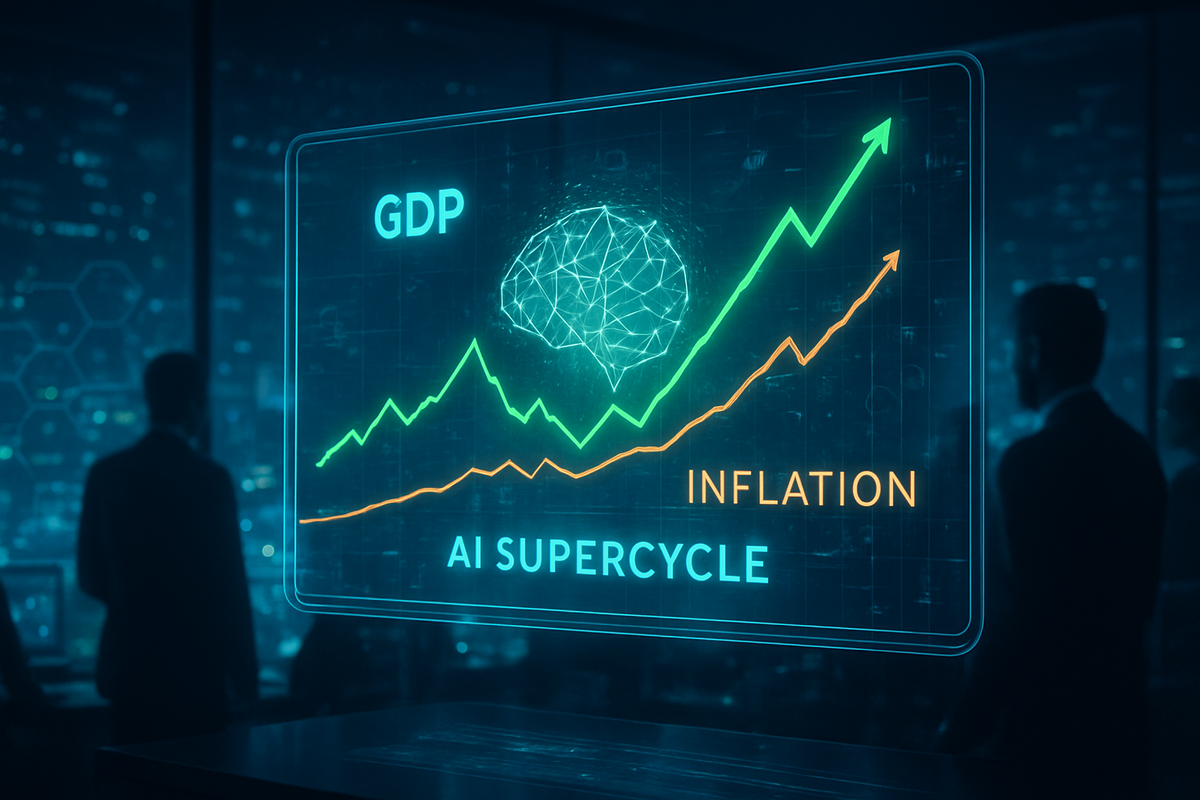
In this environment of resilient growth and elevated rates, the clear winners continue to be the titans of the "AI Supercycle." NVIDIA Corporation (NASDAQ: NVDA) and Microsoft Corporation (NASDAQ: MSFT) have seen renewed buying interest as investors bet that 2026 will be the year AI-driven productivity gains begin to offset higher labor and borrowing costs. These companies, with their massive cash reserves and dominant market positions, are less sensitive to the "sticky" inflation that plagues smaller competitors.
On the consumer side, Amazon.com, Inc. (NASDAQ: AMZN) has emerged as a primary beneficiary of the resilient labor market. With unemployment holding at 4.6% and wage growth stabilizing, consumer spending has remained surprisingly buoyant through the holiday season. Amazon’s logistics efficiency and cloud dominance allow it to navigate the inflationary environment better than traditional brick-and-mortar retailers, who are struggling with higher inventory financing costs.
Conversely, the "losers" in this narrative are the interest-rate-sensitive sectors and small-cap companies represented by the Russell 2000 Index (NYSEARCA:IWM). As the prospect of aggressive Fed cuts fades into 2026, smaller firms with floating-rate debt or a need for constant refinancing are facing a squeeze. Similarly, the banking sector presents a mixed bag; while JPMorgan Chase & Co. (NYSE: JPM) benefits from higher net interest margins, smaller regional banks remain under pressure as the cost of deposits stays high, limiting their ability to compete for loans in a stagnant hiring environment.
The wider significance of this week’s data cannot be overstated. It marks the definitive end of the "post-pandemic recovery" era and the beginning of what economists are calling the "Productivity Pivot." The fact that the economy grew at 4.3% while the Fed maintained rates above 3.5% suggests that the neutral rate of interest (R-star) may be higher than previously thought. This fits into a broader trend of structural shifts in the global economy, including the re-shoring of manufacturing and the massive capital expenditures required for the energy transition and AI infrastructure.
Historically, this period draws comparisons to the mid-1990s, where a period of high rates was offset by a massive technological boom (the internet), leading to a prolonged era of growth without runaway inflation. However, the current situation is complicated by fiscal volatility—evidenced by the recent government shutdown—and the looming impact of trade tariffs. The ripple effects of these fiscal frictions are expected to keep the 2026 outlook "partly cloudy" for the first half of the year as the market adjusts to a less accommodative Federal Reserve.
Furthermore, the regulatory environment is becoming a critical factor. As the AI supercycle accelerates, the intersection of antitrust policy and industrial strategy will likely dictate which tech giants can maintain their momentum. The policy implications of sticky inflation also mean that the "Fed Put"—the idea that the central bank will always step in to save the market—is now much further out of the money than it was in the previous decade.
Looking ahead to 2026, the market narrative is shifting toward a "Hawkish Cut" scenario. Investors should expect the Federal Reserve to implement only two or three 25-basis-point cuts throughout the entire year, a significant reduction from the more aggressive easing cycles priced in just six months ago. The strategic pivot for many firms will involve moving away from growth-at-all-costs toward a focus on free cash flow and margin preservation.
In the short term, the first quarter of 2026 will likely see a period of consolidation as the market digests the full impact of the late-2025 data. The potential for a "no-man's land" in the labor market—where unemployment drifts toward 5.0% without a corresponding increase in layoffs—remains the primary risk. If hiring does not pick up by mid-2026, the "soft landing" narrative could quickly pivot toward a late-year recession risk, currently estimated by major analysts at a 35% probability.
In summary, the macroeconomic data of late December 2025 has provided a clear, if challenging, roadmap for the coming year. The combination of a resilient labor market, evidenced by the 214,000 jobless claims, and the 2.6% core PCE inflation signals a "higher-for-longer" reality that will define the 2026 market. The era of easy money is firmly in the rearview mirror, replaced by a cycle driven by technological productivity and fiscal resilience.
For investors, the key takeaways are clear: quality and cash flow are king. The dominance of the S&P 500 (NYSEARCA:SPY) is likely to continue, but the gap between the "AI winners" and the rest of the market will widen. Moving forward, the most important metrics to watch will be the monthly hiring numbers and any signs that sticky inflation is finally beginning to break toward the 2% target. As we enter 2026, the market is no longer looking for a rescue from the Fed, but rather for the fundamental strength to stand on its own.
This content is intended for informational purposes only and is not financial advice.