As the final trading bells of 2025 ring out, the global bond market stands at its most significant inflection point in nearly a decade. After a year defined by the "higher-for-longer" mantra finally giving way to a series of strategic rate cuts, investors are increasingly turning to the iShares U.S. Aggregate Bond Index ETF (TSX: XAGG) as the definitive barometer for what lies ahead. The fund, which tracks the broad spectrum of U.S. investment-grade debt, has become a focal point for institutional and retail investors alike as they attempt to decode the Federal Reserve’s roadmap for 2026.
The immediate implications are clear: the era of extreme volatility in fixed income appears to be transitioning into a "coupon-plus" environment. With the Federal Reserve having successfully guided the economy toward a "soft landing" throughout 2025, the focus has shifted from surviving inflation to capturing yield before the next leg of the easing cycle begins. For holders of XAGG, the year-end data reflects a market that is no longer in a defensive crouch but is instead positioning for a more normalized, albeit lower-growth, economic reality in 2026.
The Great Normalization: A 2025 Retrospective
The story of the bond market in 2025 was one of resilience and recovery. Following the aggressive tightening cycle of previous years, the Federal Reserve concluded its December 2025 meeting by lowering the federal funds rate to a range of 3.50%–3.75%. This move followed a steady cadence of cuts that began in late 2024, providing a tailwind for bond prices. The iShares U.S. Aggregate Bond Index ETF (TSX: XAGG) capitalized on this shift, delivering a total year-to-date return of approximately 7.41% as of December 31, 2025. This performance marks a stark contrast to the "lost years" of 2022 and 2023, signaling that the "bond bear" has officially been put to rest.
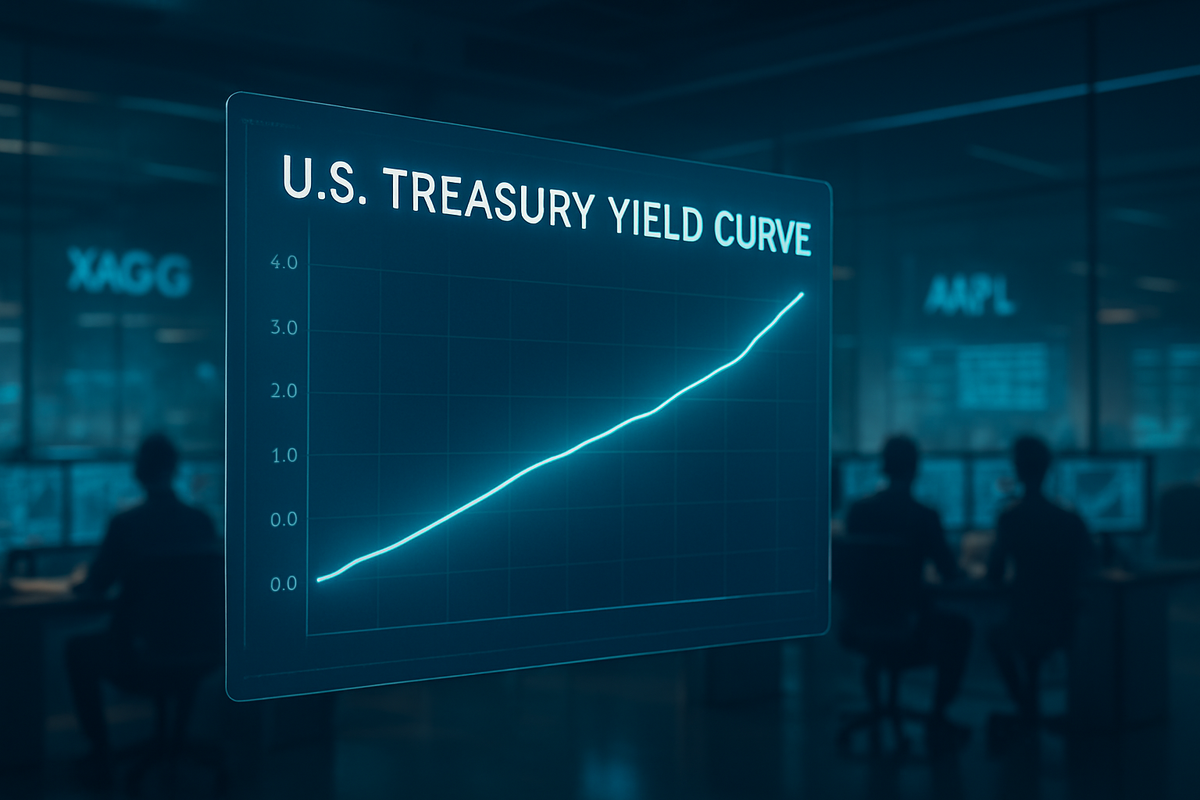
Throughout the year, the yield curve—a critical indicator of economic health—underwent a dramatic transformation. After being inverted for a record-breaking 15 months, the spread between the 2-year and 10-year U.S. Treasury notes finally normalized in late 2025. The 10-year Treasury yield ended the year near 4.14%, while the 2-year note settled around 3.48%. This "bull steepening" of the curve suggests that the market believes the Fed has successfully tamed inflation without triggering a deep recession, a feat many economists thought impossible just eighteen months ago.
Key stakeholders, including major asset managers like BlackRock, Inc. (NYSE: BLK), the parent company of iShares, have noted a massive rotation out of cash and money market funds into intermediate-duration products. The effective duration of XAGG currently sits at approximately 6.07 years, making it a "sweet spot" for those looking to lock in yields of around 4.17% before further anticipated cuts in 2026. The initial market reaction to the Fed's December dot plot was one of cautious optimism, as the central bank signaled a path toward a "neutral" rate of roughly 3.00% by the end of the coming year.
Winners and Losers in a Stabilizing Rate Environment
The shift in the interest rate environment has created a clear divide between winners and losers across the corporate landscape. Large-cap financial institutions, particularly those with massive debt-servicing arms like JPMorgan Chase & Co. (NYSE: JPM) and Bank of America Corp (NYSE: BAC), are emerging as primary beneficiaries. As rates stabilize, these banks are seeing a normalization of net interest margins and a resurgence in corporate bond issuance, which provides a steady stream of underwriting fees. Furthermore, as major holdings within the XAGG portfolio, their high-grade corporate debt remains in high demand from yield-hungry investors.
Technology giants with robust balance sheets, such as Apple Inc. (NASDAQ: AAPL), also stand to win. These companies have been able to issue long-term debt at attractive rates during the late-2025 dip, further fortifying their "fortress balance sheets." For Apple, the ability to refinance older, higher-coupon debt into the current 4% range provides a direct boost to their bottom line. Conversely, the "losers" in this environment are often found in the highly leveraged "junk bond" or high-yield sectors. As the Fed moves toward a neutral stance, the appetite for riskier credit has waned in favor of the safety and now-respectable yields offered by investment-grade ETFs like XAGG and its primary competitor, the Vanguard Total Bond Market ETF (NASDAQ: BND).
Real estate investment trusts (REITs), such as Prologis, Inc. (NYSE: PLD), are seeing a mixed bag. While lower rates reduce their borrowing costs, the slow-growth GDP projections for 2026 (estimated between 1.5% and 1.9%) could dampen demand for industrial and commercial space. However, for fixed-income investors, the stability of the mortgage-backed securities (MBS) market—which accounts for roughly 26% of XAGG’s holdings—has provided a reliable floor for the fund's valuation, as the housing market begins to thaw under the warmth of lower mortgage rates.
The Policy Path and the Powell Succession
The wider significance of the current bond market setup cannot be overstated. We are witnessing the end of the "inflation-first" era of monetary policy. For the first time since the pandemic, the Federal Reserve is balancing its dual mandate of price stability and maximum employment with equal weight. This shift fits into a broader industry trend of "bond-as-ballast," where fixed income is once again serving its traditional role as a diversifier against equity market volatility. The historical precedent for this is the mid-1990s "soft landing" under Alan Greenspan, which ushered in a period of sustained, non-inflationary growth.
However, a significant geopolitical and policy ripple effect looms on the horizon: the expiration of Jerome Powell’s term as Fed Chair in May 2026. Markets are already beginning to price in "leadership uncertainty," which could lead to increased volatility in the 5-to-7-year "belly" of the yield curve. Whoever succeeds Powell will inherit an economy that is growing but fragile, with PCE inflation still hovering around 2.4%—slightly above the 2% target. This "sticky" inflation, driven by structural factors like trade tariffs and a tight labor market, means the Fed's path to 3% will be anything but a straight line.
Furthermore, the ongoing process of Quantitative Tightening (QT) remains a wildcard. While the Fed has slowed the runoff of its balance sheet, the continued reduction of liquidity could clash with the Treasury's need to fund large fiscal deficits. This potential "liquidity tug-of-war" is a key reason why the yield on XAGG remains elevated compared to the previous decade's lows. It represents a permanent shift in the cost of capital that will influence everything from corporate M&A to consumer credit for years to come.
Looking Ahead: The 2026 Roadmap
As we move into the first quarter of 2026, the short-term strategy for fixed-income investors will likely focus on "locking in" current yields. With the Fed projected to cut rates only once or twice more in 2026, the window to capture 4%+ yields on high-quality debt is closing. Market participants should expect a strategic pivot toward bond laddering, a technique that mitigates the risk of the Fed pausing its easing cycle if inflation proves more stubborn than anticipated.
In the long term, the primary challenge will be navigating the transition to a new Federal Reserve leadership. If a more hawkish successor is named, we could see a rapid repricing of the long end of the curve, potentially hurting the capital appreciation gains XAGG saw in 2025. Conversely, a dovish appointment could trigger a final rally in bond prices, pushing yields toward the 3% mark. Investors must also watch for "fiscal-monetary friction," where government spending levels may force the Fed to keep rates higher than the "neutral" 3% target to counteract inflationary pressures.
Final Thoughts: A New Era for the 60/40 Portfolio
The performance of the iShares U.S. Aggregate Bond Index ETF (TSX: XAGG) in late 2025 serves as a testament to the return of "sanity" in the financial markets. After years of being sidelined by near-zero rates and then crushed by rapid hikes, bonds have reclaimed their rightful place at the core of a balanced portfolio. The key takeaway for the end of 2025 is that the "income" is finally back in "fixed income," providing a significant buffer for investors against any potential economic headwinds in 2026.
Moving forward, the market will be characterized by lower but more stable returns. The days of double-digit gains or losses in the "Agg" are likely over, replaced by a steady 4-5% total return profile driven primarily by coupons. As we enter 2026, investors should keep a close eye on monthly PCE inflation prints and any signals regarding the Fed Chair succession. The bond market has found its footing, but the path to the "neutral rate" remains a narrow one, requiring both the Fed and investors to move with precision and caution.
This content is intended for informational purposes only and is not financial advice.