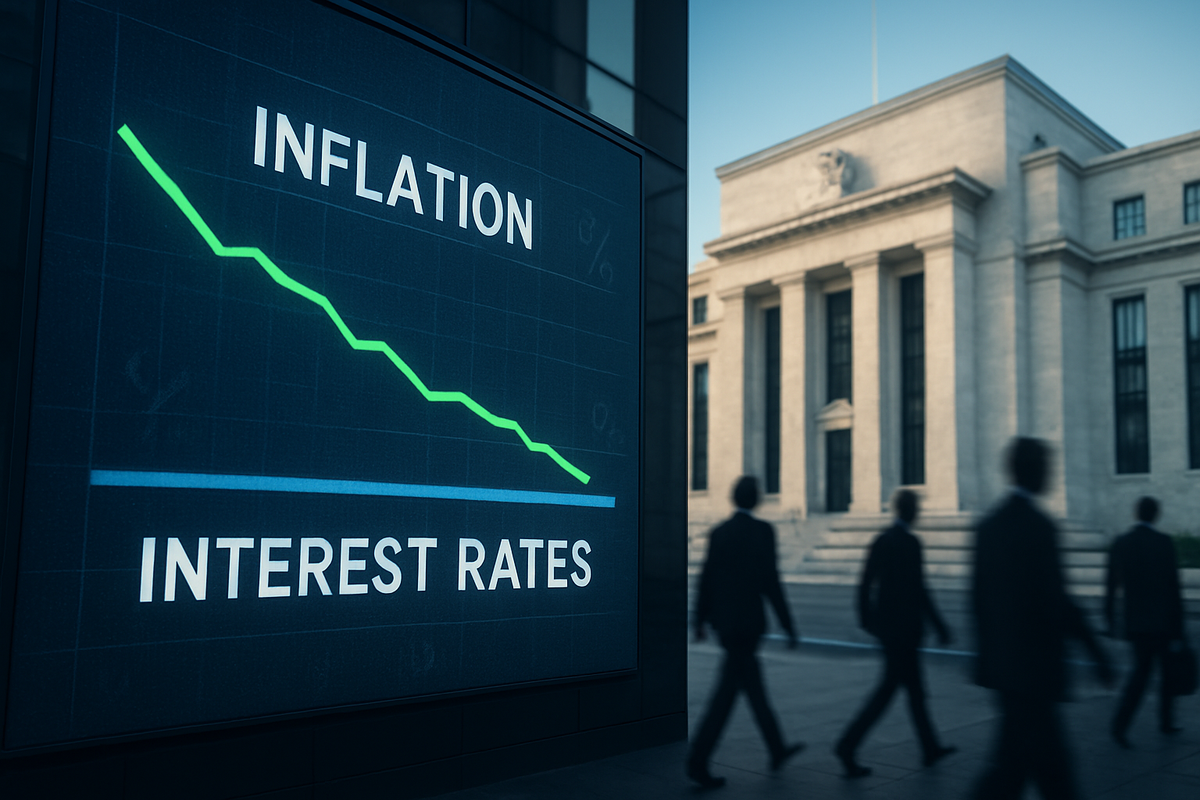
The United States Department of Labor released the December 2025 Consumer Price Index (CPI) report on January 13, 2026, revealing a significant milestone in the post-pandemic economic recovery. Core CPI—a critical metric that excludes volatile food and energy costs—moderated to a 2.6% annual pace, marking its slowest rate of growth since March 2021. While headline inflation remained steady at 2.7%, the "cooling" seen in the core data suggests that the underlying price pressures which plagued the economy for years are finally reaching a state of relative stability.
This data comes at a pivotal moment for the Federal Reserve, reinforcing the market's widespread belief that the central bank will maintain interest rates at their current levels during the upcoming January meeting. However, the initial optimism in the equities market was tempered by a mix of disappointing bank earnings and heightened geopolitical tensions. While the S&P 500 initially surged to an intraday record high, the gains proved fleeting as investors weighed the positive inflation data against broader macroeconomic uncertainties and shifting geopolitical policies.
Deciphering the December Data: A Balanced Path for Prices
The December report showed that the monthly headline CPI rose by 0.3%, bringing the year-over-year figure to 2.7%. This result aligned perfectly with economist expectations, suggesting that the era of massive inflationary surprises may be coming to an end. The core index’s 0.2% monthly increase was the highlight for many analysts, as it confirmed a downward trajectory that has been in place for several months. Shelter costs, which have remained stubbornly high throughout 2025, rose another 0.4% in December, though this was offset by declines in other sectors like used vehicles, which saw prices drop by 1.1%.
The timeline leading up to this report was marked by volatility. Following a brief government shutdown in late 2025 that distorted some economic data, the December figures were viewed as the first "clean" read on the economy in several months. Stakeholders across the financial spectrum, from retail investors to institutional fund managers, had been waiting for confirmation that the Fed’s restrictive monetary policy was successfully anchoring long-term inflation expectations without causing a severe recessionary dip.
Initial market reactions were a whirlwind of activity. Immediately following the 8:30 a.m. ET release, stock futures spiked, and the S&P 500 briefly touched a record high of 7,030. However, the rally was short-lived. As the trading day progressed, a combination of factors—including a hawkish tone from some Fed officials and a surprise tariff threat from the White House regarding countries doing business with Iran—pushed investors back toward a more defensive posture. By the closing bell, the index had surrendered its gains, finishing slightly in the red.
Winners and Losers: Corporate Performance in a Post-Inflationary World
The cooling inflation data provided a mixed bag for major public companies, particularly as it coincided with the start of the fourth-quarter earnings season. Intel Corporation (NASDAQ: INTC) and Advanced Micro Devices (NASDAQ: AMD) emerged as notable gainers. The semiconductor giants were lifted by a KeyBanc upgrade, with analysts citing "unprecedented" demand for AI-related server CPUs. Intel specifically reported that its server CPU capacity is virtually sold out through the end of 2026, showcasing how the tech sector continues to decouple from broader inflationary concerns through secular growth trends.
Conversely, the financial sector faced a difficult day. JPMorgan Chase & Co. (NYSE: JPM) saw its shares tumble by 4.2% after a disappointing outlook on investment-banking fees, despite beating top-line profit estimates. The banking sector was further rattled by comments from CEO Jamie Dimon regarding a proposed 10% cap on credit card interest rates. This regulatory shadow cast a pall over the industry, dragging down Visa Inc. (NYSE: V) and Mastercard Incorporated (NYSE: MA), both of which fell more than 4% as investors worried about the potential impact on transaction margins and interest income.
The transportation sector also showed signs of strain. Delta Air Lines (NYSE: DAL) dropped approximately 6% after providing a 2026 profit forecast that fell short of Wall Street's consensus. While fuel costs have moderated—with gasoline prices down 3.4% on a 12-month basis—airlines are struggling with rising labor costs and a leveling off in domestic travel demand. Meanwhile, L3Harris Technologies (NYSE: LHX) surged 13% after securing a $1 billion investment from the Department of Defense, highlighting how defense and aerospace remain a "safe haven" for capital amidst shifting economic data.
Broad Significance: The New Macroeconomic Reality
The December CPI report is more than just a data point; it represents the solidification of a "higher-for-longer" narrative that is different from the one seen in 2024. In the past, 2.6% core inflation might have triggered calls for immediate rate cuts. However, in the current environment, the Federal Reserve appears content to sit on its hands. The 2.7% headline rate remains above the Fed's 2% target, and with the labor market still showing signs of resilience, there is little pressure on Chairman Jerome Powell to pivot toward easing too early.
This event fits into a broader trend of "normalization" after the post-COVID price shocks. We are seeing a shift where goods-deflation is balancing out services-inflation. Historically, when core CPI hits these multi-year lows, it often precedes a period of lower market volatility. However, the current geopolitical landscape—specifically the threat of new 25% tariffs on Iran-linked trade—adds a layer of complexity. If new tariffs are implemented, the progress made on "goods inflation" could be reversed almost overnight, forcing the Fed into an even more difficult corner.
Furthermore, the focus is shifting from "inflation levels" to "regulatory impact." As seen with the reaction to the proposed credit card interest caps, markets are becoming increasingly sensitive to policy shifts that could squeeze corporate margins. The December inflation report confirms that the "inflation problem" is being managed, but it also signals that the next phase of market movement will be driven by earnings quality and government policy rather than just consumer price movements.
Looking Ahead: The Road to June 2026
The immediate future for the Federal Reserve seems set. Fed funds futures currently show a 95% probability of a rate pause at the January meeting. The market has pushed back expectations for the first rate cut of 2026 all the way to June, with some analysts now predicting only one or two total cuts for the entire year. This shift reflects a cautious optimism: the economy is strong enough to handle current rates, and inflation is falling slowly enough that a "victory" cannot yet be declared.
In the short term, investors should prepare for continued volatility in the banking and retail sectors as they navigate new regulatory proposals and the end of the holiday spending cycle. Strategically, companies may need to pivot away from price-hiking as a primary driver of revenue growth and return to volume-based growth. This transition will be easier for tech and AI-focused firms than for traditional consumer discretionary companies.
The potential for a "no landing" scenario—where the economy continues to grow while inflation hovers just above the target—is becoming the baseline expectation. While this avoids a recession, it also means that the "cheap money" era is not returning anytime soon. Markets will likely remain range-bound until more clarity emerges regarding the impact of proposed 2026 trade policies and the final trajectory of shelter costs in the second half of the year.
Summary: A Milestone Met with Caution
The December 2025 inflation report serves as a landmark moment, bringing core CPI to its lowest level in nearly five years. The 2.6% reading is a testament to the effectiveness of the Federal Reserve's prolonged tightening cycle and the easing of global supply chain pressures. However, the market's tepid reaction underscores that inflation is no longer the only variable in the equation. Earnings health, regulatory changes, and geopolitical risks have reclaimed their spots at the top of the investor worry list.
Moving forward, the primary takeaway for investors is one of "stability over stimulus." The Federal Reserve is unlikely to come to the market's rescue with rate cuts in the first half of 2026, but the absence of an inflation spike provides a predictable floor for asset valuations. The "Goldilocks" scenario of cooling prices and steady growth remains intact, but the margin for error has narrowed.
In the coming months, the focus will shift toward the February and March CPI releases to see if the "shelter" component finally breaks lower. Investors should also keep a close eye on the implementation of any new trade tariffs, as these could act as a new inflationary catalyst. For now, the US economy is walking a fine line, and while the inflation dragon has been tamed, it has not yet been defeated.
This content is intended for informational purposes only and is not financial advice