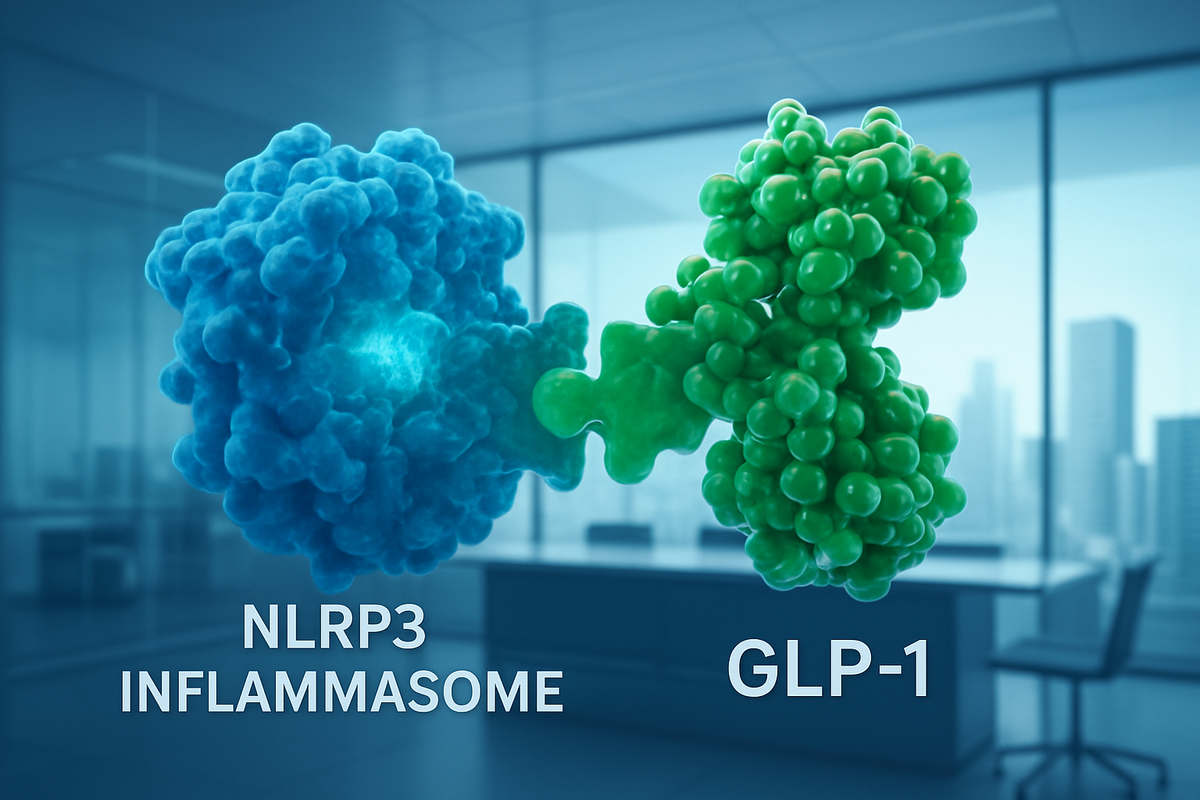
In a bold move to solidify its dominance in the cardiometabolic market, Eli Lilly and Company (NYSE: LLY) announced on January 7, 2026, that it has entered into a definitive agreement to acquire Ventyx Biosciences (NASDAQ: VTYX) for approximately $1.2 billion. The all-cash transaction, priced at $14.00 per share, represents a significant 62% premium over Ventyx's recent trading average. The deal signals Lilly’s transition from a focus on pure weight loss toward a more holistic "metabolic health" strategy, aiming to address the chronic inflammation that often persists in patients even after significant weight reduction.
The acquisition is centered on Ventyx’s pioneering work in NLRP3 (NOD-like receptor pyrin domain-containing 3) inhibitors—a class of drugs that act as a "master switch" for the body's innate immune response. By integrating these anti-inflammatory assets with its industry-leading GLP-1 portfolio, including Zepbound and Mounjaro, Eli Lilly is positioning itself to treat a broader spectrum of obesity-related complications, ranging from cardiovascular disease to neurodegenerative disorders like Parkinson’s.
The Road to the Acquisition
The path to this acquisition was paved by clinical breakthroughs in late 2025. Ventyx Biosciences had been a company to watch since October 2025, when it released Phase II data for its lead candidate, VTX3232. This drug is a CNS-penetrant NLRP3 inhibitor, meaning it can cross the blood-brain barrier to treat inflammation within the central nervous system. The data showed that VTX3232 reduced high-sensitivity C-reactive protein (hsCRP)—a critical marker of systemic inflammation—by nearly 80% in patients with obesity and high cardiovascular risk.
Leading up to the January 7 announcement, rumors of a deal began to swirl after the Wall Street Journal reported high-level talks between the two firms. Historically, Sanofi (NASDAQ: SNY) had held a stake in Ventyx, providing a $27 million investment in 2024 that included a right of first negotiation for VTX3232. However, Eli Lilly’s aggressive $1.2 billion offer effectively bypassed earlier partnerships, as Lilly sought to secure the asset exclusively to pair with its incretin backbone. The deal is expected to close in the first half of 2026, following standard regulatory approvals and a vote by Ventyx shareholders.
Winners and Losers in the Metabolic Arena
Eli Lilly and Company (NYSE: LLY) stands as the primary winner in this transaction. By acquiring Ventyx, Lilly secures a "moat" around its GLP-1 franchise, addressing the "residual inflammation" that weight loss alone cannot always fix. This allows Lilly to market a more comprehensive treatment regimen, potentially extending the patent life and clinical utility of its metabolic portfolio. Ventyx Biosciences (NASDAQ: VTYX) shareholders also benefit from a massive 62% premium, a welcome outcome after the biotech sector faced volatility throughout 2024 and 2025.
On the other side of the ledger, Sanofi (NASDAQ: SNY) may be viewed as having lost a strategic opportunity. By failing to secure Ventyx’s NLRP3 assets for its own pipeline, Sanofi loses a key foothold in the "inflammation-obesity nexus" to a much larger competitor. Similarly, Novo Nordisk (NYSE: NVO) faces increased pressure; while Novo remains a leader in the GLP-1 space with Wegovy, Lilly’s move into oral NLRP3 inhibitors gives it a potential "next-generation" combination therapy that Novo has yet to match in the clinic. Smaller biotech firms focusing on the NLRP3 pathway, such as those in the private sector or early-stage public companies, may see a "halo effect" as investors look for the next acquisition target in the space.
Broader Significance: The Convergence of Immunology and Obesity
This acquisition highlights a major shift in the pharmaceutical industry: the convergence of immunology and metabolic medicine. For years, obesity was treated primarily as a caloric imbalance; however, the emergence of NLRP3 inhibitors confirms the industry's new consensus that obesity is a chronic inflammatory state. By targeting the NLRP3 inflammasome, Lilly is following a historical precedent set by the "statins" era, where treating the underlying biological markers (like cholesterol) became as important as treating the symptoms of heart disease.
The deal also reflects the "GLP-1 Cash Engine" phenomenon. Throughout 2025, Lilly and Novo Nordisk generated unprecedented cash flows from their weight-loss drugs. This capital is now being deployed to strip-mine the biotech sector for innovative assets that can hedge against the eventual "patent cliff" of current blockbusters. Regulatory bodies, including the FDA, have shown an increasing openness to "combination protocols" that pair weight-loss agents with anti-inflammatories, suggesting a favorable path forward for Lilly’s newly acquired assets.
The Future: Toward a New Standard of Care
In the short term, the market will be looking for Phase IIb and Phase III trial designs that combine Lilly’s tirzepatide with Ventyx’s VTX3232. If these trials show superior outcomes in preventing heart attacks, strokes, or the progression of MASH (metabolic dysfunction-associated steatohepatitis), Lilly could define a new standard of care for the next decade. There is also significant excitement regarding the neuroprotective potential of these drugs; Lilly may pivot some of Ventyx's assets toward Alzheimer’s and Parkinson’s research, where neuroinflammation is a primary driver of disease progression.
Challenges do remain. Integrating a specialized biotech like Ventyx into a global giant requires careful management of R&D talent. Furthermore, the high price tag of combination therapies could face pushback from insurance payers already struggling with the costs of GLP-1 drugs. Lilly will likely need to demonstrate not just better health outcomes, but long-term cost savings through the prevention of expensive chronic conditions like end-stage heart failure or dementia.
Wrap-up and Investor Outlook
The acquisition of Ventyx Biosciences marks the first major M&A headline of 2026 and a pivotal moment for Eli Lilly. By spending $1.2 billion to capture the NLRP3 "master switch," Lilly is evolving from a provider of weight-loss injections into a holistic metabolic health powerhouse. The move effectively addresses market concerns regarding the long-term growth of the GLP-1 pipeline by adding a sophisticated, oral anti-inflammatory layer to its existing blockbuster treatments.
For investors, the coming months will be defined by the successful closing of the deal and the release of initial integration plans. The "inflammation-obesity nexus" is no longer a theoretical concept; it is now a billion-dollar clinical frontier. Watch for Eli Lilly to continue its acquisition spree as it seeks to stay one step ahead of Novo Nordisk and other challengers in the race to redefine 21st-century medicine.
This content is intended for informational purposes only and is not financial advice.