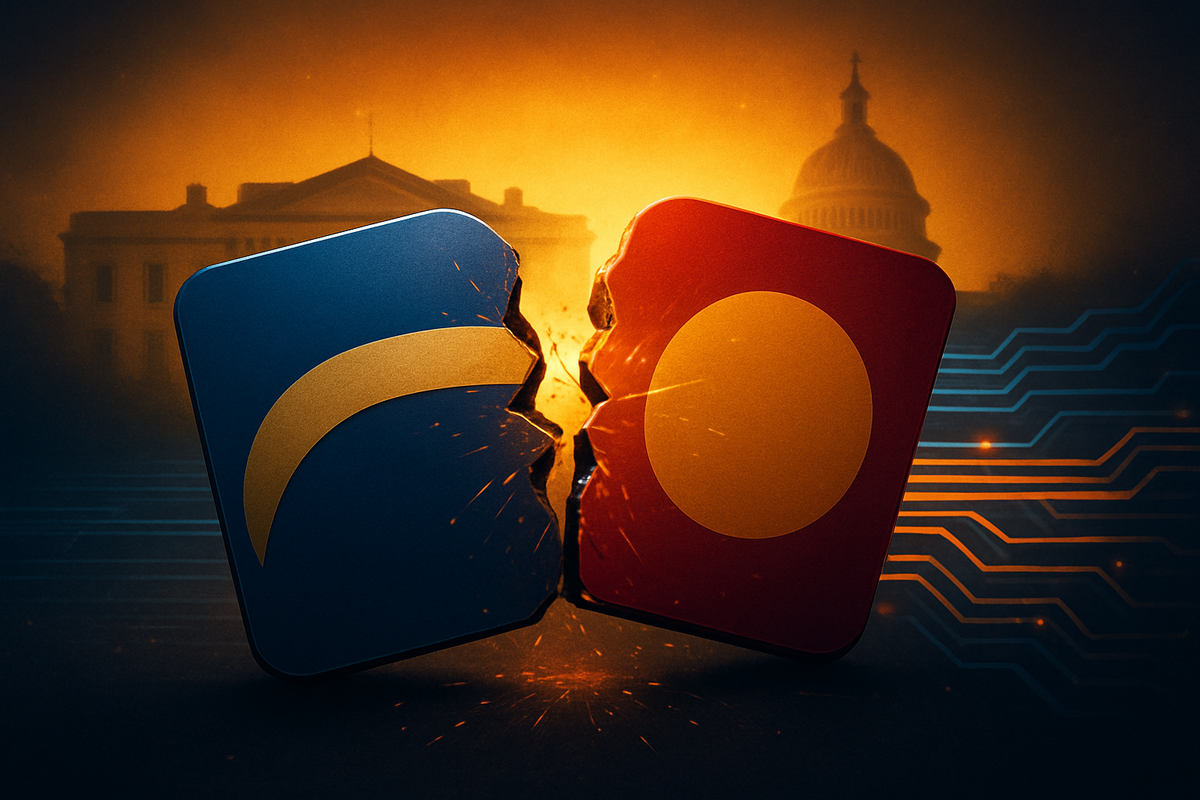
In a move that has sent shockwaves through the financial sector and the corridors of Capitol Hill, President Donald Trump officially endorsed the Credit Card Competition Act (CCCA) on January 13, 2026. Characterizing the prevailing credit card "swipe fees" as a "hidden tax" and an "out-of-control ripoff" on the American family, the President’s vocal support via Truth Social has transformed a long-stalled legislative effort into a primary policy objective for the 119th Congress. The endorsement marks a significant populist pivot, signaling a willingness to confront the powerful banking lobby in favor of lowering consumer costs and supporting small businesses.
The immediate implications of this endorsement were felt across the global equity markets. As the news broke, shares of payment giants and major credit-issuing banks plummeted, while retail stocks saw a modest uptick. The CCCA, which seeks to break the ironclad grip of the Visa-Mastercard duopoly by requiring large financial institutions to offer alternative routing networks, now has a clear, bipartisan path to passage. Analysts suggest this move could represent the most substantial overhaul of the American payments infrastructure in decades, potentially stripping billions of dollars in revenue from Wall Street and redistributing it to the retail economy.
Breaking the Duopoly: The Rise of the CCCA
The Credit Card Competition Act was reintroduced in the early days of the 119th Congress by a bipartisan coalition led by Senators Roger Marshall (R-KS) and Dick Durbin (D-IL). While versions of the bill have circulated for years, they often languished under heavy opposition from the banking industry. However, the timeline accelerated rapidly following President Trump’s January 13 endorsement. By January 15, Senate Banking Committee Chair Tim Scott (R-SC) announced a commitment to hold expedited hearings, and a formal markup in the House Financial Services Committee was scheduled for January 22, 2026.
At its core, the legislation targets "mega-banks"—those with more than $100 billion in assets—requiring them to ensure that any credit card issued to a consumer can be processed over at least two unaffiliated payment networks. Crucially, the bill mandates that at least one of these networks must be a competitor to the dominant Visa-Mastercard system. This would allow merchants to choose the most cost-effective "rail" for each transaction, effectively introducing price competition into a market where "swipe fees" are currently set in a non-negotiable fashion by the networks themselves.
The initial reaction from the financial industry was one of fierce resistance. The American Bankers Association (ABA) and the Electronic Payments Coalition launched a massive media blitz, claiming the bill would "kill" popular credit card rewards programs and compromise transaction security. Conversely, the National Retail Federation (NRF) and various small business groups hailed the move as a victory for Main Street, estimating that the introduction of competition could save merchants and consumers between $15 billion and $17 billion annually.
Winners and Losers: A Shift in Market Power
The potential passage of the CCCA creates a clear divide in the financial landscape. The primary "losers" are undoubtedly Visa (NYSE: V) and Mastercard (NYSE: MA), which together facilitate more than 80% of U.S. credit card transactions. Their high-margin business models rely on the exclusivity of their networks; a forced opening to competition threatens the very foundation of their fee structures. Shares of both companies fell more than 5% within 24 hours of the President's announcement, as investors began to discount the future of interchange revenue.
Major card-issuing banks, including JPMorgan Chase (NYSE: JPM), Bank of America (NYSE: BAC), Citigroup (NYSE: C), and Wells Fargo (NYSE: WFC), also stand to lose significantly. These institutions utilize a portion of interchange fees to fund the lucrative cash-back and travel reward programs that drive consumer loyalty. If fee revenue drops, the "golden era" of 3% or 4% back on purchases may come to an end, forcing a strategic realignment of their consumer banking divisions.
On the winning side, retail titans like Walmart (NYSE: WMT), Target (NYSE: TGT), and Kroger (NYSE: KR) are poised to see a massive reduction in operating expenses. For many retailers, credit card processing fees are their second-largest expense after labor. Furthermore, the newly merged Capital One (NYSE: COF), which completed its acquisition of Discover Financial Services in May 2025, finds itself in a uniquely advantageous position. As a bank that now owns its own payment network, Capital One can offer its proprietary "Discover rail" as the required second network for its cards, potentially capturing volume that previously belonged to Visa or Mastercard.
A New Era of Financial Populism
The significance of the CCCA endorsement extends far beyond swipe fees; it represents a fundamental shift in the Republican party's approach to financial regulation. Historically, the GOP has been the party of deregulation and a protector of the banking sector. However, the Trump-led shift toward "financial populism" mirrors the 2010 Durbin Amendment—which capped debit card fees—but on a much larger scale. By framing the issue as a fight against "corporate monopolies" and a "hidden tax on the poor," the administration has effectively neutralized traditional pro-market arguments against the bill.
This event fits into a broader global trend of "open banking" and the commoditization of payment rails. Around the world, from Brazil’s Pix to India’s UPI, governments are intervening to lower the friction of moving money. The CCCA brings this trend to the United States, challenging the notion that payment networks are entitled to high rents for providing basic digital plumbing. The ripple effects could be profound, potentially accelerating the adoption of alternative payment methods like real-time payments (RTP) and blockchain-based settlement systems.
The policy implications are also stark. By forcing competition, the federal government is essentially using the heavy hand of regulation to create a "market" where one did not exist before. This sets a precedent that could be applied to other tech-adjacent monopolies, from app stores to digital advertising exchanges. For competitors like the smaller NYCE, Star, or Shazam networks, the CCCA is an existential lifeline, offering them a chance to compete for a share of the trillion-dollar credit card market that was previously locked behind exclusive agreements.
The Road Ahead: Legislative Battles and Strategic Pivots
Looking ahead, the short-term focus will be on the legislative "sausage-making" in Washington D.C. Banking lobbyists are expected to push for "carve-outs" that might exempt certain types of cards or increase the asset threshold for banks. However, with the President’s "bully pulpit" fully behind the measure and bipartisan support from progressive Democrats and populist Republicans, the bill’s momentum seems nearly unstoppable. A floor vote in the Senate is likely before the mid-2026 summer recess.
In the long term, banks and payment networks will need to pivot their strategies. If the bill passes, expect a surge in "private label" credit cards and a shift toward subscription-based banking models as institutions seek to recoup lost interchange revenue. We may also see a massive wave of innovation in the "loyalty" space, as companies try to find new ways to reward customers that don't rely solely on transaction fees. For the networks, the focus will likely shift toward value-added services like fraud prevention, data analytics, and cross-border settlement to maintain their relevance.
Market opportunities will emerge for fintech companies that can provide the software to help merchants automatically route transactions to the cheapest network. This "smart routing" technology will become an essential tool for every retailer in America. Conversely, the challenge for banks will be to maintain consumer satisfaction; if rewards programs are slashed, they risk losing customers to more innovative, lower-cost digital competitors who aren't burdened by legacy overhead.
Final Assessment: A Tectonic Shift in Payments
The endorsement of the Credit Card Competition Act by President Trump is a watershed moment for the American financial system. It signals the end of the "duopoly era" and the beginning of a more fragmented, competitive, and potentially lower-cost environment for digital transactions. While the banking industry warns of a "collapse" of the credit system, the more likely outcome is a rebalancing of power that favors retailers and consumers at the expense of consolidated financial institutions.
Investors should watch the progress of the House and Senate markups throughout late January and February 2026. Any sign of a "weakened" bill—such as exemptions for larger banks or delays in implementation—could lead to a relief rally for Visa and Mastercard. Conversely, if the bill moves toward the President’s desk without significant amendments, the downward pressure on financial stocks may persist.
In the coming months, the central question will be whether the promised savings will truly be passed on to the consumer or simply absorbed into the bottom lines of the nation’s largest retailers. Regardless of the outcome, the financial plumbing of the United States is about to undergo its most significant upgrade in a generation, and the ripple effects will be felt by every American who swipes a card.
This content is intended for informational purposes only and is not financial advice.