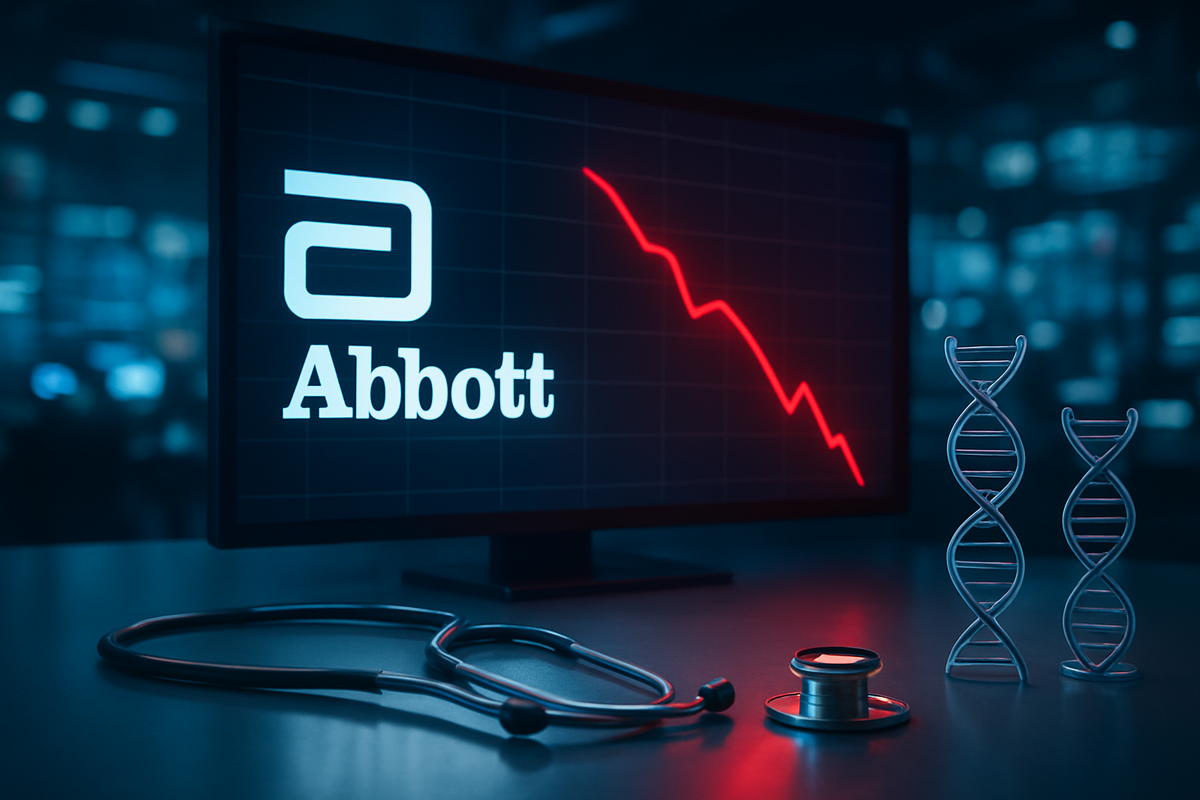
Abbott Laboratories (NYSE: ABT) saw its shares retreat by 5.8% in early trading on Thursday, January 22, 2026, following the release of its fourth-quarter financial results. Despite delivering an adjusted earnings per share (EPS) of $1.50—narrowly edging out the $1.49 consensus estimate—the medical device giant’s performance was marred by a significant miss on quarterly revenue and a cautious outlook for the coming year.
The market’s lukewarm reception highlights deepening investor anxiety over the company’s ambitious $21 billion acquisition of Exact Sciences (NASDAQ: EXAS). While the earnings beat demonstrated Abbott's operational efficiency, the revenue shortfall in key segments and the financial weight of the pending merger have created a volatile environment for the blue-chip healthcare stock.
Mixed Results and Acquisition Anxiety
The fourth quarter was a study in contrasts for Abbott Laboratories. While the company reported a healthy 12% year-over-year growth in adjusted earnings, its total revenue of $11.46 billion fell short of the $11.8 billion analysts had projected. The primary culprit for this miss was a surprising 8.9% decline in the Nutrition segment, which reported sales of $1.94 billion. Management attributed this weakness to softer international demand and strategic price adjustments that failed to offset volume declines.
The timeline leading up to today's sell-off began in November 2025, when Abbott announced its definitive agreement to acquire Exact Sciences, the maker of the widely used Cologuard colon cancer screening test. At $105 per share, the deal represents a massive bet on the future of precision oncology. However, since the announcement, some institutional investors have voiced concerns about the high premium and the potential for the deal to dilute Abbott's balance sheet in the short term. Today’s earnings report, which included a lukewarm first-quarter 2026 guidance, only served to amplify those fears.
The Medical Devices division remained the bright spot, posting a 12.3% increase in sales to $5.68 billion. This growth was largely propelled by the continued dominance of the FreeStyle Libre continuous glucose monitoring system and a rebound in electrophysiology procedures. However, even this strength was not enough to overcome the drag from the Diagnostics segment, where sales dipped 2.5% as the final remnants of COVID-19 testing revenue continued to wash out of the year-over-year comparisons.
Winners and Losers in the Med-Tech Shakeup
Abbott Laboratories (NYSE: ABT) is clearly the primary loser in the immediate wake of the report, with the 5-8% price drop wiping billions from its market capitalization. For investors, the concern is no longer just about the "if" of the Exact Sciences deal, but the "how"—specifically how Abbott will maintain its growth trajectory while integrating a massive diagnostics player in a high-interest-rate environment.
Exact Sciences (NASDAQ: EXAS) shares remained relatively stable, trading near the $105 acquisition price, though they saw a slight uptick as the deal's closing (expected in Q2 2026) draws nearer. However, for current EXAS shareholders, the upside is now capped, leading some analysts to downgrade the stock to "Neutral" or "Hold."
Competitors in the diabetes and screening space may see mixed results. Dexcom (NASDAQ: DXCM), a primary rival in the glucose monitoring market, could see a temporary boost in sentiment if investors perceive Abbott as being "distracted" by the Exact Sciences integration. On the other hand, Medtronic (NYSE: MDT) and Boston Scientific (NYSE: BSX) may find themselves under pressure to pursue their own large-scale acquisitions to keep pace with Abbott’s expanded footprint in the $60 billion cancer screening and precision oncology market.
Consolidation and the Shift to Precision Oncology
The reaction to Abbott’s report is symptomatic of a broader trend in the healthcare industry: the move toward early detection and outpatient diagnostics. By acquiring Exact Sciences, Abbott is signaling that the future of medical technology lies not just in treating chronic conditions like diabetes, but in the preventative screening and precision monitoring of oncology. This $21 billion pivot is one of the largest in the sector’s history and mirrors historical moves by companies like Roche (OTC: RHHBY) to dominate the diagnostics space.
The regulatory environment remains a hurdle for this consolidation. While Abbott expects the deal to close by mid-2026, antitrust regulators have been increasingly skeptical of "vertical" integrations in the healthcare space. The market's reaction today may reflect a "wait-and-see" approach, as investors weigh the potential for regulatory pushback or demands for divestiture in the diagnostics segment.
Furthermore, the slump in the Nutrition business highlights the ongoing vulnerability of global consumer-facing healthcare brands. After years of supply chain disruptions and inflationary pressures, Abbott’s inability to hit revenue targets in this segment suggests that the path to a full recovery remains uneven. This is a trend that competitors like Nestlé (OTC: NSRGY) are also watching closely as they navigate similar headwinds in the pediatric and adult nutrition markets.
Navigating the Path to Q2 2026
In the short term, Abbott will likely need to provide more granular detail on its cost-saving initiatives to regain investor confidence. The company’s projected 2026 adjusted EPS guidance of $5.55 to $5.80 was seen as conservative by some, suggesting that management is baking in a significant cushion for integration costs. Investors will be looking for updates on the "Oncotype DX" and "Cologuard" pipelines as the deal nears its closing date.
Longer-term, the strategic pivot could be a masterstroke. If Abbott successfully integrates Exact Sciences’ technology with its own global distribution network, it could create an unparalleled powerhouse in the diagnostic market. However, the next two quarters will be critical. Any further revenue misses in the legacy Medical Device or Nutrition businesses could force Abbott to reassess its capital allocation strategies or face further pressure from activist shareholders.
The Road Ahead for Investors
Today’s market activity serves as a reminder that even for a diversified giant like Abbott, an earnings beat on the bottom line is not always enough to satisfy Wall Street when the top line and future guidance appear shaky. The 5-8% drop reflects a combination of disappointment over the Nutrition segment's performance and a healthy dose of skepticism regarding the price tag and timing of the Exact Sciences acquisition.
Moving forward, the market will be hyper-focused on two primary catalysts: the formal approval of the EXAS merger and the stabilization of the Nutrition segment’s margins. For long-term investors, the current dip may represent a buying opportunity based on Abbott's historical resilience, but in the immediate term, caution remains the watchword. As the medical technology landscape continues to consolidate, Abbott's ability to execute on its $21 billion gamble will determine whether it remains a leader in the next era of precision healthcare.
This content is intended for informational purposes only and is not financial advice.