Shares of Alphabet Inc. (NASDAQ: GOOGL) climbed 1.8% on Thursday following a major analyst upgrade that signaled a shift in the market's perception of the tech giant’s artificial intelligence (AI) roadmap. The rally came after Raymond James analyst Josh Beck moved the stock to a 'Strong Buy' from 'Outperform' and raised the price target to $400, a move that reflects growing confidence in the company’s ability to monetize its massive investments in infrastructure and search technology.
The upgrade serves as a pivotal moment for Alphabet, which spent much of the previous two years battling concerns that generative AI would disrupt its core search business. Instead, the Raymond James report highlights a "full-stack" advantage where Alphabet's proprietary hardware and software integration are poised to drive accelerated revenue growth in both the Google Cloud Platform (GCP) and Search segments as the industry looks toward 2027.
Deep Dive: The Raymond James Upgrade and the 'AI Stack' Narrative
On January 22, 2026, Raymond James analyst Josh Beck issued a comprehensive research note arguing that Alphabet’s AI narrative is shifting from a defensive struggle to an offensive "high gear" operation. By raising the price target from $315 to $400, Beck indicated that the market has significantly undervalued Alphabet's long-term growth potential. The 1.8% rise in share price on the day of the announcement was part of a larger trend in early 2026 that saw Alphabet reclaim its position as a top-tier AI play, following a series of similar bullish revisions from firms like RBC Capital Markets and Cantor Fitzgerald earlier in the month.
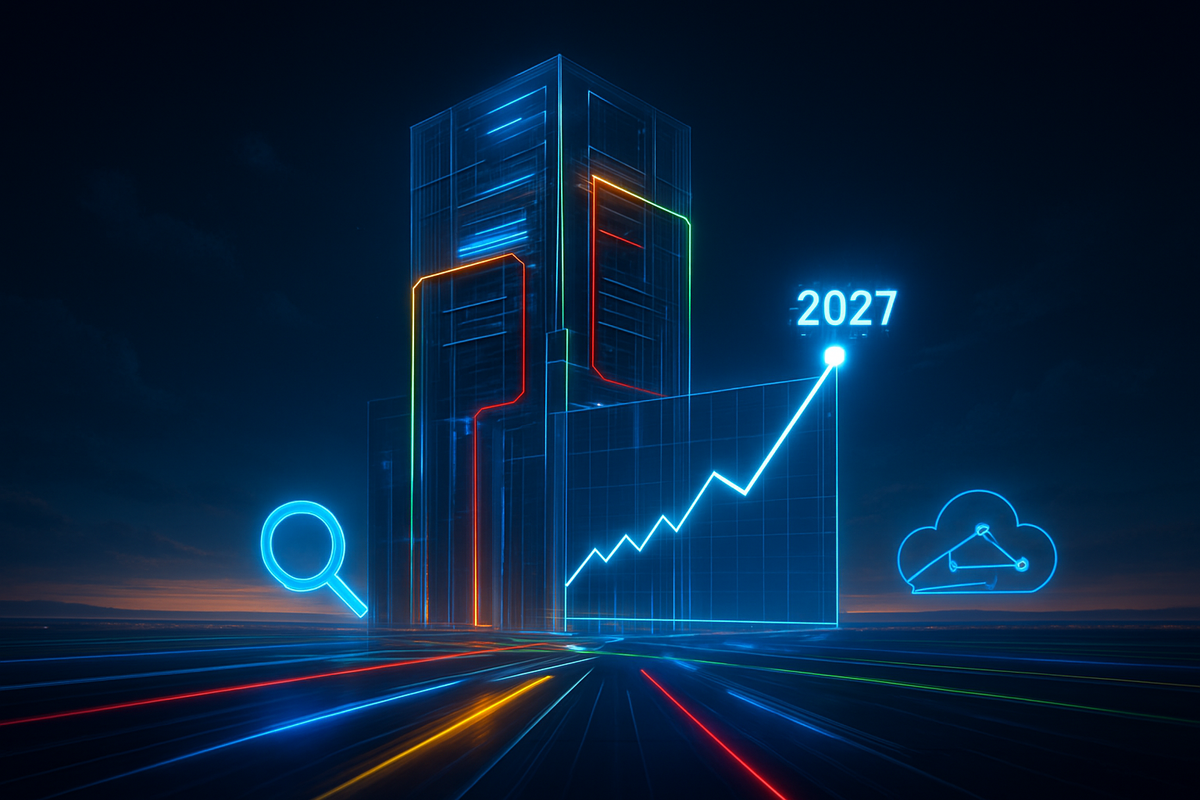
The core of the Raymond James thesis rests on a bottom-up analysis of Alphabet’s infrastructure. The firm projected that Google Cloud Platform (GCP) will see explosive growth, with revenue increases of 44% in 2026 and 36% in 2027. This growth is not merely coming from traditional cloud services but from a diversified AI revenue stream. Beck’s model suggests that by the end of 2027, Alphabet will generate approximately $25 billion annually from its custom Tensor Processing Units (TPUs), $20 billion from GPUs, and $10 billion from Gemini API services. This detailed breakdown suggests that Alphabet is successfully diversifying its cloud business into a specialized AI factory.
Furthermore, the upgrade addressed the "search existentialism" that plagued the stock in 2024 and 2025. Raymond James forecasts Search revenue growth of 13% for both 2026 and 2027, driven by the rollout of "AI Overviews" and "AI Mode." The data indicates that users are asking more complex, long-form questions, which in turn allows Alphabet to command a higher Cost-Per-Click (CPC) due to the higher intent and conversion rates associated with detailed AI-driven queries.
Identifying the Winners and Losers in the AI Infrastructure Race
Alphabet Inc. (NASDAQ: GOOGL) is the clear winner in this scenario, as the Raymond James upgrade validates its "vertical integration" strategy. By developing its own silicon (TPUs) alongside its large language models (Gemini), Alphabet can offer AI services at a lower cost-per-token than competitors who must pay a "hardware tax" to external chipmakers. This efficiency is expected to result in superior margins as AI services scale to billions of users by 2027.
However, this shift creates a more complex landscape for traditional hardware providers. While NVIDIA Corp. (NASDAQ: NVDA) remains a dominant force in the data center, Alphabet’s aggressive pivot toward its own TPUs—projected to be a $25 billion revenue stream by 2027—suggests that the "silicon sovereignty" movement could eventually eat into the market share of general-purpose GPU manufacturers. Similarly, advertisers who have successfully adapted to AI-integrated search are seeing improved ROI, while those reliant on legacy keyword strategies may find themselves "losers" in a marketplace that increasingly prioritizes conversational context.
On the competitive front, Microsoft Corp. (NASDAQ: MSFT) and Amazon.com Inc. (NASDAQ: AMZN) are locked in a fierce battle with Alphabet for enterprise AI supremacy. Microsoft’s recent launch of "Agent 365" and Amazon’s "Alexa+" reboot show that while Alphabet is winning the infrastructure narrative, its rivals are aggressively pushing the "agentic" side of AI—autonomous software that can perform tasks. The market is effectively being split between Google’s infrastructure-led growth and the consumer-app-led strategies of its peers.
The Broader Significance: From Disruption to Enhancement
The Raymond James upgrade reflects a broader industry trend where the fear of "AI disruption" is being replaced by the reality of "AI enhancement." In 2024, the prevailing market sentiment was that AI would kill Google Search; by 1/22/2026, the narrative has flipped. Analysts now view AI as a tool that expands the total addressable market (TAM) for search by enabling queries that were previously impossible to answer, such as multi-step planning and deep technical research.
This event also takes place against a backdrop of shifting regulatory dynamics. Alphabet’s recent appeal of the 2024 search monopoly ruling has effectively hit the "pause" button on potential structural breakups, such as a forced divestiture of the Chrome browser or Android operating system. This legal reprieve, combined with the EU’s Digital Markets Act (DMA) investigations into cloud interoperability, suggests that the market is currently more focused on operational compliance and competitive innovation than on the immediate threat of a corporate split.
Historically, this moment is being compared to the transition from desktop to mobile search. Just as Alphabet successfully navigated the mobile shift by integrating Android and improving mobile ad formats, the 2026 "AI Stack" era represents a successful pivot into the next generation of computing. The Raymond James report signals that the "AI winter" for Alphabet’s stock price is officially over, replaced by a fundamental-driven bull cycle.
Looking Ahead: The Road to 2027
In the short term, investors will be watching Alphabet’s quarterly earnings reports to see if the projected 44% GCP growth begins to materialize. The integration of Vertex AI and the Gemini API into the workflows of Fortune 500 companies will be the primary litmus test for the Raymond James thesis. If Alphabet can maintain its lead in cost-efficiency through its TPU v6 and v7 deployments, it could force competitors into a price war that Alphabet is uniquely positioned to win.
Long-term, the focus will shift to "Agentic AI"—the ability for Google’s AI to not just answer questions but to execute actions like booking travel, managing calendars, and automating enterprise procurement. While the Raymond James upgrade focuses heavily on infrastructure and search revenue, the next strategic pivot will likely involve Alphabet’s ability to compete with Microsoft’s "Agent 365" and Amazon’s "One Medical" AI in the service-execution space.
The primary challenge for Alphabet will be navigating the "zero-click" problem, where AI Overviews satisfy user intent without sending traffic to publishers. Maintaining a healthy ecosystem for content creators while keeping users within the Google AI environment will be a delicate balancing act that could trigger further regulatory scrutiny or require new, innovative monetization models beyond traditional CPC advertising.
Final Assessment: A New Era for Alphabet
The 1.8% rise in Alphabet’s shares following the Raymond James upgrade is more than just a daily market fluctuation; it is a vote of confidence in a 2027 vision that sees Google at the center of the AI-driven economy. By raising its price target to $400 and focusing on the "Full-Stack" narrative, Raymond James has articulated why Alphabet remains a formidable incumbent in the face of radical technological change.
Moving forward, the market will likely reward Alphabet for its infrastructure advantages and its ability to squeeze higher margins out of a more intelligent search engine. Investors should remain vigilant regarding regulatory developments in the EU and the ongoing appeal in the U.S. search monopoly case, but for now, the momentum has clearly shifted back to Mountain View.
The key takeaway for the coming months is clear: watch the Cloud. If GCP continues its current trajectory toward the $25 billion TPU revenue target, Alphabet could very well be the defining stock of the late 2020s.
This content is intended for informational purposes only and is not financial advice.