As of February 5, 2026, the global information landscape has been fundamentally reshaped not by a new cable news network or a government intelligence agency, but by the relentless, cold-blooded efficiency of prediction markets. What were once dismissed as niche "gambling" platforms for political junkies have evolved into what institutional analysts now call "Geopolitical Truth Engines." Across platforms like Polymarket and Kalshi, billions of dollars are now flowing into contracts that predict everything from the next tactical missile strike in the Middle East to the administrative feasibility of the United States acquiring Greenland.
The shift is driven by a stark reality: traditional expert models and diplomatic "cheap talk" are failing to keep pace with a volatile world. Currently, traders are pricing a 56% probability of a U.S. military strike on Iranian assets by the end of March 2026, and a surprising 42% chance that a deal for Greenland is reached within the next three years. These aren't just numbers; they are real-time, capital-backed aggregations of global intelligence that are increasingly being used by hedge funds and policy think tanks to navigate a world where official statements are often the last place to find the truth.
The Market: What's Being Predicted
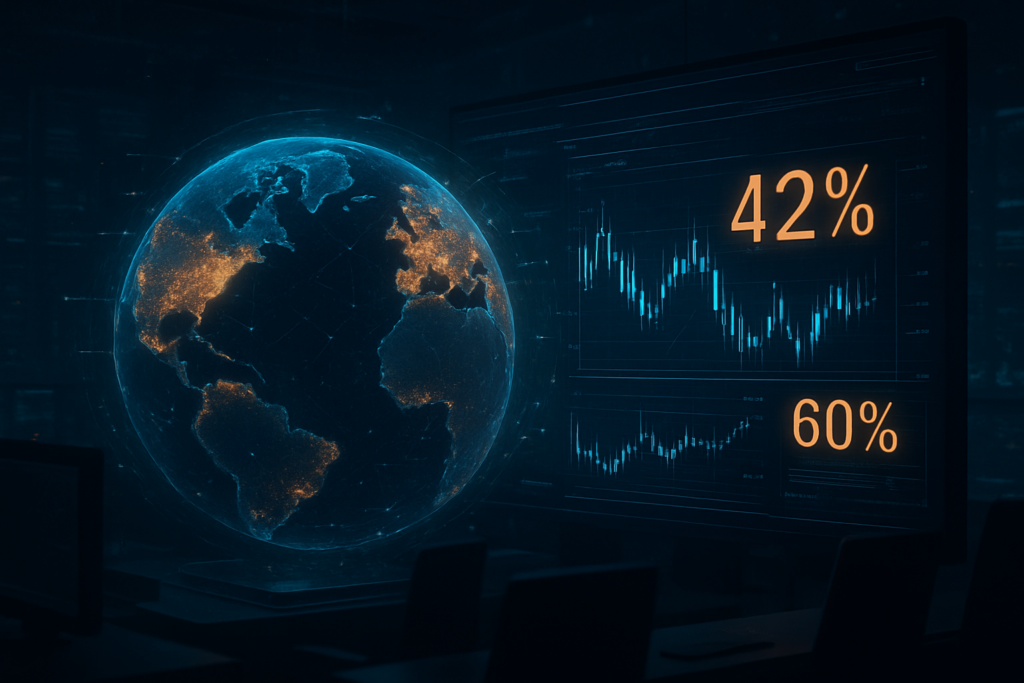
The most high-stakes "truth engine" currently running involves the renewed, serious effort by the Trump administration to negotiate a territorial transfer or a massive strategic lease for Greenland. On the regulated exchange Kalshi, the contract for "U.S. to acquire part of Greenland by 2029" has seen its odds surge to 42%, a significant jump from just 26% late last year. Meanwhile, on the decentralized platform Polymarket, more granular markets regarding a "Greenland deal in 2026" are trading at a 23% probability. This divergence suggests that while a short-term acquisition remains a long shot, the market is beginning to price in the long-term geopolitical inevitability of a U.S.-Danish-Greenlandic realignment, with over $13.8 million already wagered on the outcome.
In the Middle East, the markets are even more liquid and urgent. The "Military Action" categories have become the primary source of risk assessment for global shipping and energy firms. Markets predicting an Israeli strike on Iranian strategic sites by June 30, 2026, have climbed to a 60% probability. Even more striking is the volume: the contract for "U.S. kinetic action against Iran" by the end of Q1 2026 has attracted over $142 million in cumulative volume. This level of liquidity ensures that the "market price" is highly resistant to manipulation, reflecting a sophisticated consensus built on thousands of individual data points.
Why Traders Are Betting
The rise of these markets is fueled by a concept known as "InfoFi" (Information Finance). Unlike traditional analysts who may be hindered by institutional bias or diplomatic sensitivities, prediction market traders are incentivized solely by accuracy. These markets allow individuals with asymmetric information—ranging from embassy staff and defense contractors to regional journalists and satellite imagery analysts—to anonymously monetize their knowledge. When a trader with inside knowledge of a carrier group's movement or a diplomatic cable's tone places a large bet, the "price" of the contract shifts, effectively broadcasting that truth to the public.
Major institutional players have also entered the fray. Market makers such as Susquehanna International Group (SIG) and Jane Street have significantly increased liquidity in 2025, narrowing spreads and making it possible for large-scale "geopolitical hedging." Furthermore, media conglomerates like News Corp (NASDAQ: NWSA) have begun integrating live Polymarket widgets into their reporting, treating the market price as a more reliable indicator than the "official line" from government press secretaries. This institutionalization has transformed these platforms from speculative playgrounds into essential tools for "systemic arbitrage."
Broader Context and Implications
The credibility of prediction markets as "Truth Engines" is backed by a track record of outperforming traditional models. In the 2024 U.S. Presidential Election, Polymarket consistently gave Donald Trump a lead in key swing states weeks before traditional polls showed any significant movement. More recently, in January 2026, the markets correctly anticipated the collapse of the Maduro regime in Venezuela just hours before "Operation Absolute Resolve" was launched—at a time when traditional media outlets like The New York Times (NYSE: NYT) were still reporting on "diplomatic gridlock."
This shift has profound implications for public sentiment and democratic accountability. A 2025 study from Vanderbilt University confirmed that prediction markets are roughly 23% more accurate than expert surveys in "rapid-shift" environments where data changes hour-by-hour. By providing a transparent, real-time probability of major events, these markets strip away the "fog of war" and partisan spin. However, they also raise regulatory questions. While Kalshi operates under the oversight of the Commodity Futures Trading Commission (CFTC), decentralized platforms like Polymarket continue to navigate a complex global legal landscape, even as their influence on global finance becomes undeniable.
What to Watch Next
As we move toward the spring of 2026, several key milestones will serve as a "stress test" for these geopolitical truth engines. For the Greenland market, the upcoming April summit between U.S., Danish, and Greenlandic officials will be a major catalyst. If the odds on Kalshi move toward 50%, it will signal that the "impossible" deal is entering the realm of the probable. Traders are currently watching for any shifts in "infrastructure investment" language, which often precedes a formal territorial negotiation.
In the Middle East, the March 31 deadline for the "U.S. strike Iran" contract is the date to watch. If the probability continues to hover above 50%, it suggests that the market has already factored in military movements that have yet to be confirmed by the Pentagon. Additionally, watch for the launch of new "Cyber War" markets, which aim to predict state-sponsored hacks on critical infrastructure—an area where prediction markets may prove to be the only effective early warning system for the private sector.
Bottom Line
The transformation of prediction markets into "Geopolitical Truth Engines" represents the most significant shift in information gathering since the advent of the 24-hour news cycle. By forcing participants to put "skin in the game," these platforms cut through the noise of modern media and the opacity of international diplomacy. Whether it is the potential redrawing of the Arctic map or the ignition of a regional conflict in the Middle East, the "market price" is now the most honest signal we have.
Ultimately, these markets tell us that the public is no longer content to wait for "expert" post-mortems after a crisis has already begun. In 2026, the quest for truth has been financialized, and the result is a more accurate, if sometimes more frightening, view of the world’s future. For anyone looking to understand where the world is actually headed, the ticker tape is now more important than the teleprompter.
This article is for informational purposes only and does not constitute financial or betting advice. Prediction market participation may be subject to legal restrictions in your jurisdiction.
PredictStreet focuses on covering the latest developments in prediction markets.
Visit the PredictStreet website at https://www.predictstreet.ai/.