
Arcade company Dave & Buster’s (NASDAQ: PLAY) fell short of the markets revenue expectations in Q3 CY2025, with sales falling 1.1% year on year to $448.2 million. Its non-GAAP loss of $1.14 per share was 9.3% below analysts’ consensus estimates.
Is now the time to buy Dave & Buster's? Find out by accessing our full research report, it’s free for active Edge members.
Dave & Buster's (PLAY) Q3 CY2025 Highlights:
- Revenue: $448.2 million vs analyst estimates of $461.1 million (1.1% year-on-year decline, 2.8% miss)
- Adjusted EPS: -$1.14 vs analyst expectations of -$1.04 (9.3% miss)
- Operating Margin: -3.6%, down from 1.4% in the same quarter last year
- Same-Store Sales fell 4% year on year (-7.7% in the same quarter last year)
- Market Capitalization: $616 million
“I am pleased to report we are making substantive progress on our back-to-basics plan,” said Tarun Lal, Chief Executive Officer.
Company Overview
Founded by a former game parlor and bar operator, Dave & Buster’s (NASDAQ: PLAY) operates a chain of arcades providing immersive entertainment experiences.
Revenue Growth
Reviewing a company’s long-term sales performance reveals insights into its quality. Any business can put up a good quarter or two, but many enduring ones grow for years. Over the last five years, Dave & Buster's grew its sales at a 25.9% compounded annual growth rate. Although this growth is acceptable on an absolute basis, it fell slightly short of our standards for the consumer discretionary sector, which enjoys a number of secular tailwinds.
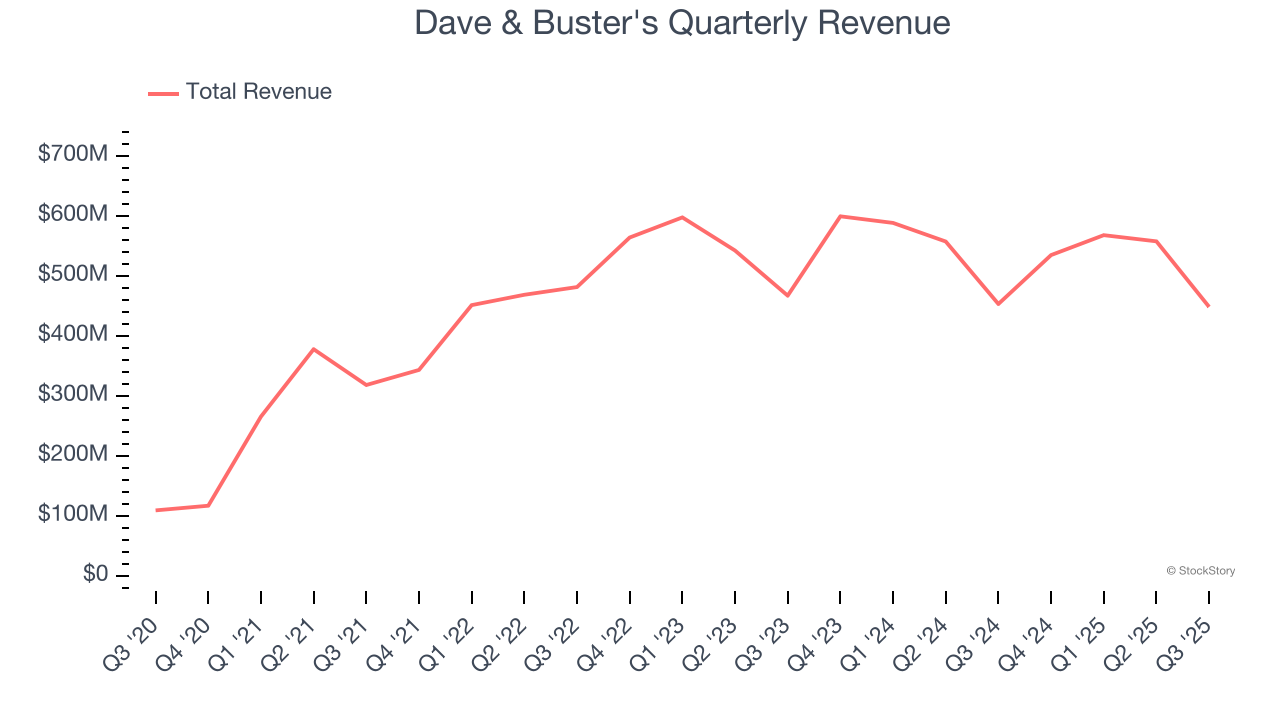
We at StockStory place the most emphasis on long-term growth, but within consumer discretionary, a stretched historical view may miss a company riding a successful new product or trend. Dave & Buster’s performance shows it grew in the past but relinquished its gains over the last two years, as its revenue fell by 1.4% annually. Note that COVID hurt Dave & Buster’s business in 2020 and part of 2021, and it bounced back in a big way thereafter. 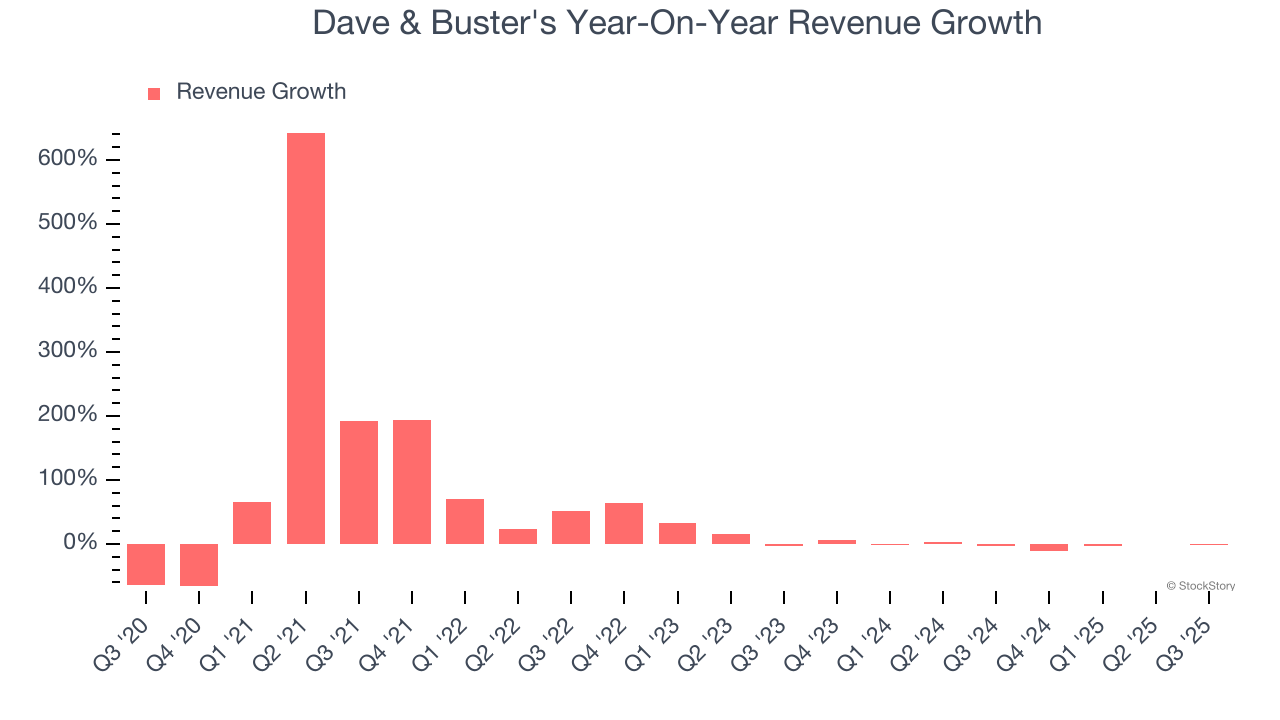
Dave & Buster's also reports same-store sales, which show how much revenue its established locations generate. Over the last two years, Dave & Buster’s same-store sales averaged 6.4% year-on-year declines. Because this number is lower than its revenue growth, we can see the opening of new locations is boosting the company’s top-line performance. 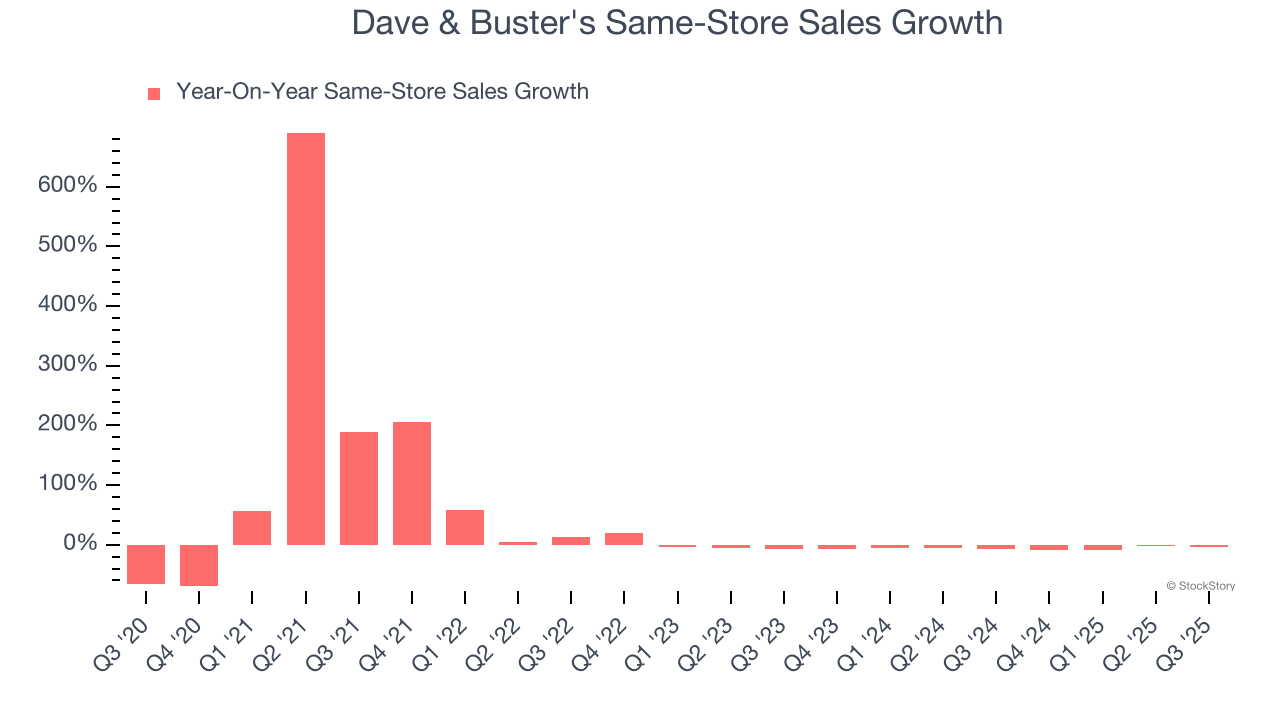
This quarter, Dave & Buster's missed Wall Street’s estimates and reported a rather uninspiring 1.1% year-on-year revenue decline, generating $448.2 million of revenue.
Looking ahead, sell-side analysts expect revenue to grow 5.8% over the next 12 months. While this projection implies its newer products and services will fuel better top-line performance, it is still below the sector average.
Microsoft, Alphabet, Coca-Cola, Monster Beverage—all began as under-the-radar growth stories riding a massive trend. We’ve identified the next one: a profitable AI semiconductor play Wall Street is still overlooking. Go here for access to our full report.
Operating Margin
Dave & Buster’s operating margin has shrunk over the last 12 months and averaged 9.5% over the last two years. The company’s profitability was mediocre for a consumer discretionary business and shows it couldn’t pass its higher operating expenses onto its customers.
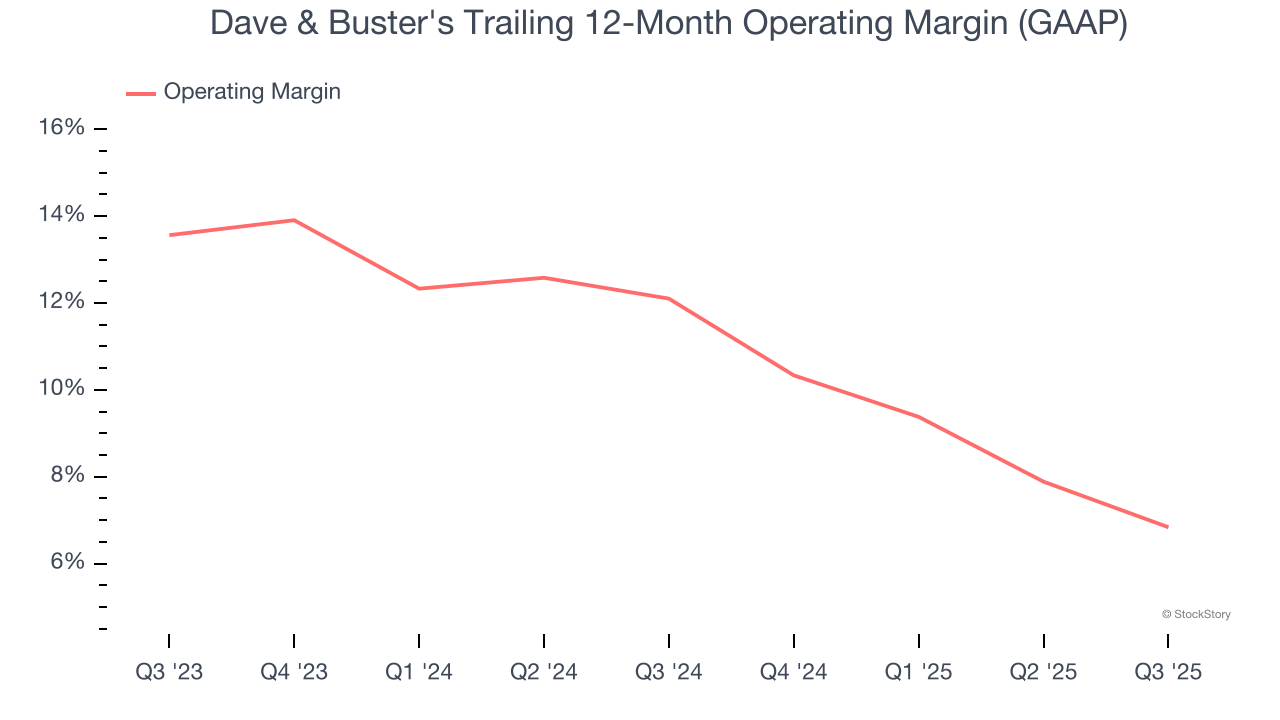
In Q3, Dave & Buster's generated an operating margin profit margin of negative 3.6%, down 5 percentage points year on year. This contraction shows it was less efficient because its expenses increased relative to its revenue.
Earnings Per Share
Revenue trends explain a company’s historical growth, but the long-term change in earnings per share (EPS) points to the profitability of that growth – for example, a company could inflate its sales through excessive spending on advertising and promotions.
Dave & Buster’s full-year EPS flipped from negative to positive over the last five years. This is encouraging and shows it’s at a critical moment in its life.
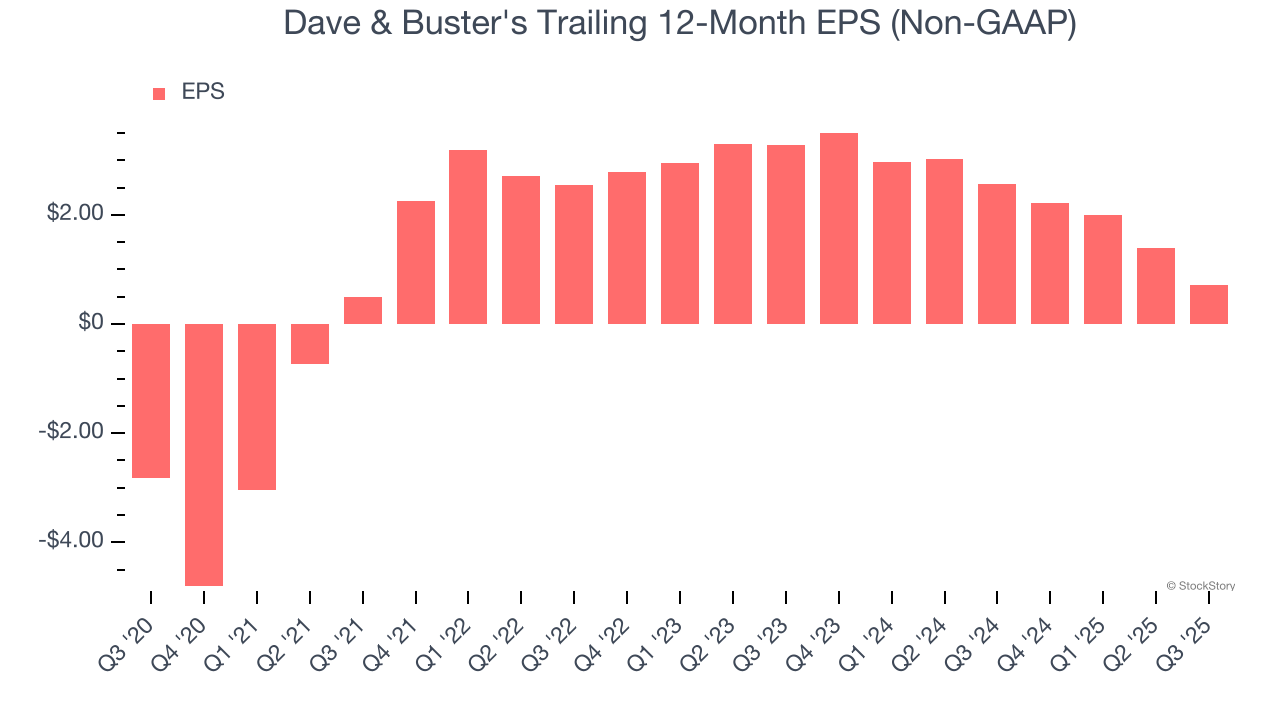
In Q3, Dave & Buster's reported adjusted EPS of negative $1.14, down from negative $0.45 in the same quarter last year. This print missed analysts’ estimates. Over the next 12 months, Wall Street expects Dave & Buster’s full-year EPS of $0.71 to grow 51.4%.
Key Takeaways from Dave & Buster’s Q3 Results
There weren't many positives here, starting with negative same-store sales. Revenue and EPS also fell short of Wall Street’s estimates. Overall, this was a softer quarter. The stock traded down 4.6% to $17.28 immediately following the results.
Dave & Buster’s latest earnings report disappointed. One quarter doesn’t define a company’s quality, so let’s explore whether the stock is a buy at the current price. When making that decision, it’s important to consider its valuation, business qualities, as well as what has happened in the latest quarter. We cover that in our actionable full research report which you can read here, it’s free for active Edge members.