Digital insurance provider Lemonade (NYSE: LMND) reported Q4 CY2025 results exceeding the market’s revenue expectations, with sales up 53.3% year on year to $228.1 million. Its GAAP loss of $0.29 per share was 26.1% above analysts’ consensus estimates.
Is now the time to buy Lemonade? Find out by accessing our full research report, it’s free.
Lemonade (LMND) Q4 CY2025 Highlights:
- Net Premiums Earned: $179.5 million vs analyst estimates of $165.8 million (77.4% year-on-year growth, 8.3% beat)
- Revenue: $228.1 million vs analyst estimates of $217.6 million (53.3% year-on-year growth, 4.8% beat)
- Pre-tax Profit: -$20.6 million (-9% margin)
- EPS (GAAP): -$0.29 vs analyst estimates of -$0.39 (26.1% beat)
- Market Capitalization: $4.91 billion
Company Overview
Built on the principle of giving back unused premiums to charitable causes selected by policyholders, Lemonade (NYSE: LMND) is a technology-driven insurance company that offers homeowners, renters, pet, car, and life insurance through an AI-powered digital platform.
Revenue Growth
In general, insurance companies earn revenue from three primary sources. The first is the core insurance business itself, often called underwriting and represented in the income statement as premiums earned. The second source is investment income from investing the “float” (premiums collected upfront not yet paid out as claims) in assets such as fixed-income assets and equities. The third is fees from various sources such as policy administration, annuities, or other value-added services. Luckily, Lemonade’s revenue grew at an incredible 50.9% compounded annual growth rate over the last five years. Its growth beat the average insurance company and shows its offerings resonate with customers.
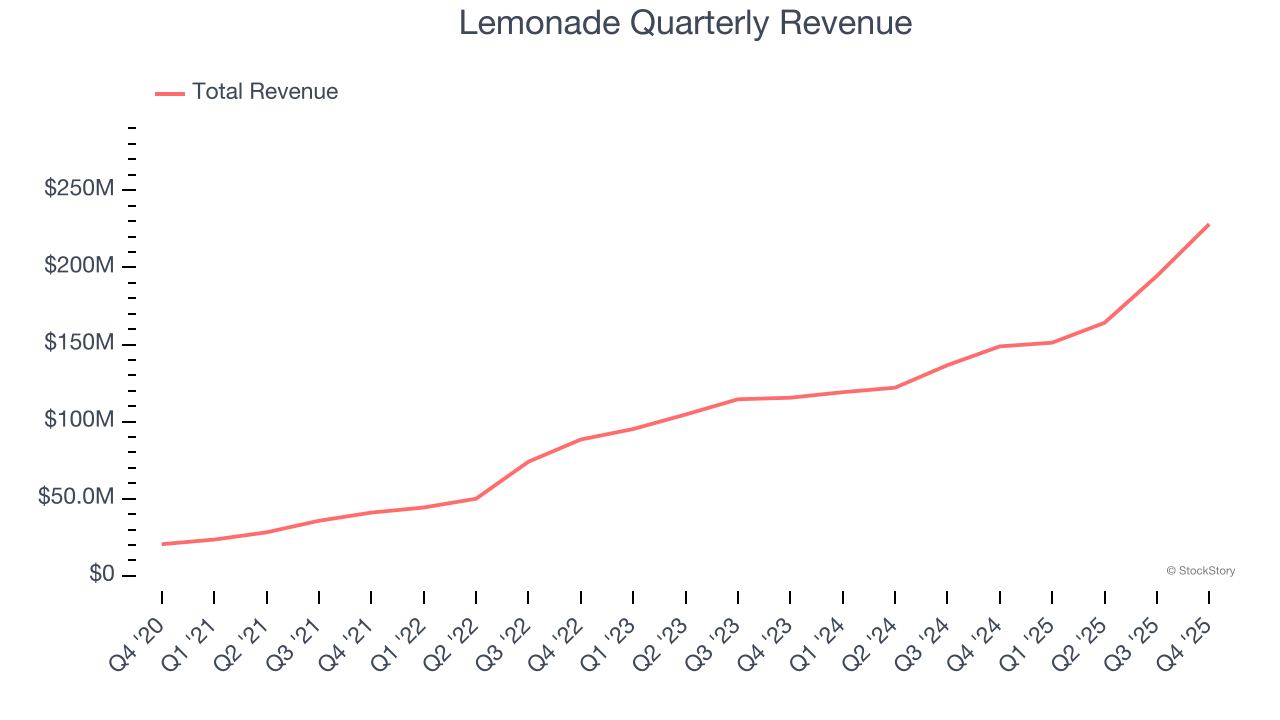
We at StockStory place the most emphasis on long-term growth, but within financials, a half-decade historical view may miss recent interest rate changes, market returns, and industry trends. Lemonade’s annualized revenue growth of 31% over the last two years is below its five-year trend, but we still think the results suggest healthy demand. 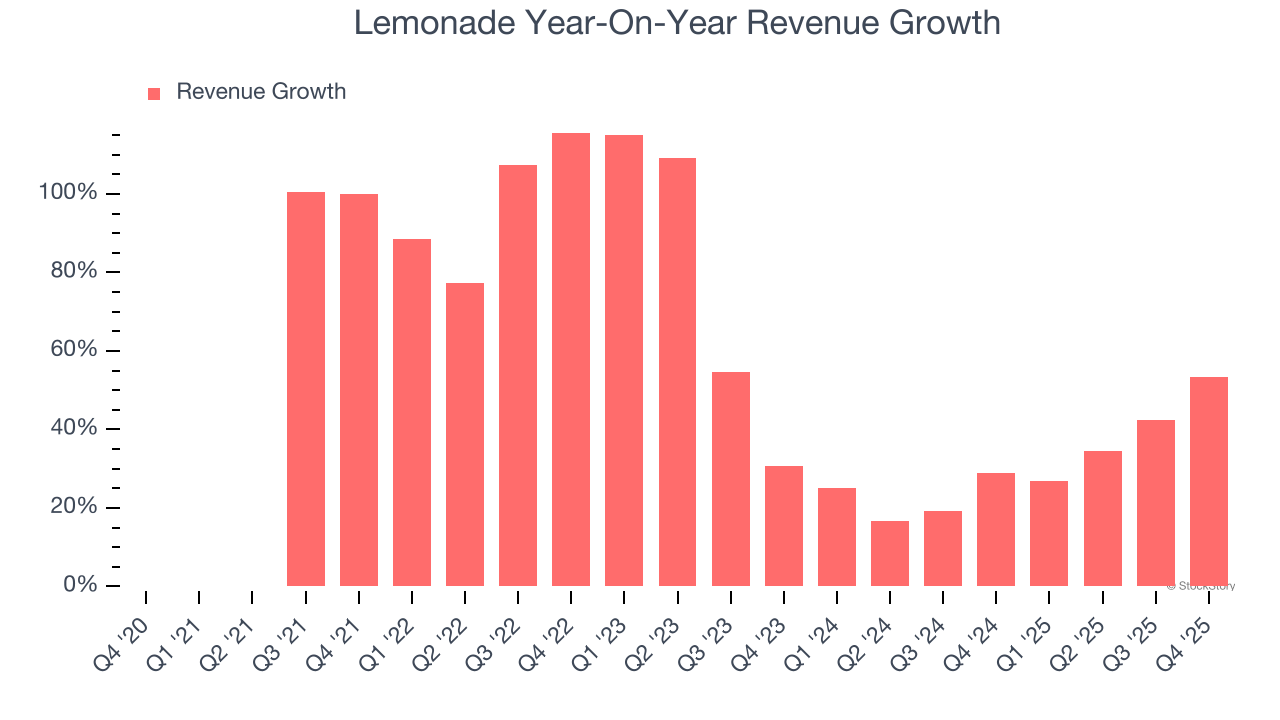 Note: Quarters not shown were determined to be outliers, impacted by outsized investment gains/losses that are not indicative of the recurring fundamentals of the business.
This quarter, Lemonade reported magnificent year-on-year revenue growth of 53.3%, and its $228.1 million of revenue beat Wall Street’s estimates by 4.8%.
Net premiums earned made up 70.8% of the company’s total revenue during the last five years, meaning insurance operations are Lemonade’s largest source of revenue.
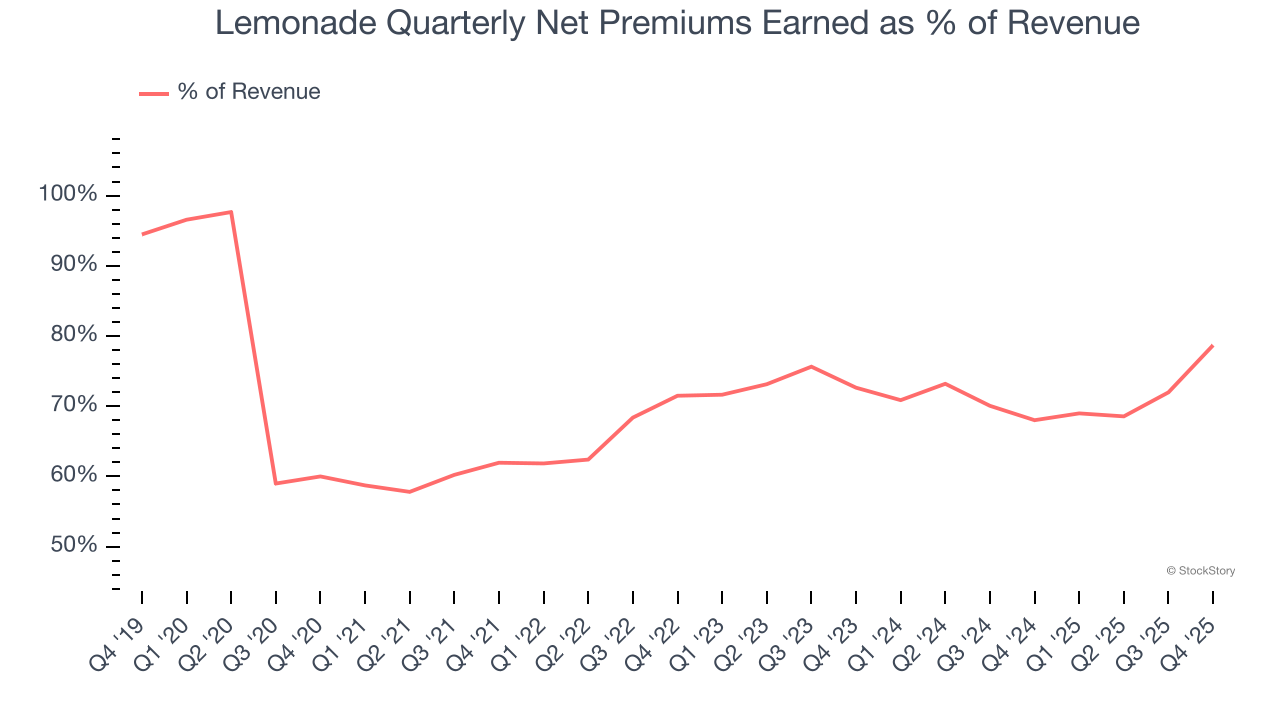
Our experience and research show the market cares primarily about an insurer’s net premiums earned growth as investment and fee income are considered more susceptible to market volatility and economic cycles.
While Wall Street chases Nvidia at all-time highs, an under-the-radar semiconductor supplier is dominating a critical AI component these giants can’t build without. Click here to access our free report one of our favorites growth stories.
Net Premiums Earned
Insurers sell policies then use reinsurance (insurance for insurance companies) to protect themselves from large losses. Net premiums earned are therefore what's collected from selling policies less what’s paid to reinsurers as a risk mitigation tool.
Lemonade’s net premiums earned has grown at a 47.3% annualized rate over the last five years, much better than the broader insurance industry but slower than its total revenue.
When analyzing Lemonade’s net premiums earned over the last two years, we can see that growth decelerated to 30.4% annually. This performance was similar to its total revenue.
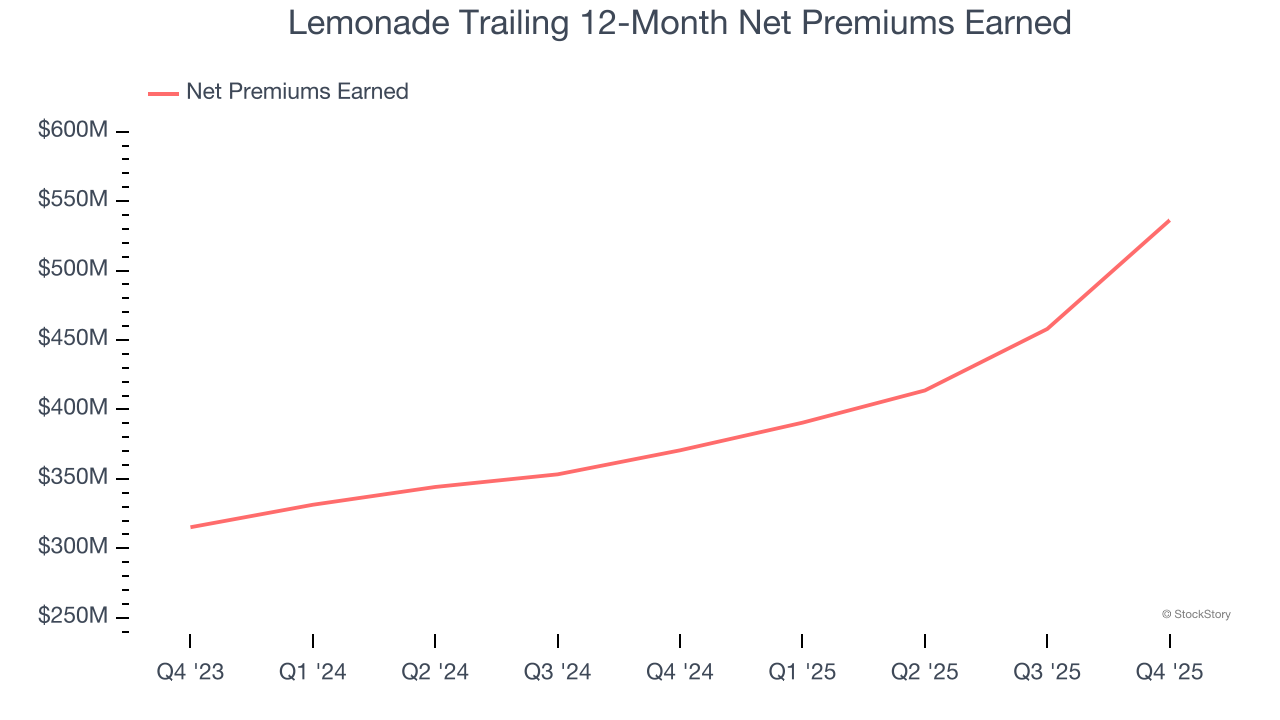
Lemonade produced $179.5 million of net premiums earned in Q4, up a hearty 77.4% year on year and topping Wall Street Consensus estimates by 8.3%.
Key Takeaways from Lemonade’s Q4 Results
It was good to see Lemonade beat analysts’ EPS expectations this quarter. We were also excited its net premiums earned outperformed Wall Street’s estimates by a wide margin. Zooming out, we think this quarter featured some important positives. The stock traded up 11.1% to $73.05 immediately after reporting.
Sure, Lemonade had a solid quarter, but if we look at the bigger picture, is this stock a buy? If you’re making that decision, you should consider the bigger picture of valuation, business qualities, as well as the latest earnings. We cover that in our actionable full research report which you can read here (it’s free).