 | |||||||||
 |  | ||||||||
Vancouver, B.C. – January 14, 2026 – TheNewswire - IDEX Metals Corp. (“IDEX” or the “Company”) (TSXV: IDEX; OTCQB: IDXMF) is pleased to announce drill results from holes KSMT25003 and KSMT25004 at its 100%-owned Freeze Copper-Gold-Molybdenum Project in Idaho, USA (“Freeze”, or the “Property”). The results further confirm the scale, strength, and growth potential of Freeze, a large magmatic-hydrothermal copper system that continues to demonstrate consistent copper mineralization from surface that expands significantly at depth.
-
KSMT25004 intersected 130.93 m of 0.50% CuEq (0.40% Cu, 1.87 g/t Ag, 89 ppm Mo) within 344.34 m of 0.45% CuEq (0.30% Cu, 1.88 g/t Ag, 147 ppm Mo)
-
KSMT25003 intersected 57.10 m of 0.65% CuEq (0.50% Cu, 3.14 Ag g/t, 140 ppm Mo) within 134.22 m of 0.42% CuEq (0.34% Cu, 1.92 g/t Ag, 71 ppm Mo)
-
Kismet Breccia Complex (“Kismet”) copper mineralization remains open in all directions and at depth; Phase I drilling has revealed multiple high‑priority expansion targets
-
Drilling has confirmed continuity of breccia mineralization and constrained the extent of weakly-mineralized tonalite, strengthening confidence in the Company’s structural interpretation of the system
Clayton Fisher, CEO of IDEX Metals Corp., commented: “These results are exactly what we want to see as we continue to define a large copper system. Intersecting hundreds of meters of consistent copper mineralization from surface – in multiple directions – clearly demonstrates the strength, scale, and continuity of the system at Freeze. Importantly, drilling shows that the breccia complex expands at depth and remains open in all directions, a powerful indicator of long‑term growth potential. With two holes still pending, the ongoing integration of geophysical datasets, and the development of additional targets across the Property, we are still in the early stages of unlocking a district‑scale copper system within one of North America’s most compelling emerging copper belts.”
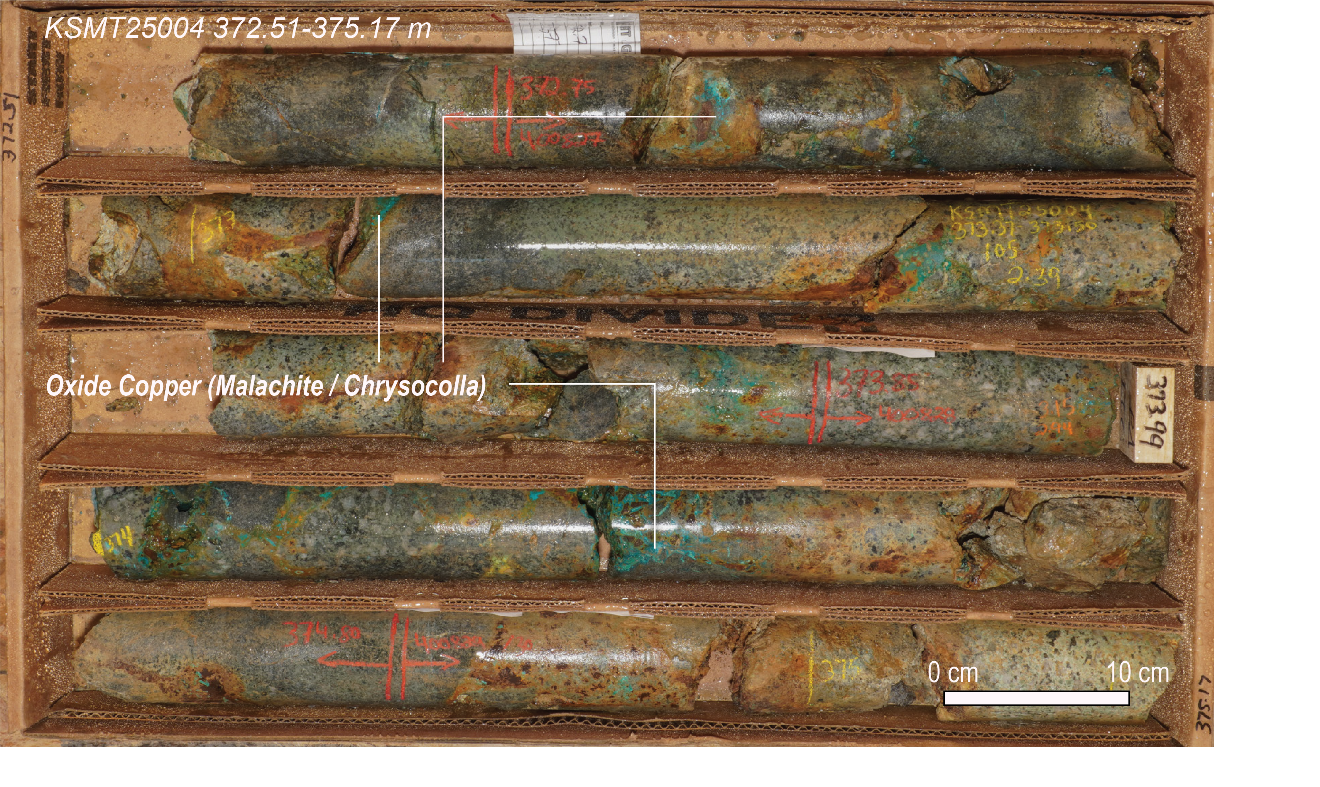
Figure 1. KSMT25004 drill core: high grade oxide copper mineralization at depth of 372.51-375.17 meters
Click Image To View Full Size
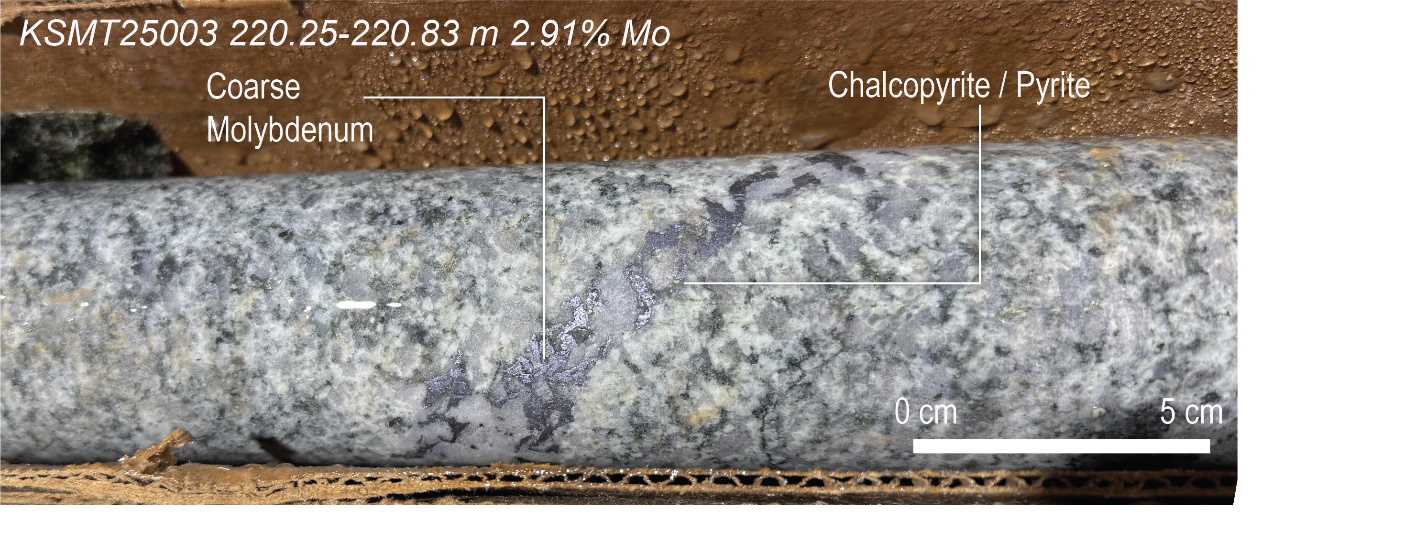
Figure 2: KSMT25003 Drill Core: high grade coarse molybdenum with disseminated chalcopyrite/pyrite at depth of 220.75 meters
Click Image To View Full Size
These results demonstrate that Kismet remains open both to the north and south at depth, and highlights a vertically-extensive system with multiple vectors for near-term expansion. Drilling has also constrained the extent of weakly-mineralized tonalite, further strengthening confidence in the continuity and architecture of the mineralized breccia body.
Located within the rapidly-emerging Idaho Copper Belt, Freeze benefits from a jurisdictional advantage while exhibiting geological characteristics comparable to major porphyry‑related systems around the world. The consistency and thickness of mineralization intersected to date strongly support the potential for Kismet to evolve into a district‑scale copper system through continued systematic drilling and geophysical targeting.
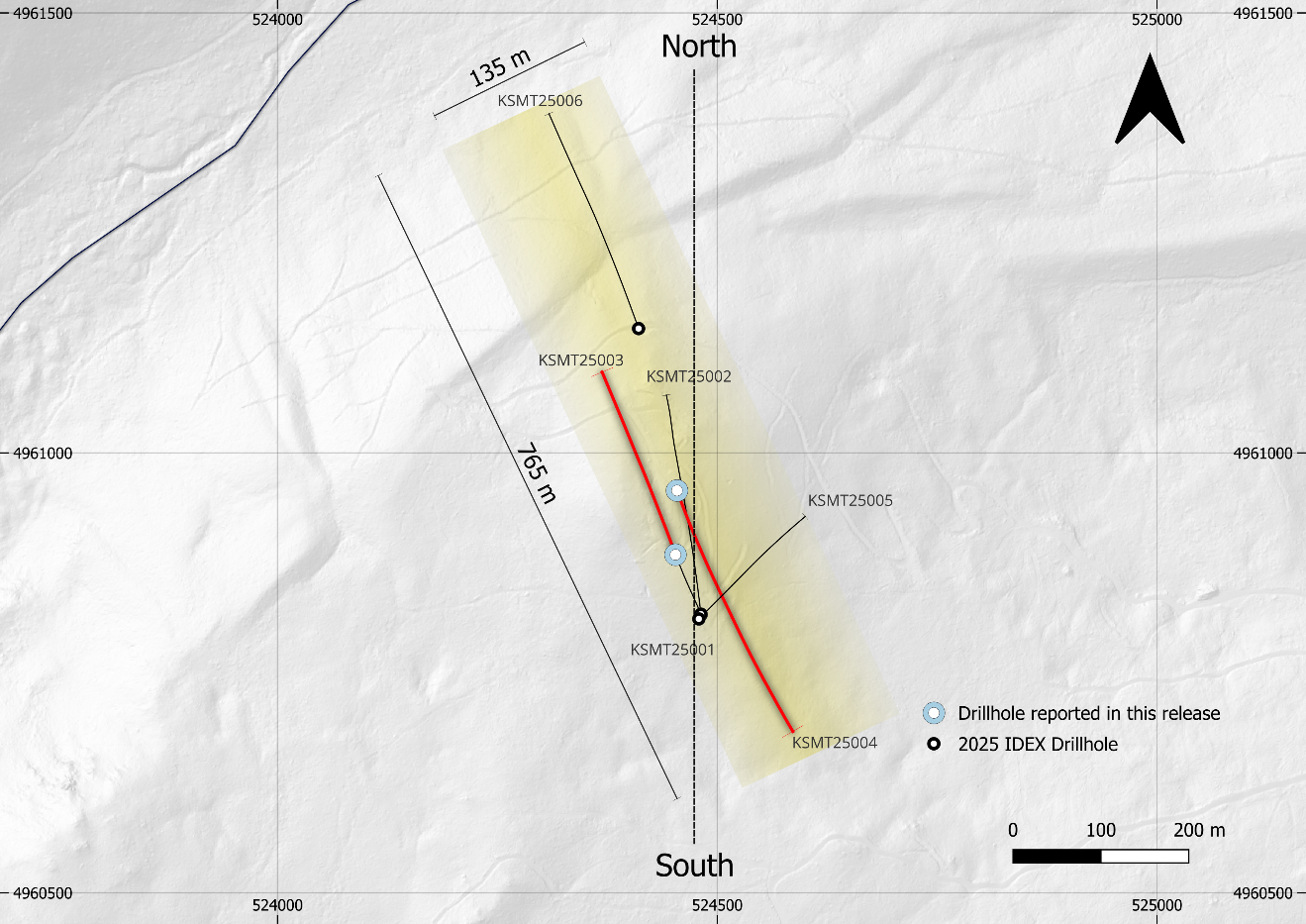
Figure 3. Plan Map of all Drillholes completed in the 2026 drill season (N-S Section can be seen in Figures 4-5)
Click Image To View Full Size
Table 1. Drill Intercepts for KSMT25003 and KSMT25004
|
Hole |
From |
To |
Interval (m) |
Cu (%) |
CuEq* (%) |
Ag (g/t) |
Mo (ppm) |
W (ppm) |
|
KSMT25003 |
1.83 |
346.56 |
344.73 |
0.19 |
0.28 |
1.05 |
97.67 |
77.80 |
|
Including |
1.83 |
136.05 |
134.22 |
0.34 |
0.42 |
1.92 |
71.4 |
88.94 |
|
And including |
39.95 |
97.05 |
57.10 |
0.50 |
0.65 |
3.14 |
140.20 |
119.90 |
|
And |
314.00 |
327.00 |
13.00 |
0.22 |
0.29 |
0.50 |
80.40 |
249.21 |
|
KSMT25004 |
1.37 |
518.31 |
516.94 |
0.23 |
0.37 |
1.48 |
147.59 |
274.57 |
|
Including |
38.71 |
383.05 |
344.34 |
0.30 |
0.45 |
1.88 |
146.72 |
322.31 |
|
With |
90.05 |
220.98 |
130.93 |
0.40 |
0.50 |
1.87 |
89.19 |
300.33 |
*Copper equivalent calculations used the following assumptions: US$3.75/lb Copper, US$35/oz Silver, US$30/lb Molybdenum, and metallurgical recoveries were assumed to be 90%. All intervals are presented as core lengths as the true thicknesses of mineralization is currently unknown.
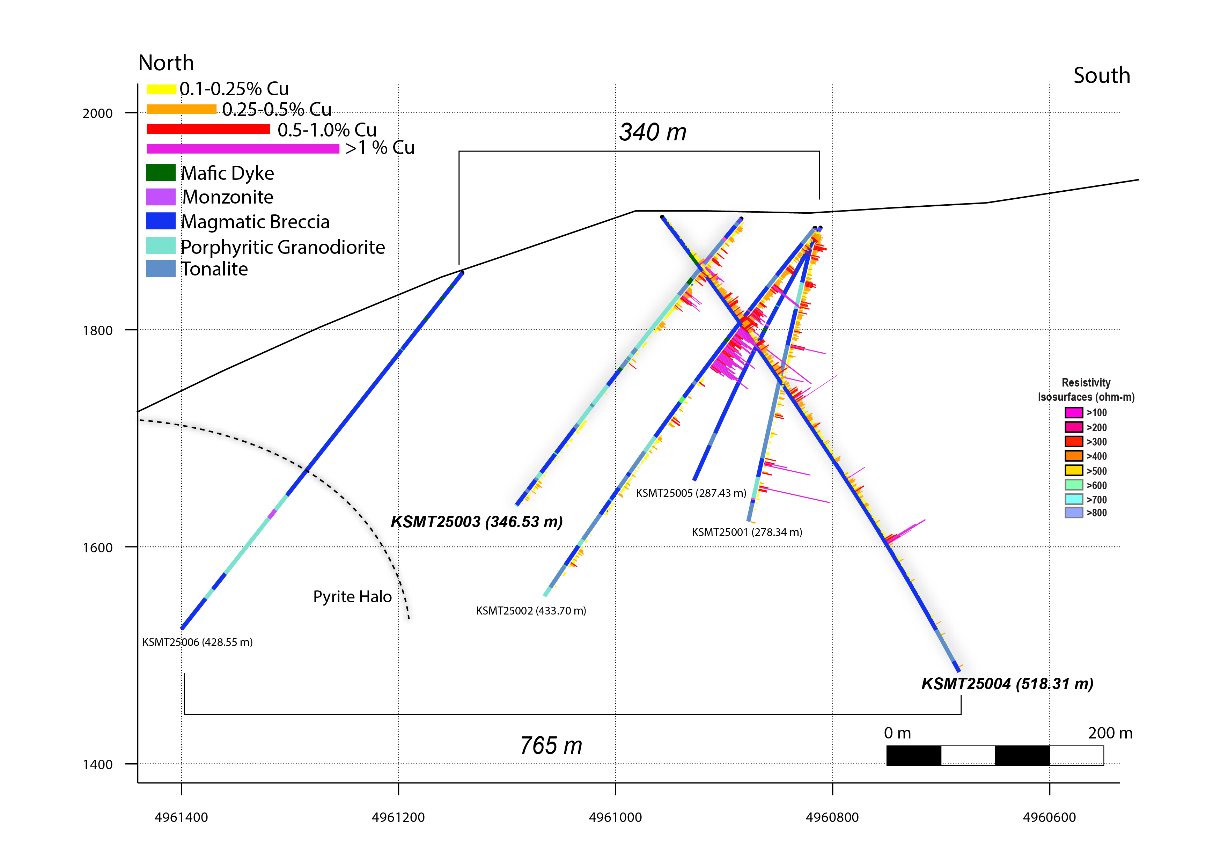
Figure 4. Drill results for the 2026 IDEX Drill program showing lithology and downhole copper.
Click Image To View Full Size
Figure 5. Drill results for the 2026 drill program showing lithology, downhole copper and resistivity isosurfaces
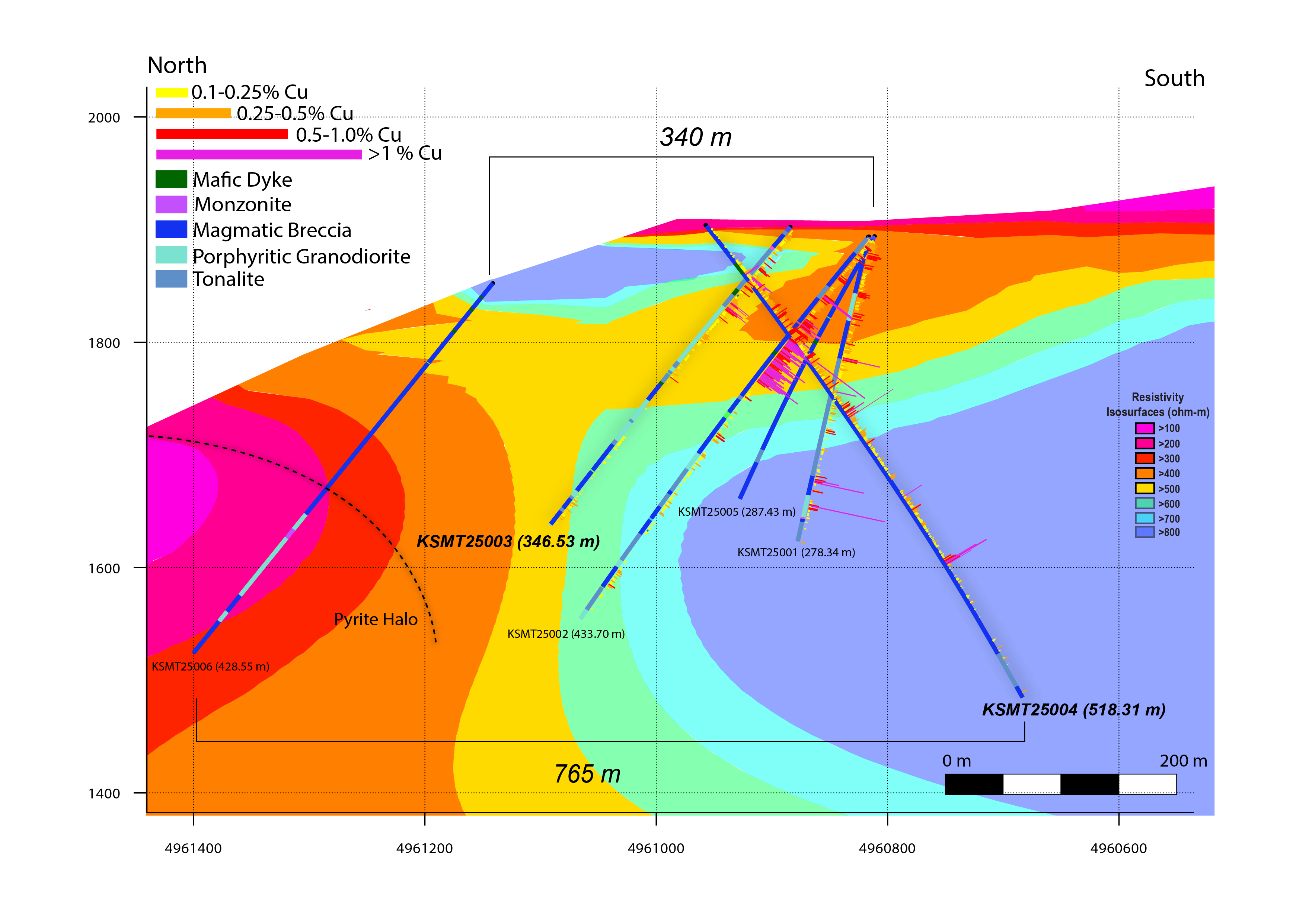
Click Image To View Full Size
Table 2. Drillhole Information for KSMT25003 and KSMT25004
|
Hole |
Easting |
Northing |
Azimuth |
Dip |
Final Depth |
|
KSMT25003 |
524455 |
4960884 |
340 |
-50 |
346.53 |
|
KSMT25004 |
524452 |
4960960 |
160 |
-50 |
518.31 |
KSMT25003
KSMT25003 was drilled approximately 75 metres north of holes KSMT25001 and KSMT25002 and was oriented at an azimuth of 340° (NNW). The objective of the hole was to extend known mineralization at Kismet to the north and to improve the Company’s understanding of mineralization geometry through lithological correlations between KSMT25003, KSMT25002, and KSMT25001.
The upper portion of the hole intersected alternating intervals of clast‑supported and matrix‑supported breccia exhibiting mineralization characteristics consistent with KSMT25001 and KSMT25002, including abundant oxide copper mineralization. The mineral assemblage consists of hematite–tourmaline–pyrite–chalcopyrite, locally upgraded to oxide minerals including malachite and chrysocolla. Mineralization occurs primarily as a hydrothermal overprint within a magmatic breccia assemblage.
The magmatic breccia contains clasts of two dominant lithologies observed in previous drilling: (a) porphyritic granodiorite and (b) tonalite. Porphyritic granodiorite clasts commonly display moderate-to-intense phyllic alteration, often controlled by thin, millimetre‑scale D‑type veins. These veins are typically confined to clasts and are interpreted to pre‑date brecciation.
At depth, KSMT25003 enters a broad interval of weakly-mineralized porphyritic granodiorite with variable alteration intensity and copper grades. A second mineralized breccia zone was encountered between 313 m and 327 m, consisting of clast‑supported breccia comparable to that intersected near the top of the hole.
From below overburden to final depth, the interval of 344.73 m averaged 0.19% Cu. Drilling was terminated due to challenging downhole conditions, including repeated caving and loss of circulation.
KSMT25004
Drillhole KSMT25004 was collared approximately 75 meters north of KSMT25003 and was drilled at an azimuth of 160° (SSE) to a total depth of 518.31 m. The objective of the hole was to test the southern extension of the breccia complex and determine whether the weakly-to-moderately mineralized tonalite encountered in KSMT25001 extended to the southeast.
From surface to 472.36 m, the hole intersected alternating intervals of variably-mineralized breccia. Near surface, mineralization is dominated by copper oxides including malachite, azurite, chrysocolla, and chalcocite. With increasing depth, mineralization transitions to sulfide‑dominant assemblages characterized by chalcopyrite and pyrite, with structurally-controlled intervals of secondary copper oxides persisting at depths greater than 400 m.
Breccia textures transition from predominantly clast‑supported in the upper portions of the hole to matrix‑supported at depth. Notably, KSMT25004 did not intersect the weakly-mineralized tonalite unit observed in KSMT25001, indicating that mineralized breccia remains open to the south and supporting the potential for continued lateral expansion of Kismet. The hole was terminated in matrix‑supported breccia due to challenging drilling conditions.
Below approximately 385 m depth, mineralization becomes less pervasive and transitions to structurally-controlled oxide mineralization in localized 1–3 m intervals. The system remains open for oxide copper mineralization to the south above this depth and for potential porphyry‑style mineralization below this depth.
KSMT25004 confirms that the tonalite body encountered in KSMT25001 is not extensive and that consistent breccia‑hosted mineralization continues at depth. These results also demonstrate that highly-resistive geophysical features (>700 ohm‑m; Figure 5) can host significant copper mineralization, while low-to-moderate resistivity features remain priority targets for porphyry exploration due to their potential association with more intense phyllic (quartz–sericite–pyrite) alteration zones.
-
Assay results from drill holes KSMT25005-25006
-
Geophysical results from IP, Vector IP, NSIP ELF surveys
-
Completion of a Property-wide model with defined porphyry copper drill targets for the 2026 exploration season
-
Ongoing planning and development of 2026 exploration activities and Phase II drilling campaign
Sample Analysis and QAQC
All drill core samples were prepped and analyzed at AGAT Labs Analytical in Calgary, Alberta, and Thunder Bay, Ontario, ISO 17025 and ISO 9001 certified laboratories. Samples were dried and crushed to 2 mm, from which a 250 g sub-sample split was then pulverized to 85% passing a 75-micron sieve. Following preparation, a 48-element 4-acid digestion (method 201-071) was conducted. For this, a 0.25 g aliquot of the prepared pulp was digested in a 4-acid solution consisting of hydrochloric, nitric, perchloric and hydrofluoric acids. 4-acid is a near total digest and only the most highly resistant minerals are not dissolved. The resulting solution was analyzed via ICP-OES and ICP-MS. Lower detection limits for this procedure are 0.01 ppm for silver, 0.5 ppm for copper, 0.05 ppm for Molybdenum and 0.1 ppm for Tungsten.
Gold was analyzed by 202-051, a 30-gram fire assay fusion with AAS finish. No significant results were reported.
Samples with initial results beyond the upper detection limit of the 201-071 method were analyzed by over-limit 201-470 procedure (ICP-OES and/or ICP-MS) for copper. For copper, the threshold is >1%.
AGAT Labs Analytical employs internal quality control standards, duplicates and blank samples at set frequencies. Blind certified reference materials (CRMs), blank samples and duplicate ¼ core samples were systematically inserted by the Company into the sample stream and analyzed as part of the Company's quality assurance/quality control protocol.
At Freeze, “Internal Dilution” includes calculated weighted averages of the drillhole that may contain lower grade intervals that are greater than five meters in length with less than 1,000 ppm copper. In the table, in general, no intercepts were reported that averaged less than 0.25 % Copper, except where a significant Tungsten (W) intercept was noted. The reported intercepts were calculated using copper as the main element of interest, and may have intervals of more than five consecutive meters of less than 1,000 ppm copper. All copper values are graphed in the cross section for illustration purposes.
Qualified Person
The scientific and technical information in this news release has been reviewed and approved for disclosure by David Hladky, P.Geo. (registered in Alberta), V.P. Exploration of IDEX Metals Corp. David Hladky is a "Qualified Person" for IDEX Metals Corp. within the meaning of National Instrument 43-101 - Standards of Disclosure for Mineral Projects.
About IDEX Metals Corp.
IDEX Metals Corp. is a mineral exploration company focused on advancing a portfolio of base and precious metal projects in Idaho, USA. IDEX is primarily focused on the exploration and development of the Freeze Copper-Gold porphyry prospect located in the newly discovered Idaho Copper Belt, Washington County, Idaho. With a strategic land position in a top-tier mining jurisdiction and surrounded by major industry players, IDEX is committed to redefining district-scale exploration in Idaho.
For more information, please visit https://idexmetals.com/.
ON BEHALF OF THE BOARD OF DIRECTORS
Clayton Fisher, CEO & Director
For further information regarding IDEX contact:
Investor Relations
info@idexmetals.com
1 (604) 260-0356
Cautionary Note Regarding Forward-Looking Statements
Statements contained in this news release that are not historical facts may be forward-looking statements. These forward-looking statements involve risks, uncertainties and other factors that could cause actual results to differ materially from those expressed or implied by such forward-looking statements. In addition, the forward-looking statements require management to make assumptions and are subject to inherent risks and uncertainties. There is significant risk that the forward-looking statements will not prove to be accurate, that the management’s assumptions may not be correct and that actual results may differ materially from such forward-looking statements. Accordingly, readers should not place undue reliance on the forward-looking statements. Generally forward-looking statements can be identified by the use of terminology such as “anticipate”, “will”, “expect”, “may”, “continue”, “could”, “estimate”, “forecast”, “plan”, “potential” and similar expressions. These forward-looking statements are based on a number of assumptions which may prove to be incorrect which, without limiting the generality of the following, include: risks inherent in exploration activities; the impact of exploration competition; unexpected geological or hydrological conditions; changes in government regulations and policies, including trade laws and policies; failure to obtain necessary permits and approvals from government authorities; volatility and sensitivity to market prices; volatility and sensitivity to capital market fluctuations; the ability to raise funds through private or public equity financings; environmental and safety risks including increased regulatory burdens; weather and other natural phenomena; and other exploration, development, operating, financial market and regulatory risks. The forward-looking statements contained in this press release are made as of the date hereof or the dates specifically referenced in this press release, where applicable. Except as required by applicable securities laws and regulation, IDEX disclaims any intention or obligation to update or revise any forward-looking statement, whether as a result of new information, future events or otherwise, except as required by applicable securities laws. All forward-looking statements contained in this press release are expressly qualified by this cautionary statement.
Neither the TSX Venture Exchange nor its Regulation Services Provider (as that term is defined in the policies of the TSX Venture Exchange) accepts responsibility for the adequacy or accuracy of this release.
Copyright (c) 2026 TheNewswire - All rights reserved.