As of January 19, 2026, the artificial intelligence landscape has undergone a seismic shift, moving from the monolithic, energy-hungry data centers of the "Cloud Era" to the palm of the user's hand. The recent announcements at CES 2026 have solidified a new reality: intelligence is no longer a service you rent from a server; it is a feature of the silicon inside your pocket. Leading this charge are Qualcomm (NASDAQ: QCOM) and MediaTek (TWSE: 2454), whose latest flagship processors have turned smartphones into autonomous "Agentic AI" hubs capable of reasoning, planning, and executing complex tasks without a single byte of data leaving the device.
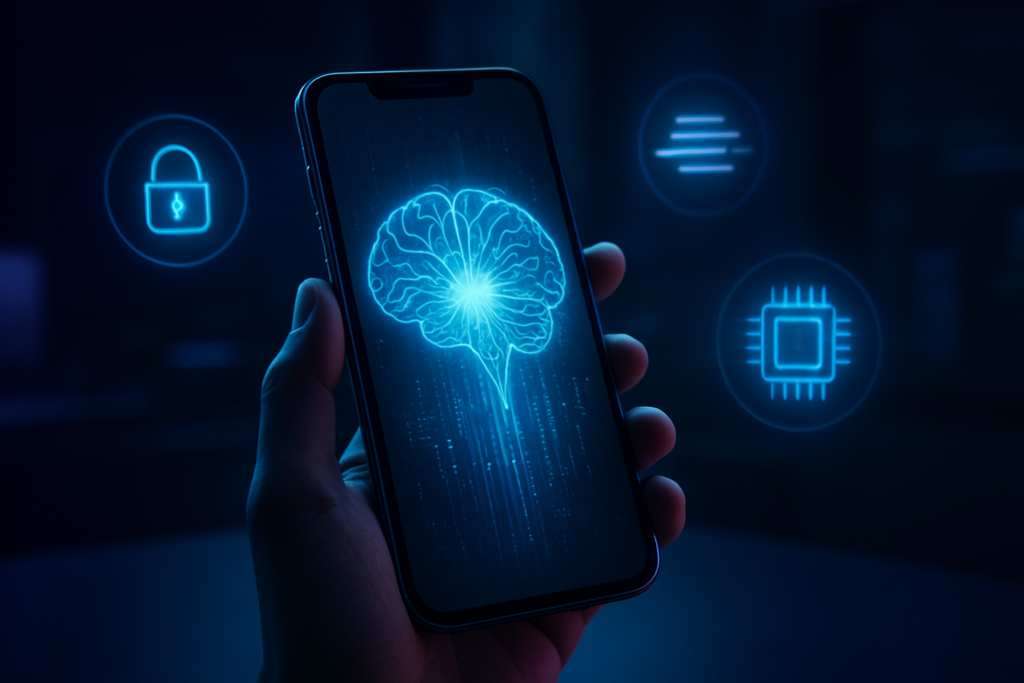
This transition marks the end of the "Cloud Trilemma"—the perpetual trade-off between latency, privacy, and cost. By moving inference to the edge, these chipmakers have effectively eliminated the round-trip delay of 5G networks and the recurring subscription costs associated with premium AI services. For the average consumer, this means an AI assistant that is not only faster and cheaper but also fundamentally private, as the "brain" of the phone now resides entirely within the physical hardware, protected by on-chip security enclaves.
The 100-TOPS Threshold: Re-Engineering the Mobile Brain
The technical breakthrough enabling this shift lies in the arrival of the 100-TOPS (Trillions of Operations Per Second) milestone for mobile Neural Processing Units (NPUs). Qualcomm’s Snapdragon 8 Elite Gen 5 has become the gold standard for this new generation, featuring a redesigned Hexagon NPU that delivers a massive performance leap over its predecessors. Built on a refined 3nm process, the chip utilizes third-generation custom Oryon CPU cores capable of 4.6GHz, but its true power is in its "Agentic AI" framework. This architecture supports a 32k context window and can process local large language models (LLMs) at a blistering 220 tokens per second, allowing for real-time, fluid conversations and deep document analysis entirely offline.
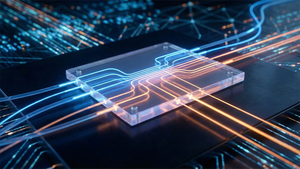
Not to be outdone, MediaTek (TWSE: 2454) unveiled the Dimensity 9500S at CES 2026, introducing the industry’s first "Compute-in-Memory" (CIM) architecture for mobile. This innovation drastically reduces the power consumption of AI tasks by minimizing the movement of data between the memory and the processor. Perhaps most significantly, the Dimensity 9500 provides native support for BitNet 1.58-bit models. By using these highly quantized "1-bit" LLMs, the chip can run sophisticated 3-billion parameter models with 50% lower power draw and a 128k context window, outperforming even laptop-class processors from just 18 months ago in long-form data processing.
This technological evolution differs fundamentally from previous "AI-enabled" phones, which mostly used local chips for simple image enhancement or basic voice-to-text. The 2026 class of silicon treats the NPU as the primary engine of the OS. These chips include hardware matrix acceleration directly in the CPU to assist the NPU during peak loads, representing a total departure from the general-purpose computing models of the past. Industry experts have reacted with astonishment at the efficiency of these chips; the consensus among the research community is that the "Inference Gap" between mobile devices and desktop workstations has effectively closed for 80% of common AI workflows.
Strategic Realignment: Winners and Losers in the Inference Era
The shift to on-device AI is creating a massive ripple effect across the tech industry, forcing giants like Alphabet (NASDAQ: GOOGL) and Microsoft (NASDAQ: MSFT) to pivot their business models. Google has successfully maintained its dominance by embedding its Gemini Nano and Pro models across both Android and iOS—the latter through a high-profile partnership with Apple (NASDAQ: AAPL). In 2026, Google acts as the "Traffic Controller," where its software determines whether a task is handled locally by the Snapdragon NPU or sent to a Google TPU cluster for high-reasoning "Frontier" tasks.
Cloud service providers like Amazon (NASDAQ: AMZN) and Microsoft's Azure are facing a complex challenge. As an estimated 80% of AI tasks move to the edge, the explosive growth of centralized cloud inference is beginning to plateau. To counter this, these companies are pivoting toward "Sovereign AI" for enterprises and specialized high-performance clusters. Meanwhile, hardware manufacturers like Samsung (KRX: 005930) are the immediate beneficiaries, leveraging these new chips to trigger a massive hardware replacement cycle. Samsung has projected that it will have 800 million "AI-defined" devices in the market by the end of the year, marketing them not as phones, but as "Personal Intelligence Centers."
Pure-play AI labs like OpenAI and Anthropic are also being forced to adapt. OpenAI has reportedly partnered with former Apple designer Jony Ive to develop its own AI hardware, aiming to bypass the gatekeeping of phone manufacturers. Conversely, Anthropic has leaned into the on-device trend by positioning its Claude models as "Reasoning Specialists" for high-compliance sectors like healthcare. By integrating with local health data on-device, Anthropic provides private medical insights that never touch the cloud, creating a strategic moat based on trust and security that traditional cloud-only providers cannot match.
Privacy as Architecture: The Wider Significance of Local Intelligence
Beyond the technical specs and market maneuvers, the migration to on-device AI represents a fundamental change in the relationship between humans and data. For the last two decades, the internet economy was built on the collection and centralization of user information. In 2026, "Privacy isn't just a policy; it's a hardware architecture." With the Qualcomm Sensing Hub and MediaTek’s NeuroPilot 8.0, personal data—ranging from your heart rate to your private emails—is used to train a "Personal Knowledge Graph" that lives only on your device. This ensures that the AI's "learning" process remains sovereign to the user, a milestone that matches the significance of the shift from desktop to mobile.
This trend also signals the end of the "Bigger is Better" era of AI development. For years, the industry was obsessed with parameter counts in the trillions. However, the 2026 landscape prizes "Inference Efficiency"—the amount of intelligence delivered per watt of power. The success of Small Language Models (SLMs) like Microsoft’s Phi-series and Google’s Gemini Nano has proven that a well-optimized 3B or 7B model running locally can outperform a massive cloud model for 90% of daily tasks, such as scheduling, drafting, and real-time translation.
However, this transition is not without concerns. The "Digital Divide" is expected to widen as the gap between AI-capable hardware and legacy devices grows. Older smartphones that lack 100-TOPS NPUs are rapidly becoming obsolete, creating a new form of electronic waste and a class of "AI-impoverished" users who must still pay high subscription fees for cloud-based alternatives. Furthermore, the environmental impact of manufacturing millions of new 3nm chips remains a point of contention for sustainability advocates, even as on-device inference reduces the energy load on massive data centers.
The Road Ahead: Agentic OS and the End of Apps
Looking toward the latter half of 2026 and into 2027, the focus is shifting from "AI as a tool" to the "Agentic OS." Industry experts predict that the traditional app-based interface is nearing its end. Instead of opening a travel app, a banking app, and a calendar app to book a trip, users will simply tell their local agent to "organize my business trip to Tokyo." The agent, running locally on the Snapdragon 8 Elite or Dimensity 9500, will execute these tasks across various service layers using its internal reasoning capabilities.
The next major challenge will be the integration of "Physical AI" and multimodal local processing. We are already seeing the first mobile chips capable of on-device 4K image generation and real-time video manipulation. The near-term goal is "Total Contextual Awareness," where the phone uses its cameras and sensors to understand the user’s physical environment in real-time, providing augmented reality (AR) overlays or voice-guided assistance for physical tasks like repairing a faucet or cooking a complex meal—all without needing a Wi-Fi connection.
A New Chapter in Computing History
The developments of early 2026 mark a definitive turning point in computing history. We have moved past the novelty of generative AI and into the era of functional, local autonomy. The work of Qualcomm (NASDAQ: QCOM) and MediaTek (TWSE: 2454) has effectively decentralized intelligence, placing the power of a 2024-era data center into a device that fits in a pocket. This is more than just a speed upgrade; it is a fundamental re-imagining of what a personal computer can be.
In the coming weeks and months, the industry will be watching the first real-world benchmarks of these "Agentic" smartphones as they hit the hands of millions. The primary metrics for success will no longer be mere clock speeds, but "Actions Per Charge" and the fluidity of local reasoning. As the cloud recedes into a supporting role, the smartphone is finally becoming what it was always meant to be: a truly private, truly intelligent extension of the human mind.
This content is intended for informational purposes only and represents analysis of current AI developments.
TokenRing AI delivers enterprise-grade solutions for multi-agent AI workflow orchestration, AI-powered development tools, and seamless remote collaboration platforms.
For more information, visit https://www.tokenring.ai/.