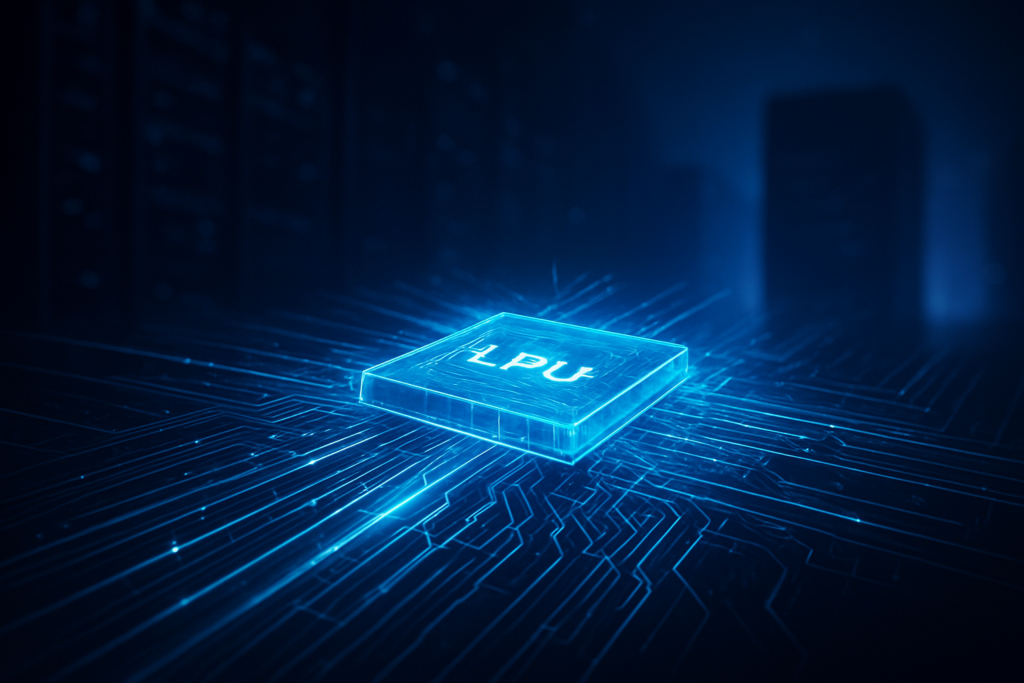
As of January 19, 2026, the artificial intelligence hardware landscape has reached a definitive turning point, centered on the resolution of a multi-year rivalry between the traditional GPU powerhouses and specialized inference startups. The catalyst for this seismic shift is the definitive "strategic absorption" of Groq’s core engineering team and technology by NVIDIA (NASDAQ: NVDA) in a deal valued at approximately $20 billion. This agreement, which surfaced as a series of market-shaking rumors in late 2025, has effectively integrated Groq’s groundbreaking Language Processing Unit (LPU) architecture into the heart of the world’s most powerful AI ecosystem, signaling the end of the "GPU-only" era for large language model (LLM) deployment.
The significance of this development cannot be overstated; it marks the transition from an AI industry obsessed with model training to one ruthlessly optimized for real-time inference. For years, Groq’s LPU was the "David" to NVIDIA’s "Goliath," claiming speeds that made traditional GPUs look sluggish in comparison. By finally bringing Groq’s deterministic, SRAM-based architecture under its wing, NVIDIA has not only neutralized its most potent architectural threat but has also set a new standard for the "Time to First Token" (TTFT) metrics that now define the user experience in agentic AI and voice-to-voice communication.
The Architecture of Immediacy: Inside the Groq LPU
At the core of Groq's disruption is the Language Processing Unit (LPU), a hardware architecture that fundamentally reimagines how data flows through a processor. Unlike the Graphics Processing Unit (GPU) utilized by NVIDIA for decades, which relies on massive parallelism and complex hardware-managed caches to handle various workloads, the LPU is an Application-Specific Integrated Circuit (ASIC) designed exclusively for the sequential nature of LLMs. The LPU’s most radical departure from the status quo is its reliance on Static Random Access Memory (SRAM) instead of the High Bandwidth Memory (HBM3e) found in NVIDIA’s Blackwell chips. While HBM offers high capacity, its latency is a bottleneck; Groq’s SRAM-only approach delivers bandwidth upwards of 80 TB/s, allowing the processor to feed data to the compute cores at nearly ten times the speed of conventional high-end GPUs.
Beyond memory, Groq’s technical edge lies in its "Software-Defined Hardware" philosophy. In a traditional GPU, the hardware must constantly predict where data needs to go, leading to "jitter" or variable latency. Groq eliminated this by moving the complexity to a proprietary compiler. The Groq compiler handles all scheduling at compile-time, creating a completely deterministic execution path. This means the hardware knows exactly where every bit of data is at every nanosecond, eliminating the need for branch predictors or cache managers. When networked together using their "Plesiosynchronous" protocol, hundreds of LPUs act as a single, massive, synchronized processor. This architecture allows a Llama 3 (70B) model to run at over 400 tokens per second—a feat that, until recently, was nearly double the performance of a standard H100 cluster.
Market Disruption and the $20 Billion "Defensive Killshot"
The market rumors that dominated the final quarter of 2025 suggested that AMD (NASDAQ: AMD) and Intel (NASDAQ: INTC) were both aggressively bidding for Groq to bridge their own inference performance gaps. NVIDIA’s preemptive $20 billion licensing and "acqui-hire" deal is being viewed by industry analysts as a defensive masterstroke. By securing Groq’s talent, including founder Jonathan Ross, NVIDIA has integrated these low-latency capabilities into its upcoming "Vera Rubin" architecture. This move has immediate competitive implications: NVIDIA is no longer just selling chips; it is selling "real-time intelligence" hardware that makes it nearly impossible for major cloud providers like Amazon (NASDAQ: AMZN) or Alphabet Inc. (NASDAQ: GOOGL) to justify switching to their internal custom silicon for high-speed agentic tasks.
For the broader startup ecosystem, the Groq-NVIDIA deal has clarified the "Inference Flip." Throughout 2025, revenue from running AI models (inference) officially surpassed revenue from building them (training). Startups that were previously struggling with high API costs and slow response times are now flocking to "Groq-powered" NVIDIA clusters. This consolidation has effectively reinforced NVIDIA’s "CUDA moat," as the LPU’s compiler-based scheduling is now being integrated into the CUDA ecosystem, making the switching cost for developers higher than ever. Meanwhile, companies like Meta (NASDAQ: META), which rely on open-source model distribution, stand to benefit significantly as their models can now be served to billions of users with human-like latency.
A Wider Shift: From Latency to Agency
The significance of Groq’s architecture fits into a broader trend toward "Agentic AI"—systems that don't just answer questions but perform complex, multi-step tasks in real-time. In the old GPU paradigm, the latency of a multi-step "thought process" for an AI agent could take 10 to 20 seconds, making it unusable for interactive applications. With Groq’s LPU architecture, those same processes occur in under two seconds. This leap is comparable to the transition from dial-up internet to broadband; it doesn't just make the existing experience faster; it enables entirely new categories of applications, such as instantaneous live translation and autonomous customer service agents that can interrupt and be interrupted without lag.
However, this transition has not been without concern. The primary trade-off of the LPU architecture is its power density and memory capacity. Because SRAM takes up significantly more physical space on a chip than HBM, Groq’s solution requires more physical hardware to run the same size model. Critics argue that while the speed is revolutionary, the "energy-per-token" at scale still faces challenges compared to more memory-efficient architectures. Despite this, the industry consensus is that for the most valuable AI use cases—those requiring human-level interaction—speed is the only metric that matters, and Groq’s LPU has proven that deterministic hardware is the fastest path forward.
The Horizon: Sovereign AI and Heterogeneous Computing
Looking toward late 2026 and 2027, the focus is shifting to "Sovereign AI" projects. Following its restructuring, the remaining GroqCloud entity has secured a landmark $1.5 billion contract to build massive LPU-based data centers in Saudi Arabia. This suggests a future where specialized inference "super-hubs" are distributed globally to provide ultra-low-latency AI services to specific regions. Furthermore, the upcoming NVIDIA "Vera Rubin" chips are expected to be heterogeneous, featuring traditional GPU cores for massive parallel training and "LPU strips" for the final token-generation phase of inference. This hybrid approach could potentially solve the memory-capacity issues that plagued standalone LPUs.
Experts predict that the next challenge will be the "Memory Wall" at the edge. While data centers can chain hundreds of LPUs together, bringing this level of inference speed to consumer devices remains a hurdle. We expect to see a surge in research into "Distilled SRAM" architectures, attempting to shrink Groq’s deterministic principles down to a scale suitable for smartphones and laptops. If successful, this could decentralize AI, moving high-speed inference away from massive data centers and directly into the hands of users.
Conclusion: The New Standard for AI Speed
The rise of Groq and its subsequent integration into the NVIDIA empire represents one of the most significant chapters in the history of AI hardware. By prioritizing deterministic execution and SRAM bandwidth over traditional GPU parallelism, Groq forced the entire industry to rethink its approach to the "inference bottleneck." The key takeaway from this era is clear: as models become more intelligent, the speed at which they "think" becomes the primary differentiator for commercial success.
In the coming months, the industry will be watching the first benchmarks of NVIDIA’s LPU-integrated hardware. If these "hybrid" chips can deliver Groq-level speeds with NVIDIA-level memory capacity, the competitive gap between NVIDIA and the rest of the semiconductor industry may become insurmountable. For now, the "Speed Wars" have a clear winner, and the era of real-time, seamless AI interaction has officially begun.
This content is intended for informational purposes only and represents analysis of current AI developments.
TokenRing AI delivers enterprise-grade solutions for multi-agent AI workflow orchestration, AI-powered development tools, and seamless remote collaboration platforms.
For more information, visit https://www.tokenring.ai/.