The state of Georgia, once the fastest-growing hub for digital infrastructure in the Southeastern United States, has hit a dramatic legislative wall. In a move that has sent shockwaves through the technology and energy sectors, state lawmakers have introduced a landmark bill to implement the nation’s first comprehensive statewide moratorium on new data center construction. The legislation, House Bill 1012, introduced in early January 2026, marks a desperate attempt by state officials to decouple Georgia’s residential energy stability from the insatiable power demands of the generative artificial intelligence (AI) boom.
This development signals a historic pivot in the relationship between state governments and the "hyperscale" tech giants that have flocked to the region. For years, Georgia lured companies with aggressive tax incentives and the promise of a robust grid. However, the sheer scale of the AI infrastructure required to power large language models has pushed the local utility, Southern Company (NYSE: SO), to its absolute limits. The immediate significance of this ban is a clear message to the industry: the era of "growth at any cost" has ended, and the physical constraints of the electrical grid now dictate the speed of digital innovation.
The 10-Gigawatt Tipping Point: Technical and Legislative Drivers
The move toward a moratorium was catalyzed by a series of technical and regulatory escalations throughout late 2025. In December, the Georgia Public Service Commission (PSC) approved an unprecedented request from Georgia Power, a subsidiary of Southern Company (NYSE: SO), to add an astronomical 10,000 megawatts (10 GW) of new energy capacity to the state’s grid. This expansion—enough to power over 8 million homes—was explicitly requested to meet the projected load from data centers, which now account for approximately 80% of all new electricity demand in the state.
HB 1012 seeks to halt all new data center project approvals until March 1, 2027. This "cooling-off period" is designed to allow the newly formed Special Committee on Data Center Energy Planning to conduct a thorough audit of the state’s water and energy resources. Unlike previous attempts to limit the industry, such as the vetoed HB 1192 in 2024, the 2026 legislation focuses on "grid sovereignty." It mandates that any future data center over 100MW must undergo a rigorous "Conditional Certification" process, requiring up-front financial collateral to ensure that if the AI market cools, residential ratepayers aren't left paying for billions of dollars in stranded fossil-fuel infrastructure.
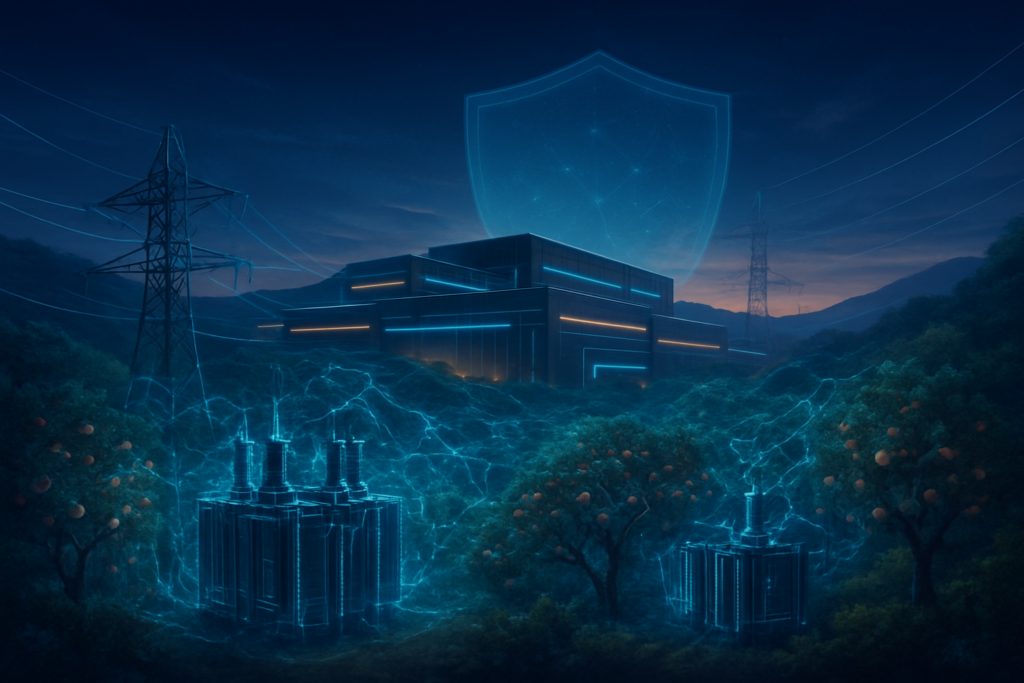
Industry experts and the AI research community have expressed alarm at the technical bottleneck this creates. While the 2024-2025 period saw record deployments of the H100 and Blackwell chips from Nvidia Corporation (NASDAQ: NVDA), the actual physical deployment of these clusters is now being throttled not by chip shortages, but by the availability of high-voltage transformers and transmission lines. Researchers argue that without massive, centralized clusters in hubs like Atlanta, the training of "Frontier Models" expected in late 2026 could be delayed or fragmented, leading to higher latency and increased operational costs.
Capital Flight and the Tech Giant Re-evaluation
The legislative freeze poses an immediate strategic challenge for the world’s largest technology companies. Microsoft Corporation (NASDAQ: MSFT), Alphabet Inc. (NASDAQ: GOOGL), and Meta Platforms, Inc. (NASDAQ: META) have all invested billions into the "Silicon Peach" corridor, with massive campuses in Douglasville, Lithia Springs, and downtown Atlanta. The ban effectively halts several "Phase 2" expansions that were slated to break ground in mid-2026. For these companies, the uncertainty in Georgia may trigger a "capital flight" to states like Texas or Iowa, where energy markets are more deregulated, though even those regions are beginning to show signs of similar grid fatigue.
The competitive implications are stark. Major AI labs like OpenAI and Anthropic rely on the massive infrastructure provided by Amazon.com, Inc. (NASDAQ: AMZN) and Microsoft to maintain their lead in the global AI race. If a primary hub like Georgia goes dark for new projects, it forces these giants into a more expensive, decentralized strategy. Market analysts suggest that companies with the most diversified geographic footprints will gain a strategic advantage, while those heavily concentrated in the Southeast may see their infrastructure costs spike as they are forced to compete for a dwindling supply of "pre-approved" power capacity.
Furthermore, the ban threatens the burgeoning ecosystem of AI startups that rely on local low-latency "edge" computing. By halting construction, Georgia may inadvertently push its tech talent toward other regions, reversing years of progress in making Atlanta a premier technology destination. The disruption is not just to the data centers themselves, but to the entire supply chain, from construction firms specializing in advanced liquid cooling to local clean-energy developers who had planned projects around data center demand.
A National Trend: The End of Data Center Exceptionalism
Georgia is not an isolated case; it is the vanguard of a national trend toward "Data Center Accountability." In early 2026, similar moratoriums were proposed in Oklahoma and Maryland, while South Carolina is weighing a "Energy Independence" mandate that would require data centers to generate 100% of their power on-site. This fits into a broader global landscape where the environmental and social costs of AI are becoming impossible to ignore. For the first time, the "cloud" is being viewed not as a nebulous digital service, but as a heavy industrial neighbor that consumes vast amounts of water and requires the reopening of retired coal plants.
The environmental impact has become a focal point of public concern. To meet the 10GW demand approved in December 2025, Georgia Power delayed the retirement of several coal units and proposed five new natural gas plants. This shift back toward fossil fuels to power "green" AI initiatives has sparked a backlash from environmental groups and residents who are seeing their utility bills rise to subsidize the expansion. The Georgia ban is a manifestation of this tension: a choice between meeting international AI milestones and maintaining local environmental standards.
Comparatively, this moment mirrors the early 20th-century regulation of the railroad and telecommunications industries. Just as those technologies eventually faced "common carrier" laws and strict geographic oversight, AI infrastructure is losing its "exceptionalism." The transition from the "lure and subsidize" phase to the "regulate and restrict" phase is now in full swing, marking 2026 as the year the physical world finally pushed back against the digital expansion.
Future Developments: SMRs and the Rise of the "Prosumer" Data Center
Looking ahead, experts predict that the Georgia ban will force a radical evolution in how data centers are designed. With connection to the public grid becoming a legislative liability, the next generation of AI infrastructure will likely move toward "off-grid" or "behind-the-meter" solutions. This includes the accelerated deployment of Small Modular Reactors (SMRs) and on-site hydrogen fuel cells. Companies like Microsoft have already signaled interest in nuclear-powered data centers, and the Georgia moratorium could make these high-capital projects the only viable path forward for large-scale AI.
In the near term, we can expect a fierce legal battle. Tech trade groups and industrial lobbyists are already preparing to challenge HB 1012, arguing that it violates interstate commerce and undermines national security by slowing domestic AI development. However, if the legislation holds, it will likely serve as a blueprint for other states facing similar grid instability. The long-term challenge will be the development of "grid-aware" AI, where training workloads are dynamically shifted to regions with excess renewable energy, rather than being anchored to a single, overloaded location.
Predictions for the remainder of 2026 suggest that while construction may slow in Georgia, the demand for AI will not. This will lead to a surge in "infrastructure arbitrage," where companies pay a premium for existing, grandfathered capacity. We may also see the emergence of the "Prosumer" data center—facilities that not only consume power but also act as giant batteries for the grid, providing storage and stabilization services to justify their massive footprint to local regulators.
A New Chapter in the AI Era
The introduction of Georgia’s data center moratorium marks a definitive end to the first phase of the AI revolution. The key takeaways are clear: energy is the new silicon. The ability to secure gigawatts of power is now a more significant competitive advantage than the ability to design a new neural architecture. This development will likely be remembered as the moment the AI industry was forced to reconcile its digital ambitions with the physical realities of 20th-century infrastructure.
As we move through the early months of 2026, the tech industry will be watching the Georgia General Assembly with intense scrutiny. The outcome of HB 1012 will determine whether the "Silicon Peach" remains a tech leader or becomes a cautionary tale of overextension. For now, the focus shifts from algorithms to transformers, and from software to sovereignty, as the state seeks to protect its citizens from the very technology it once sought to champion.
This content is intended for informational purposes only and represents analysis of current AI developments.
TokenRing AI delivers enterprise-grade solutions for multi-agent AI workflow orchestration, AI-powered development tools, and seamless remote collaboration platforms.
For more information, visit https://www.tokenring.ai/.