On February 5, 2026, OpenAI fundamentally redefined the landscape of corporate productivity with the launch of OpenAI Frontier. Moving beyond the paradigm of simple chat interfaces and creative assistants, Frontier is a comprehensive enterprise platform designed to deploy and manage "AI co-workers"—autonomous agents capable of executing complex, multi-step workflows with minimal human intervention. The announcement marks a pivotal shift for the San Francisco-based AI giant, transitioning from a model provider to a provider of "digital labor" infrastructure.
The immediate significance of Frontier lies in its focus on governance and orchestration. By providing a centralized "control tower" for autonomous agents, OpenAI is addressing the primary hurdle to AI adoption in highly regulated environments: trust. Early adopters including HP Inc. (NYSE: HPQ), Uber Technologies, Inc. (NYSE: UBER), and Oracle Corporation (NYSE: ORCL) have already begun integrating Frontier into their core operations, signaling that the era of the AI agent has moved from experimental labs into the heart of the global economy.
The Semantic Operating System: Inside the Frontier Architecture
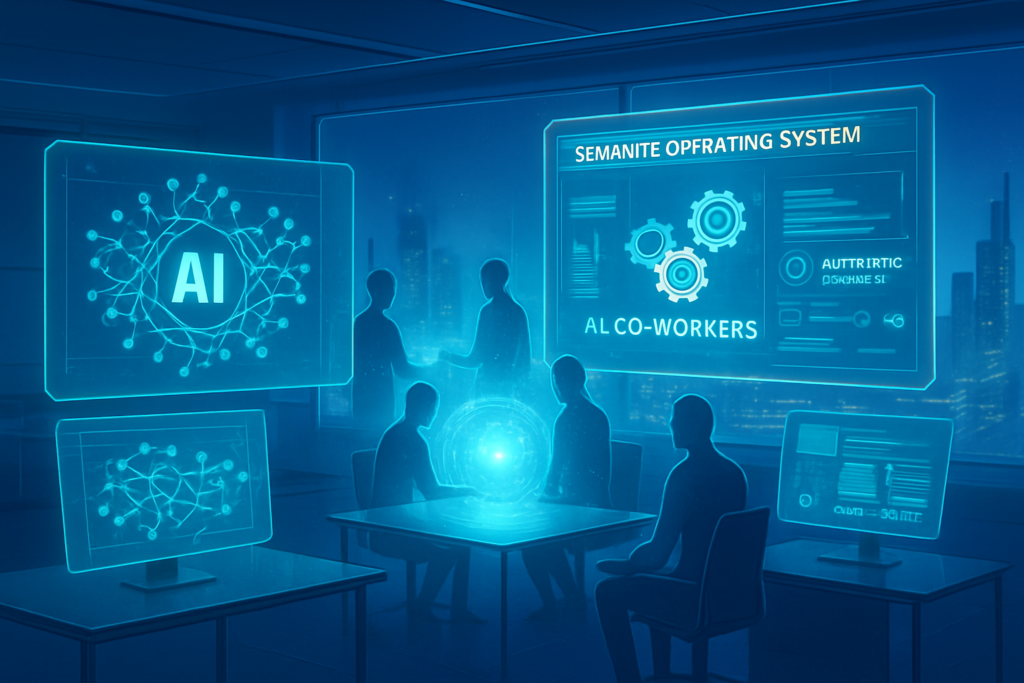
OpenAI Frontier introduces several architectural breakthroughs that differentiate it from previous iterations of ChatGPT Enterprise. At its core is what OpenAI calls a "Semantic Operating System"—a shared logic layer that connects disparate corporate data sources, such as CRM and ERP systems, into a unified "shared brain." This allows every AI agent within a company to understand specific business terminology, internal hierarchies, and historical context. Unlike standard Large Language Models (LLMs) that treat every prompt as a new interaction, Frontier agents utilize "Durable Memory," allowing them to learn from past successes and failures within a specific corporate environment.
Technically, Frontier provides an isolated "Agent Execution Environment" where AI co-workers are granted controlled "computer access." This enables them to run code, manipulate files, and interact with software interfaces just as a human employee would, but within secure, sandboxed runtimes. This "agentic" capability is a significant departure from the RAG (Retrieval-Augmented Generation) patterns of 2024 and 2025; rather than just finding information, Frontier agents are empowered to act on it. For instance, an agent at Oracle can now identify a supply chain bottleneck, cross-reference it with existing contracts, and draft—or even execute—a reorder request autonomously.
The reaction from the AI research community has been one of cautious optimism mixed with technical fascination. Experts note that OpenAI is successfully borrowing strategies from companies like Palantir Technologies Inc. (NYSE: PLTR) by deploying "Forward Deployed Engineers" (FDEs) to help flagship partners operationalize these agents. The consensus among industry veterans is that OpenAI has effectively solved the "prompting fatigue" problem by shifting the human role from an active prompter to a passive supervisor or "agent manager."
Disruption in the Enterprise: Market Implications and the SaaS Shakeup
The launch of Frontier has sent shockwaves through the technology sector, particularly among established Software-as-a-Service (SaaS) providers. On the day of the announcement, shares of companies like Salesforce, Inc. (NYSE: CRM) and Workday, Inc. (NASDAQ: WDAY) saw increased volatility as investors weighed whether autonomous agents might eventually replace the "per-seat" middleware that currently dominates corporate tech stacks. If an AI co-worker can navigate a database directly via Frontier’s semantic layer, the need for complex, human-centric user interfaces may diminish over time.
For major partners like Uber and HP, the strategic advantages are already becoming clear. Uber has reported a 40% increase in process completion speeds within its logistics and internal operations divisions during the Frontier pilot phase. By automating the "glue work"—the manual data entry and coordination between different software tools—these companies are finding they can scale operations without a proportional increase in administrative overhead. Oracle, acting as both a partner and an infrastructure provider, is integrating Frontier’s orchestration tools into its own Cloud Infrastructure (OCI), positioning itself as the backbone for the next generation of autonomous enterprise applications.
The competitive landscape is also intensifying. Frontier's launch follows closely behind the release of "Claude Cowork" by Anthropic, setting up a high-stakes battle for the "Enterprise AI Operating System." While Anthropic has focused heavily on "Constitutional AI" and safety frameworks, OpenAI’s Frontier leans into deep integration and "computer access" capabilities. This rivalry is expected to accelerate the development of vendor-agnostic standards, as Frontier already supports the integration of third-party and custom-built models, moving OpenAI further toward becoming a platform rather than just a product.
Governance in the Age of Agent Sprawl
As autonomous agents begin to outnumber human employees in certain digital workflows, the "wider significance" of OpenAI Frontier centers on governance and the prevention of "agent sprawl." To address this, OpenAI has implemented a sophisticated Identity and Access Management (IAM) system specifically for AI. Each AI co-worker is assigned a unique digital identity with strictly scoped permissions. This ensures that an agent tasked with customer support cannot inadvertently access sensitive payroll data or execute unauthorized financial transactions.
The shift toward "digital labor" represents a major milestone in the AI landscape, comparable to the transition from mainframe computers to the internet. However, it also brings potential concerns regarding accountability. OpenAI has integrated "Evaluation Loops" that automatically flag agents when their performance deviates from pre-set quality benchmarks or ethical guardrails. Every action taken by a Frontier agent is logged in a tamper-proof audit trail, meeting the stringent compliance requirements of SOC 2 Type II and ISO 27001, which are essential for partners like State Farm and Intuit Inc. (NASDAQ: INTU).
Comparatively, Frontier represents the move from the "General Intelligence" hype of the early 2020s to "Applied Autonomy." While early AI breakthroughs focused on what the models could say, Frontier focuses on what they can do. This transition is not without its critics, who worry about the long-term impact on white-collar employment. However, OpenAI and its partners argue that these agents are intended to "onboard" into roles that are currently underserved due to labor shortages or high turnover, effectively augmenting the existing workforce rather than simply replacing it.
The Road Ahead: From Flagship Pilots to the Agentic Economy
Looking toward the near-term future, OpenAI plans to expand Frontier from its current roster of flagship partners to a broader range of Fortune 500 companies by mid-to-late 2026. Expected developments include more refined "Human-in-the-Loop" (HITL) interfaces, where agents can intelligently pause and ask for human guidance when they encounter high-stakes ambiguity. We also anticipate the rise of "Agent-to-Agent" marketplaces, where a company’s Frontier agent might autonomously negotiate and contract services with a vendor’s agent.
The long-term challenges remain significant, particularly in the realm of "emergent behavior." As agents become more autonomous, ensuring they adhere to the spirit—not just the letter—of corporate policy will require constant vigilance. Experts predict that the next major frontier will be the physical-digital bridge, where Frontier-managed agents interact with IoT devices and robotics on factory floors, a use case already being explored by HP for supply chain optimization.
Conclusion: A New Chapter in Corporate Architecture
The launch of OpenAI Frontier marks the beginning of a new chapter in corporate history. By providing the tools to govern and deploy autonomous AI co-workers at scale, OpenAI is offering a blueprint for the "Autonomous Enterprise." The key takeaways from this launch are clear: the focus of AI has shifted from chat to action, from individual productivity to organizational orchestration, and from experimental tools to core infrastructure.
As we look ahead, the significance of Frontier will be measured by how seamlessly these digital entities integrate into the social and professional fabric of our workplaces. For now, the successful deployments at HP, Uber, and Oracle suggest that the "AI co-worker" is no longer a concept of science fiction, but a functional reality of the 2026 business world. Investors and industry leaders should watch closely for the next wave of "agent-native" companies that will likely emerge, built from the ground up to be powered by the Frontier platform.
This content is intended for informational purposes only and represents analysis of current AI developments.
TokenRing AI delivers enterprise-grade solutions for multi-agent AI workflow orchestration, AI-powered development tools, and seamless remote collaboration platforms. For more information, visit https://www.tokenring.ai/.